

 Eng
Eng 
 русский
 Español

 Home / News / Industry News / Brush DC Motor vs. Brushless DC Motor: How to Choose the Right Technology
 Brush DC Motor vs. Brushless DC Motor: How to Choose the Right Technology
 2026.06.10
 Industry News
Brush vs. Brushless DC Motor: The Core Difference at a Glance
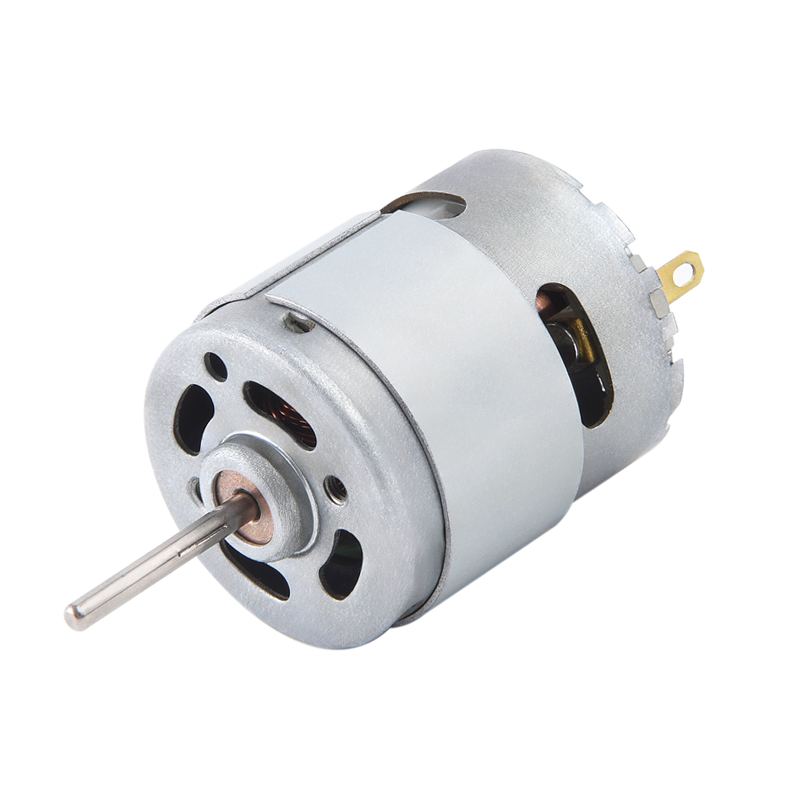
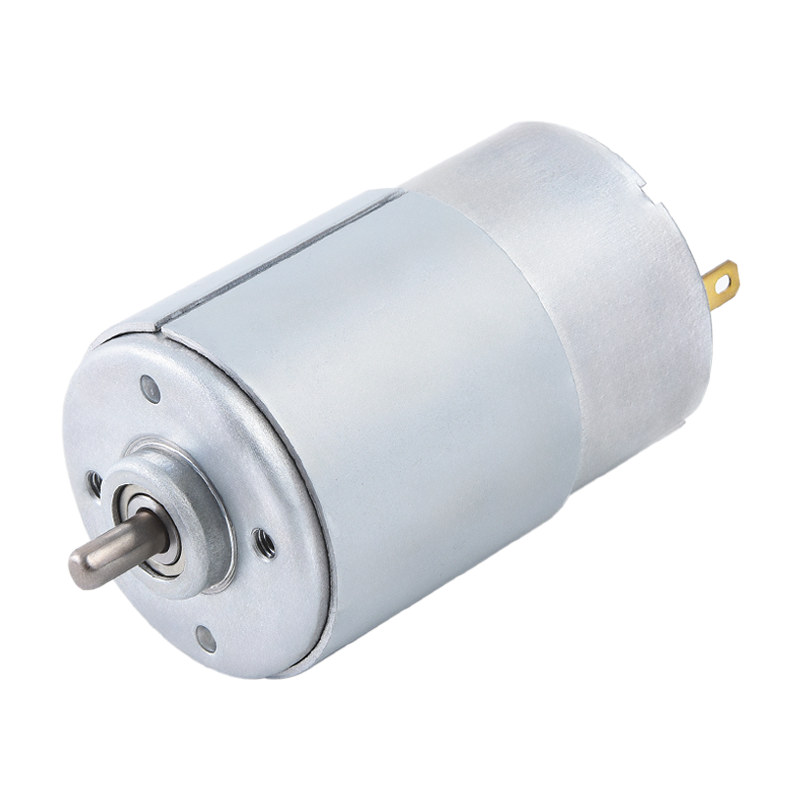
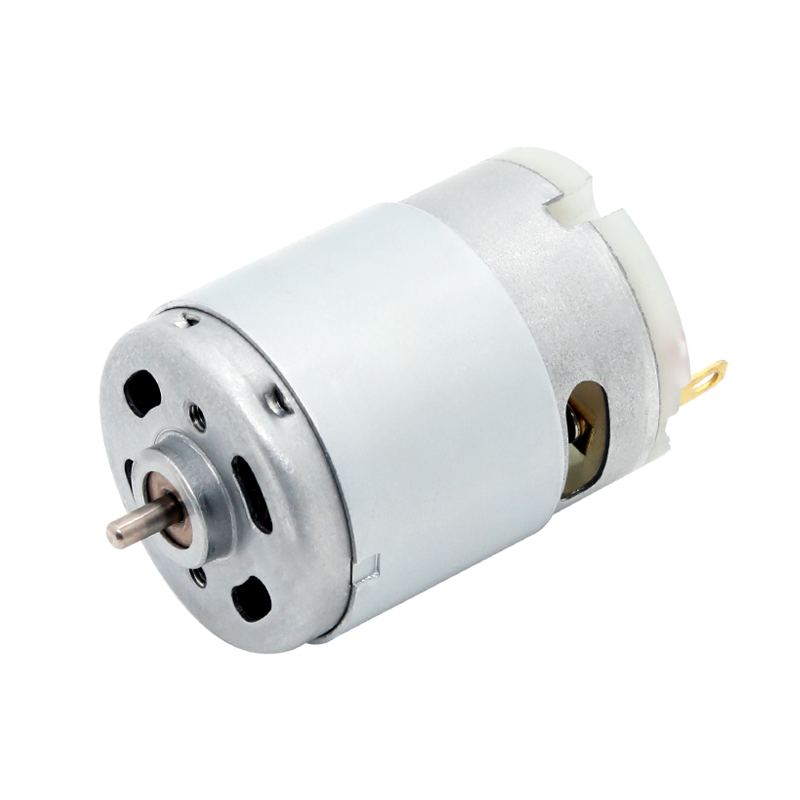
A brush DC motor uses physical carbon brushes and a mechanical commutator to transfer electrical current to the rotating coil, creating motion. A brushless DC motor (BLDC) eliminates the brushes entirely, using electronic controllers and fixed stator coils to drive the rotor — achieving the same result with no physical contact between moving parts.
The practical bottom line: brushless DC motors are more efficient, longer-lasting, and more precise than brush motors — but they cost more and require an electronic speed controller (ESC). Brush DC motors are simpler, cheaper, and easier to control directly, making them the right choice for cost-sensitive, lower-duty-cycle applications.
Choosing between them depends on your application's priorities: budget and simplicity favor brush motors; efficiency, lifespan, and performance favor brushless. The sections below break down exactly how each works, where each excels, and how to decide which is right for your use case.
How a Brush DC Motor Works
A brush DC motor operates on a straightforward electromagnetic principle: current flowing through a conductor in a magnetic field produces force. The motor converts this force into continuous rotation through a clever mechanical switching system.
Core Components
- Rotor (Armature): The rotating part, consisting of wire coils wound around a laminated iron core. Current flows through these coils to generate the magnetic field that drives rotation.
- Stator: The stationary outer casing holding permanent magnets (or field coils in larger motors) that create the fixed magnetic field the rotor works against.
- Commutator: A segmented copper ring attached to the rotor shaft. As the rotor turns, the commutator reverses the direction of current through the coils at precisely the right moment to keep rotation continuous.
- Brushes: Spring-loaded carbon or graphite contacts that press against the spinning commutator, transferring electrical current from the stationary power supply to the rotating coils. This physical contact is the defining characteristic — and the primary limitation — of brush motor technology.
The Commutation Process
As the rotor spins, the brushes slide across successive commutator segments, automatically switching which coil receives current. This mechanical commutation keeps the electromagnetic force in a consistent rotational direction — no external electronics required. The entire switching process happens passively, which is why brush DC motors can be driven directly from a DC power source with no controller circuitry.
The tradeoff: every time a brush transitions between commutator segments, there is friction, electrical arcing, and heat generation. A typical brush DC motor loses 15–30% of input energy to brush friction and commutator resistance alone, and the brushes themselves wear down at a rate that limits service life to roughly 1,000–5,000 operating hours depending on load and environment.
How a Brushless DC Motor Works
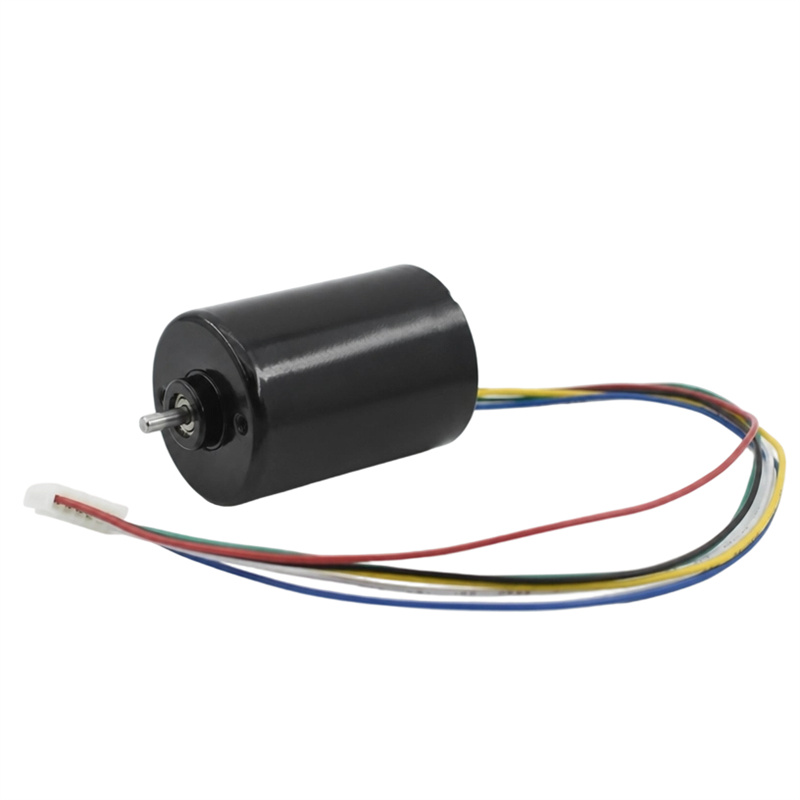
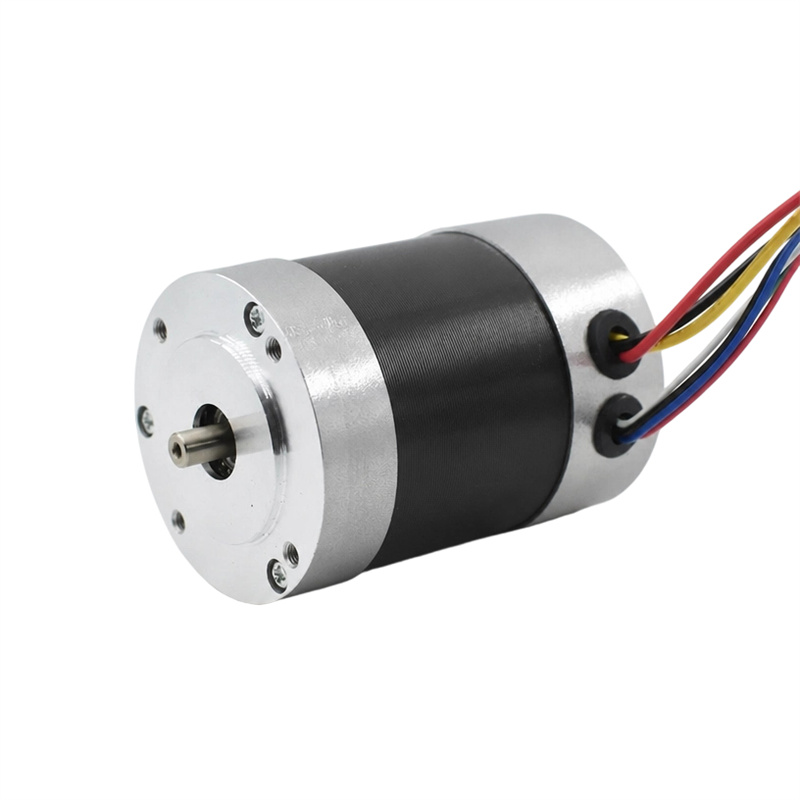
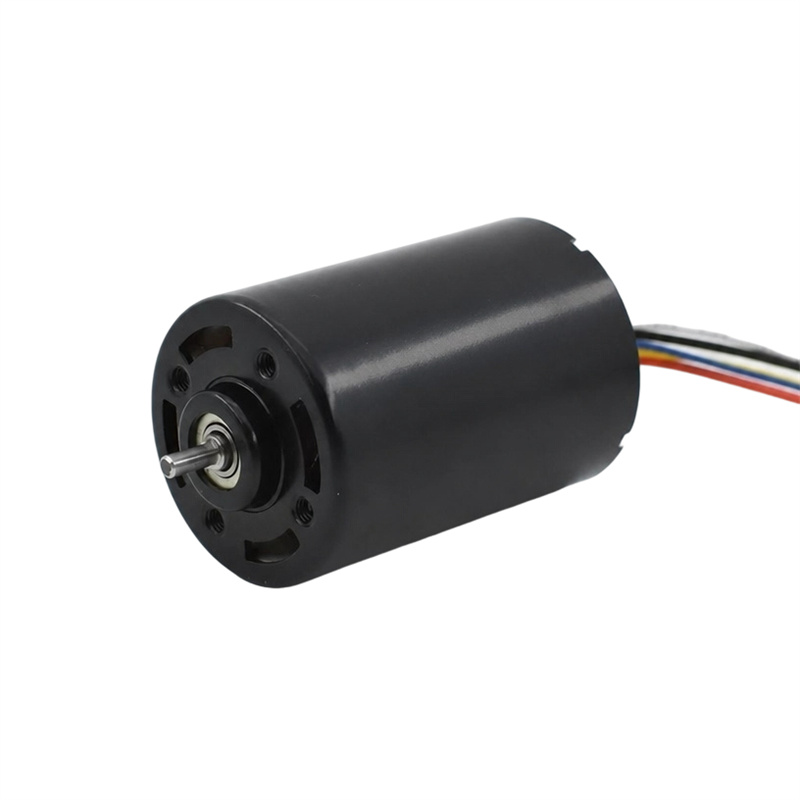
A brushless DC motor achieves the same rotational output as a brush motor but inverts the architecture: the permanent magnets are on the rotor, and the electromagnetic coils are fixed in the stator. Because the coils don't move, there is no need to transfer current across a rotating junction — eliminating the need for brushes entirely.
Core Components
- Rotor: Contains permanent magnets (typically rare-earth neodymium magnets in modern BLDC motors) mounted on or around the shaft. The rotor responds to the rotating magnetic field produced by the stator.
- Stator: Houses three or more sets of wire coils arranged symmetrically around the rotor. These are energized in sequence by the electronic controller to create a rotating magnetic field that pulls the permanent magnet rotor along with it.
- Electronic Speed Controller (ESC) / Driver: Replaces the mechanical commutator. The ESC uses transistors (typically MOSFETs) to switch current through each stator coil phase in the correct sequence, timed by rotor position feedback.
- Position Sensors (Hall sensors) or Sensorless Detection: Hall effect sensors detect the rotor's magnetic field position so the controller knows exactly when to switch each phase. Sensorless BLDC motors use back-EMF (electromotive force) detection instead, reducing sensor cost and improving reliability in harsh environments.
Electronic Commutation
Instead of mechanical brushes switching coil currents, the ESC energizes each stator phase electronically at microsecond precision. A typical three-phase BLDC motor cycles through six switching states per electrical revolution. This electronic commutation is not only frictionless but also enables precise speed and torque control impossible to achieve with mechanical commutation — including constant torque delivery across a wide speed range and regenerative braking capability.
Without friction losses from brushes, brushless DC motors routinely achieve 85–95% electrical-to-mechanical efficiency — a significant improvement over brush motors in the same power class.
Brush DC Motor vs. Brushless DC Motor: Head-to-Head Comparison
The differences between brush and brushless DC motors span nearly every performance and practical dimension. This comparison covers the metrics that matter most for selection decisions:
| Characteristic | Brush DC Motor | Brushless DC Motor |
|---|---|---|
| Commutation method | Mechanical (brushes + commutator) | Electronic (ESC / driver) |
| Typical efficiency | 70–85% | 85–95% |
| Service life | 1,000–5,000 hours | 10,000–20,000+ hours |
| Maintenance | Regular brush replacement required | Virtually maintenance-free |
| Speed control | Simple (vary supply voltage) | Precise (PWM via ESC) |
| Torque at low speed | Good (high starting torque) | Excellent (full torque from 0 RPM) |
| Heat generation | Higher (brush friction + I²R losses) | Lower (losses only in stator, easier to cool) |
| Noise / EMI | Higher (brush arcing generates EMI) | Lower (no arcing) |
| Cost (motor only) | Lower | Higher |
| Controller required | No (can run direct from DC supply) | Yes (ESC required) |
| Suitability for harsh environments | Limited (dust degrades brushes) | Excellent (fully enclosed rotor) |
| Power-to-weight ratio | Moderate | High |
Efficiency and Lifespan: The Numbers That Drive Most Decisions
For many engineers and product designers, two metrics dominate the brush vs. brushless decision: efficiency and service life. The differences are substantial enough to justify significant cost premiums in most applications.
Efficiency Gap
Brush DC motors typically operate at 70–85% efficiency, with losses attributable to brush friction (5–15%), commutator resistance, rotor copper losses, and heat. Brushless DC motors routinely achieve 85–95% efficiency because rotor losses are eliminated (the rotor carries no current — only permanent magnets) and there is no friction component from commutation.
In a battery-powered application — an electric vehicle, a power tool, or a drone — this efficiency difference is directly proportional to runtime. A BLDC motor running at 92% efficiency vs. a brush motor at 78% efficiency draws roughly 17% less current for the same mechanical output. On a 5 Ah battery pack, that translates to several additional minutes of runtime per charge — significant in high-performance applications.
Service Life and Maintenance Cost
Carbon brushes are a consumable component. In a typical small DC motor under moderate load, brushes wear at a rate of approximately 0.1–0.5mm per 100 operating hours. Brush replacement intervals range from 500 hours (high-load applications) to 5,000 hours (light-duty intermittent use). Each replacement requires downtime, labor, and parts cost.
Brushless DC motors, with no wearing contact parts, routinely achieve 10,000–20,000 hours of service life — limited primarily by bearing wear. In industrial applications running 8 hours per day, a BLDC motor can operate for 3–7 years before bearing replacement is needed, compared to brush motor intervals of 6–18 months for brush maintenance.
Where Brush DC Motors Still Make Sense
Despite their limitations, brush DC motors remain the right choice in specific contexts. Their advantages are real — and in cost-driven or simplicity-driven applications, they often win.
Low-Cost Consumer Products
A brush motor in a toy car, a small fan, or a basic household appliance costs $0.50–$5.00 at volume — a fraction of even the cheapest BLDC alternative (which still requires a controller IC). When the entire product sells for $10–$30, brush motor economics are unchallengeable. The shorter service life is acceptable because the product lifecycle is itself short.
Simple Speed Control Without Electronics
A brush DC motor's speed is directly proportional to supply voltage — a rheostat or simple PWM circuit is all that's needed. For hobbyists, prototypers, and low-budget embedded projects, this simplicity drastically reduces time-to-prototype and component count. No software, no three-phase driver IC, no position sensing — just a motor and a voltage.
Low-Duty-Cycle Applications
Applications that run only seconds per day — a garage door opener, an automatic pet feeder motor, or a power window actuator — accumulate operating hours so slowly that brush wear is irrelevant over a product's realistic lifespan. A brush motor in a power window actuator may see only 50–100 hours of actual runtime over 15 years of vehicle life.
Applications Requiring Regenerative Braking Simplicity
Brush DC motors can function as generators when mechanically driven, making simple regenerative braking possible with a basic H-bridge circuit and a diode. While BLDC motors also support regenerative braking, the implementation requires more sophisticated controller logic.
Where Brushless DC Motors Dominate
Brushless DC motors have become the default choice in any application where performance, longevity, or operating environment demands more than brush technology can reliably deliver.
Power Tools and Cordless Equipment
The shift from brush to brushless in professional power tools is essentially complete. A brushless cordless drill delivers 25–50% more runtime per charge than an equivalent brushed model, runs cooler under sustained load, and requires no maintenance over the tool's working life. Brands like DeWalt, Milwaukee, and Makita now offer brushless motors across their entire professional cordless lines — the efficiency and longevity gains justify the $20–$60 price premium per tool.
Electric Vehicles and E-Bikes
Every major electric vehicle — from Tesla's Model 3 (using a permanent magnet synchronous motor, a BLDC variant) to e-bikes and electric scooters — uses brushless motor technology. The reasons are straightforward: higher efficiency extends range, regenerative braking capability recovers energy during deceleration, and the sealed rotor construction withstands road debris, moisture, and temperature extremes that would destroy brush contacts within months.
Drones and RC Aircraft
Brushless outrunner motors are universal in multirotor drones. They offer the high power-to-weight ratio (some hobby-grade BLDC motors produce over 1 kg of thrust per 50g of motor weight) and precise throttle response required for stable flight. The absence of brush arcing also eliminates radio frequency interference that would corrupt flight controller signals.
Industrial Automation and Robotics
CNC machines, robotic arms, conveyor systems, and medical devices all rely on brushless DC motors for their precise torque control, high duty cycle tolerance, and low maintenance burden. In a factory running three shifts, a motor that requires brush replacement every 1,000 hours creates unacceptable downtime costs compared to a BLDC motor running 15,000+ hours between bearing services.
HVAC and Appliance Motors
Modern high-efficiency HVAC blowers, washing machine drum motors, and refrigerator compressors increasingly use BLDC technology. Variable-speed BLDC compressors in inverter air conditioners can reduce energy consumption by 30–50% compared to fixed-speed brush or induction motor alternatives — a major factor in ENERGY STAR ratings and consumer utility bills.
Types of Brushless DC Motors: Inrunner vs. Outrunner
Within the brushless DC motor category, two main physical configurations exist — and the choice between them affects torque, speed, and application suitability significantly.
Inrunner BLDC Motors
In an inrunner, the rotor (with permanent magnets) rotates inside the stator coils — the same configuration as a brush motor, but without brushes. Inrunners spin at high RPM with lower torque and are most common in applications where high speed is the priority: electric RC cars, high-speed spindles, and some power tools. A typical inrunner may spin at 15,000–50,000 RPM and requires a gearbox to convert speed to usable torque.
Outrunner BLDC Motors
In an outrunner, the permanent magnet shell rotates around the outside of the fixed stator coils. This configuration produces higher torque at lower RPM, making outrunners suitable for direct-drive applications that don't need a gearbox. Drone propellers, e-bike hub motors, and direct-drive washing machine drums are all outrunner applications. The larger rotor diameter increases rotational inertia, which smooths operation under varying loads.
| Property | Inrunner BLDC | Outrunner BLDC |
|---|---|---|
| Rotor location | Inside stator | Outside stator |
| Speed range | High (10,000–50,000+ RPM) | Lower (200–10,000 RPM) |
| Torque output | Lower | Higher |
| Gearbox needed? | Usually yes | Often no (direct drive) |
| Typical applications | RC cars, spindles, fans | Drones, e-bikes, washing machines |
How to Choose Between a Brush and Brushless DC Motor
Use this decision framework to match motor type to application requirements:
Choose a Brush DC Motor When:
- Budget is the primary constraint and the application does not demand long service life or high efficiency.
- No microcontroller or driver IC is available and you need direct DC-voltage speed control.
- Operating hours are very low — under 500 hours expected total life — making brush wear irrelevant.
- Simplicity of design and repair is valued — brushes are user-replaceable with basic tools.
- The application is a prototype or educational project where low cost enables faster iteration.
Choose a Brushless DC Motor When:
- Battery runtime or energy efficiency is critical — BLDC motors extend runtime 25–50% in comparable configurations.
- High duty cycle or continuous operation is required — 2,000+ annual hours makes brush maintenance costs significant.
- Precise speed or torque control is needed across a wide operating range.
- The environment involves dust, moisture, or contamination that would degrade brush contacts rapidly.
- Low noise and minimal EMI are required — brush arcing generates radio frequency interference that can disrupt nearby electronics.
- The product will be sold into a competitive market where efficiency ratings, warranty periods, or maintenance-free operation are selling points.
Common Brush DC Motor and Brushless DC Motor Specifications Explained
Motor datasheets use standardized specifications that can be confusing without context. Here are the most important parameters for both motor types:
- KV rating (BLDC): RPM per volt with no load. A 1,000 KV motor spins at 10,000 RPM on a 10V supply. Lower KV = more torque, higher KV = more speed. Critical for matching motor to propeller or gearbox in drone and RC applications.
- Stall torque: Maximum torque the motor produces when the shaft is held stationary. Relevant for applications with high starting loads. Brush motors often have higher stall torque relative to their running torque compared to BLDC equivalents.
- No-load speed (Rpm): Maximum speed with no mechanical load on the shaft. Real-world operating speed under load will be 70–90% of this figure.
- Continuous current rating (A): The maximum sustained current draw without overheating. Exceeding this causes insulation breakdown. For brush motors, brush arcing becomes severe above rated current; for BLDC motors, the ESC typically enforces this limit electronically.
- IP rating: Ingress Protection rating defines resistance to dust and moisture. IP44 (splash-resistant) is common in consumer products; IP67 (fully dust-tight, submersible to 1m) is standard in outdoor power tools and industrial BLDC motors. Brush motors rarely exceed IP44 due to brush chamber ventilation requirements.
- Number of poles (BLDC): More magnetic poles increase torque at low RPM but reduce maximum speed. A 14-pole outrunner is well-suited to direct-drive low-RPM applications; a 2-pole inrunner suits high-speed applications.
News
-
Brush DC Motor Origins and Physical Foundations The Brush DC Motor is a pioneer in converting electrical energy into mechanical motion, and its history is closely intertwined with ...
READ MORE -
Who Is Still Using Brushed DC Motors These Days? Brushed DC motors in small appliances Despite the growing adoption of brushless motor technology, small appliances remain a major c...
READ MORE -
Brush DC Motor Applications in Consumer Electronics and Smart Devices Brush DC Motor Role in Consumer Electronics Design Brush DC Motor plays a critical role in the design and func...
READ MORE

Quick Links
 Home
Home


Copyright © Yuyao Hongyang Micromotor Co., Ltd. All rights reserved.

