

 Eng
Eng 
 русский
 Español


Brushed vs Brushless DC Motor: Which Is Better for You?
 2026.03.04
 Industry News
Brushless DC motors are better in most performance-critical, long-service, or precision applications — but brushed DC motors remain the superior choice when simplicity, low upfront cost, or direct voltage control is the priority. Neither motor type is universally superior; the right answer depends on duty cycle, budget, required lifespan, control complexity tolerance, and operating environment. For applications like industrial automation, drones, electric vehicles, and medical devices, brushless motors win decisively. For low-cycle hobby projects, simple actuators, and cost-sensitive consumer goods, brushed motors are often the pragmatic choice.
How Each Motor Type Works
Brushed DC Motor: Mechanical Commutation
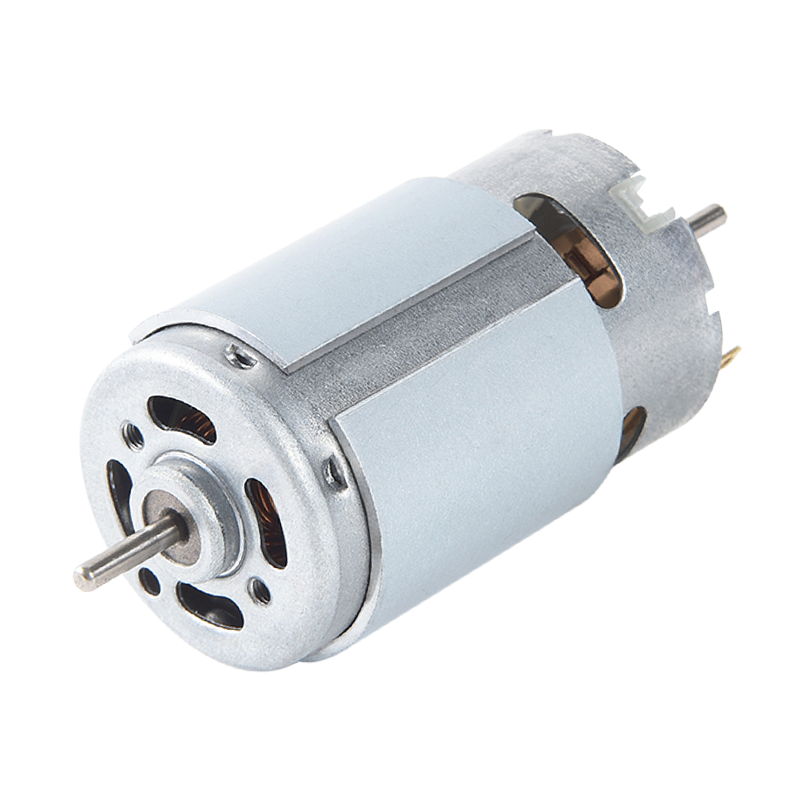
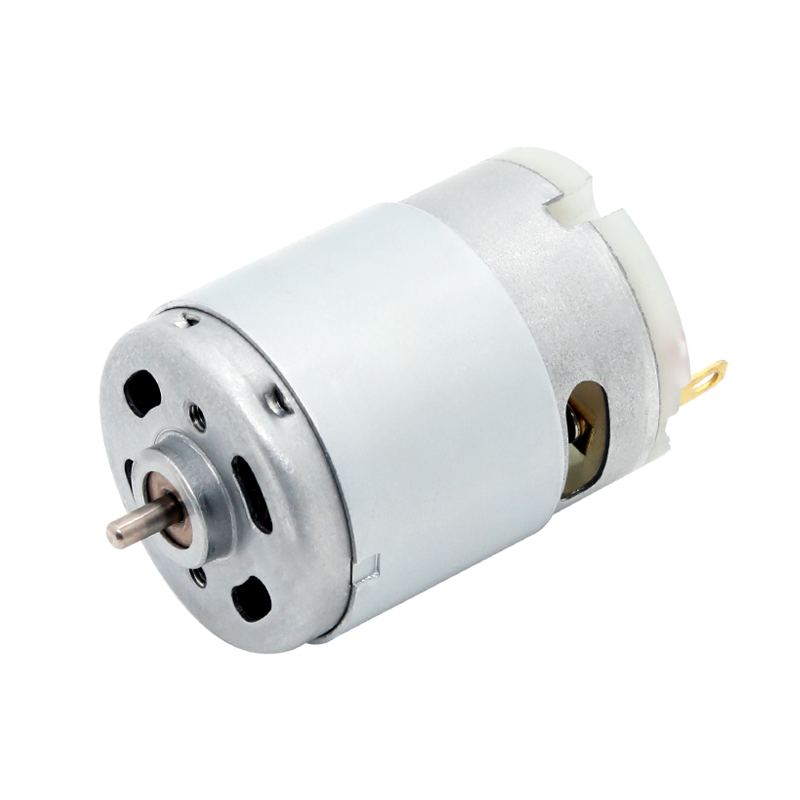
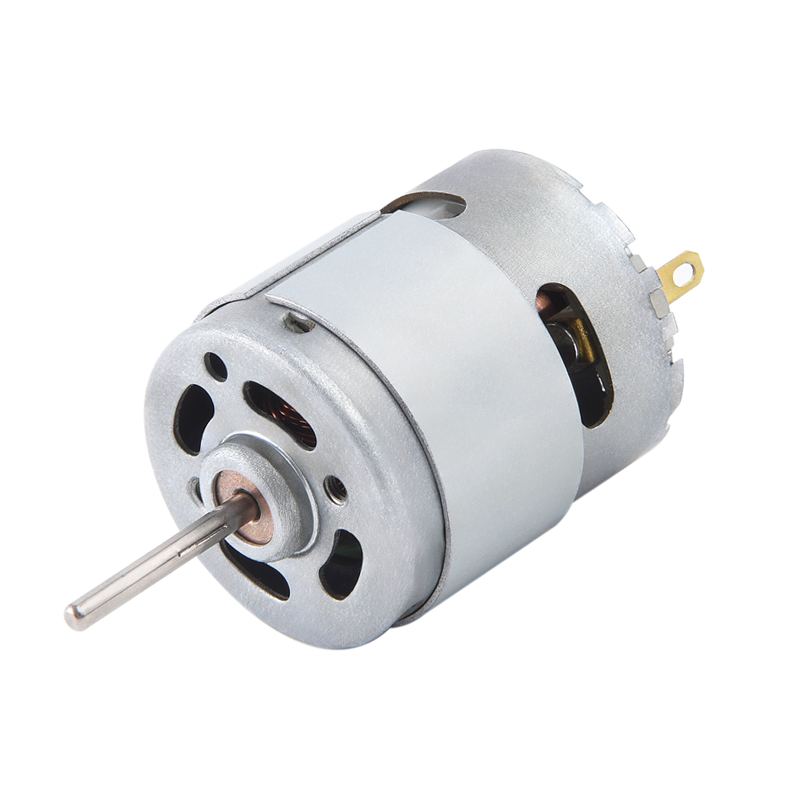
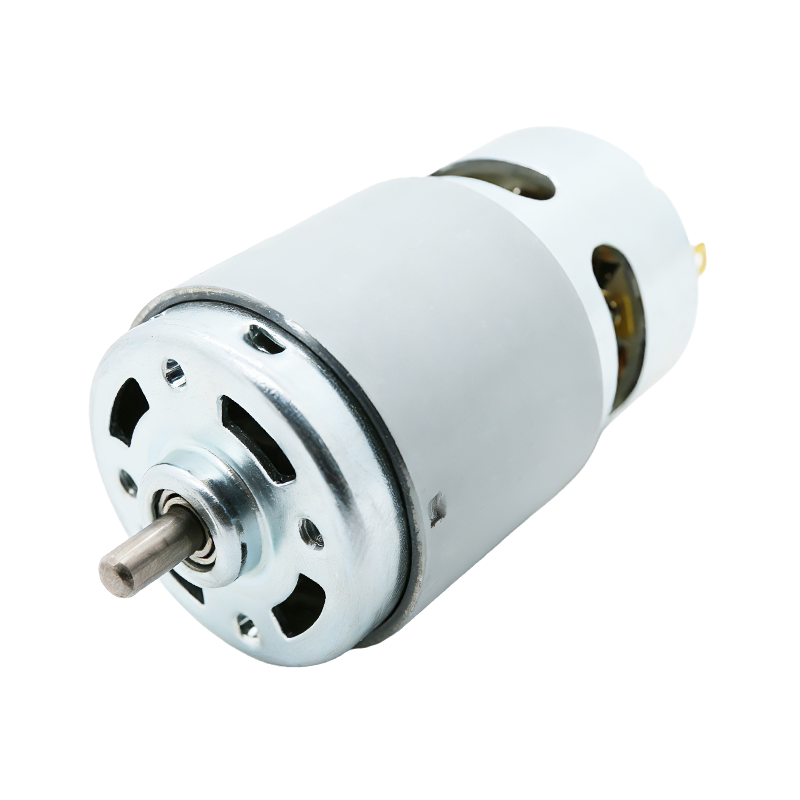
In a brushed DC motor, current flows through stationary carbon brushes that press against a rotating commutator ring on the shaft. As the rotor turns, the commutator segments switch the direction of current in the rotor windings, generating continuous rotational torque. The magnets are fixed to the stator (outer housing), and the wound coils are on the rotor. This mechanical commutation system is entirely self-contained — apply DC voltage and the motor runs, with no external controller needed.
Brushless DC Motor: Electronic Commutation
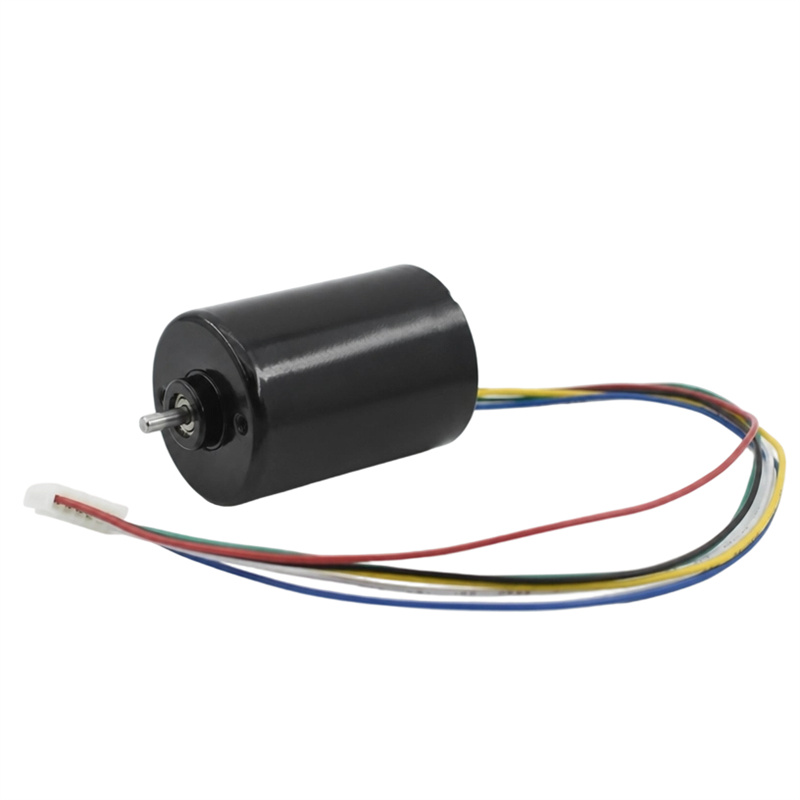
A brushless DC (BLDC) motor inverts the architecture: the permanent magnets are on the rotor, and the wound coils are on the stator. Because there is no mechanical contact for commutation, an external electronic speed controller (ESC) or motor driver uses rotor position feedback — from Hall-effect sensors or back-EMF sensing — to fire each stator phase in the correct sequence. The result is electronic commutation with no wear surfaces, but at the cost of requiring a dedicated controller for operation.
Head-to-Head Performance Comparison
| Parameter | Brushed DC Motor | Brushless DC Motor |
|---|---|---|
| Efficiency | 75–85% | 85–95% |
| Typical lifespan | 1,000–3,000 hours | 10,000–20,000+ hours |
| Power-to-weight ratio | Lower | Higher (up to 6× for same frame) |
| Speed range | Limited by brush/commutator wear at high RPM | 100,000+ RPM achievable |
| Torque at low speed | Good (linear torque-speed curve) | Excellent (flat torque to high RPM) |
| Maintenance | Regular brush replacement required | Essentially maintenance-free |
| Electrical noise (EMI) | High (brush arcing) | Low |
| Heat generation | Heat in rotor (hard to dissipate) | Heat in stator (easy to dissipate) |
| Controller required | No (direct voltage control) | Yes (ESC or motor driver IC) |
| Motor cost (equivalent power) | Lower ($5–$50 typical) | Higher ($20–$200+ typical) |
| Total system cost | Lower | Higher (motor + controller) |
| Speed control method | Simple PWM or voltage reduction | ESC with commutation timing |
| Use in explosive environments | Risky (brush sparking) | Safe (no arcing) |
Efficiency: Where the Gap Is Most Consequential
The efficiency gap between brushed and brushless motors is real and measurable. A brushed motor loses energy at the brush-commutator interface through friction and electrical resistance — these losses are independent of load and persist even at light loads. A well-designed BLDC motor operating at its design point achieves 90–95% efficiency, while a comparable brushed motor typically ranges from 75–85%.
In battery-powered applications, this difference is critical. Consider a drone motor drawing an average of 200W for 20 minutes per flight. A brushed motor at 80% efficiency wastes 40W as heat; a brushless motor at 93% efficiency wastes only 14W. Over 500 flight cycles, the cumulative energy waste of the brushed motor is approximately 3.3 kWh more than the brushless alternative — translating directly into reduced battery life per charge and more frequent replacement.
For continuously running industrial applications (fans, pumps, conveyor drives), the efficiency premium of brushless motors pays back the higher initial cost within 6–18 months at typical industrial electricity rates, making total cost of ownership (TCO) favorable for BLDC despite the higher purchase price.
Lifespan and Maintenance: The Brush Wear Problem
Carbon brushes in a brushed motor wear at a rate that depends on current density, RPM, brush pressure, and operating temperature. Under normal conditions, brushes last 1,000–3,000 operating hours before requiring replacement. At high current loads or elevated RPM, this drops significantly — some high-current brushed motors in power tools need brush replacement after as few as 200–400 hours.
Brush wear also produces carbon dust that contaminates the motor interior, potentially causing winding shorts. In dusty, humid, or chemically aggressive environments, this is a serious failure mode. By contrast, a BLDC motor has no wear surfaces beyond its bearings — its theoretical lifespan is limited only by bearing life, winding insulation degradation, and magnet demagnetization. High-quality BLDC motors with sealed bearings routinely achieve 20,000–50,000 operating hours in HVAC and industrial pump applications.
For applications where motor access for maintenance is difficult — such as implanted medical pumps, sealed enclosures, or permanently installed building systems — the maintenance-free nature of brushless motors is not merely convenient but essential.
Speed and Torque Characteristics
Speed Range and High-RPM Performance
The brushed motor's maximum speed is physically constrained by the commutator. At very high RPM, the brush contact becomes intermittent, causing arcing, accelerated wear, and eventually commutator failure. In practice, most brushed DC motors are limited to 5,000–20,000 RPM for sustained operation. Brushless motors face no such constraint — with proper balancing and bearings, BLDC motors in dental drills, PCB routing spindles, and turbomolecular pumps routinely operate at 50,000–100,000 RPM.
Torque Delivery and Speed Regulation
Both motor types deliver torque proportional to current, but they differ in torque consistency. Brushed motors exhibit torque ripple from commutation switching — at low speeds, this creates noticeable cogging. BLDC motors, especially those with three-phase sinusoidal drive (field-oriented control / FOC), produce significantly smoother torque with ripple below 1–2%, making them preferred in precision robotics, CNC axes, and servo applications where smooth motion profiles are required.
BLDC motors also maintain their rated torque across a wider speed range. A brushed motor's torque drops approximately linearly as speed increases (classic torque-speed curve). A BLDC motor with closed-loop speed control can deliver near-constant torque from near-zero RPM to rated speed — a significant advantage in variable-load applications like electric vehicle drives and servo presses.
Control Complexity and System Cost
The single biggest practical advantage of brushed motors is control simplicity. A brushed DC motor can be run directly from a battery or DC power supply, controlled with nothing more than a variable resistor or a basic PWM signal to a transistor. This makes implementation trivial for prototypers, educators, and simple consumer products.
A BLDC motor requires a dedicated motor controller that sequences the three stator phases in synchronization with rotor position. Entry-level BLDC controllers (such as the DRV8313 IC from Texas Instruments) add $2–$8 to bill-of-materials cost at component level, while complete ESC modules for higher-power applications cost $20–$500. Additionally, the controller firmware must be tuned for the specific motor parameters (pole count, inductance, back-EMF constant) — adding engineering time.
For high-volume production, the cost delta has narrowed significantly. Integrated motor-controller ICs (such as the TI MCF8316A, which includes a BLDC controller, current sensing, and FOC in a single package) have reduced the cost of adding brushless control to under $3 at volume, making BLDC economically viable even in appliances and consumer electronics previously dominated by brushed motors.
Thermal Management: Why BLDC Runs Cooler
In a brushed motor, the copper windings that generate heat are wound on the rotor — the moving part. Heat must conduct through the rotor core, across the air gap, and through the stator to reach the motor housing. This thermal path has high resistance, limiting how aggressively a brushed motor can be driven without overheating. Sustained operation above the winding temperature rating (typically 130°C class B or 155°C class F insulation) causes insulation failure and premature motor death.
In a BLDC motor, the heat-generating windings are on the stator — the stationary outer housing. Heat conducts directly from the windings into the motor housing and then into any attached heatsink or mounting structure. This dramatically shorter thermal path allows BLDC motors to be loaded more aggressively, enables more effective external cooling, and makes thermal monitoring straightforward with surface-mounted temperature sensors. Many high-performance BLDC motors — such as those in Tesla's drive units — incorporate water cooling channels directly cast into the stator housing.
EMI and Noise: A Critical Difference in Sensitive Applications
The brush-commutator interface in a brushed motor generates electrical arcing every time a commutator segment switches. This arcing creates broadband electromagnetic interference (EMI) that can disrupt nearby electronics, sensors, and communication systems. In medical devices, precision measurement instruments, and RF-sensitive environments, this makes brushed motors problematic or outright unusable.
Brushed motors also generate significant acoustic noise from brush vibration and commutator surface irregularities — audible as a buzzing or rasping sound. BLDC motors produce only bearing noise and aerodynamic noise (at high RPM), making them far quieter in operation. In products where noise is a differentiator — premium power tools, CPAP machines, robotic vacuum cleaners, electric vehicles — brushless motors have almost entirely displaced brushed alternatives.
Application-by-Application Recommendation
| Application | Recommended Motor | Key Reason |
|---|---|---|
| Drones / multirotors | Brushless | High RPM, efficiency, power-to-weight ratio |
| Electric vehicles (traction) | Brushless | Efficiency, lifespan, thermal management |
| CNC / servo axes | Brushless | Smooth torque, precision speed control, longevity |
| HVAC fans and pumps | Brushless | Continuous duty, energy savings, no maintenance |
| Medical devices (implanted/sealed) | Brushless | No maintenance access, EMI sensitivity, reliability |
| Premium power tools | Brushless | Runtime, power density, no brush replacement |
| Simple hobby / prototyping | Brushed | No controller needed, low cost, easy to use |
| Low-cost consumer appliances | Brushed | Lowest BOM cost; acceptable lifespan for product life |
| Automotive window / seat actuators | Brushed | Very low duty cycle; brushed lifespan sufficient |
| Explosive / flammable environments | Brushless | No brush arcing; intrinsically safer |
When Brushed Motors Still Make Sense
Despite brushless motors' technical superiority in most metrics, brushed DC motors are still produced in enormous quantities and remain the right choice in specific scenarios:
- Very low duty cycle applications — automotive convenience actuators (window lifters, mirror adjusters, seat motors) cycle only a few seconds per day. A brushed motor rated for 1,000 hours will last the vehicle's lifetime under such conditions.
- Extreme cost sensitivity — in high-volume consumer products where BOM cost is counted in cents, a brushed motor at $0.80 versus a brushless system at $4.50 can determine product viability.
- Direct reversible control with H-bridge — brushed motors can be instantly reversed by flipping polarity using a simple H-bridge IC, making bi-directional control straightforward for robotics education and simple automation.
- Rapid prototyping and education — connecting a brushed motor directly to a battery or microcontroller PWM output requires no specialized knowledge, making them the default choice for Arduino and Raspberry Pi projects.
- Legacy system compatibility — existing equipment designed around brushed motors may be more economically repaired with brushed replacements than redesigned for brushless compatibility.
The Industry Shift: Why Brushless Is Winning Long-Term
The global market for brushless DC motors was valued at approximately $17 billion in 2023 and is projected to exceed $30 billion by 2030, driven primarily by EV adoption, industrial automation (Industry 4.0), and energy efficiency regulations. Meanwhile, the brushed motor market is either flat or declining in most segments.
The power tool industry illustrates the transition clearly: in 2010, brushless power tools represented less than 5% of cordless tool sales. By 2023, brushless models accounted for over 60% of premium cordless tool revenue at brands like DeWalt, Milwaukee, and Makita, with brushed models largely relegated to entry-level price points. Battery-powered garden equipment, robotic vacuum cleaners, and e-bikes have followed similar trajectories.
The declining cost of motor controller ICs, the availability of integrated motor-driver chips with built-in FOC algorithms, and the proliferation of 32-bit microcontrollers at sub-$1 prices have collectively removed the control complexity barrier that once favored brushed motors. For any new product design with a multi-year production horizon, the default starting point should be brushless — the engineering investment in the controller is typically recovered through reduced warranty costs, better user experience, and lower energy consumption.
News
-
Brush DC Motor Origins and Physical Foundations The Brush DC Motor is a pioneer in converting electrical energy into mechanical motion, and its history is closely intertwined with ...
READ MORE -
Who Is Still Using Brushed DC Motors These Days? Brushed DC motors in small appliances Despite the growing adoption of brushless motor technology, small appliances remain a major c...
READ MORE -
Brush DC Motor Applications in Consumer Electronics and Smart Devices Brush DC Motor Role in Consumer Electronics Design Brush DC Motor plays a critical role in the design and func...
READ MORE

Quick Links
 Home
Home


Copyright © Yuyao Hongyang Micromotor Co., Ltd. All rights reserved.

