

 Eng

 русский
 Español


 Home / News / Industry News / How Does a Cooling Fan Work? A Look Inside the Motor and Airflow Science
How Does a Cooling Fan Work? A Look Inside the Motor and Airflow Science
 2026.11.05
 Industry News
Few things are as easy to overlook as the small fan humming inside a computer, a power supply, or a household appliance. Yet if you stop to ask how does the cooling fan work, the answer brings together several strands of engineering: airflow, heat transfer, and a small electric motor spinning at thousands of revolutions per minute. In this article, we break down the mechanism step by step, from the physics of moving air to the motor that makes it all happen.
The Basic Physics: Moving Air Removes Heat
To understand fan cooling, it helps to remember that moving air is not the same as air that is simply blowing. When air moves across a surface, it speeds up the exchange of heat. If that surface is your skin, the moving air also accelerates the evaporation of moisture, which carries heat away. This is why a fan makes you feel cooler even though the room temperature may not drop. It does not cool the air itself; it helps objects and people shed heat more efficiently.
The same principle applies inside a machine. A heat sink may collect heat from a processor; a fan then moves air across the fins so that the heat can be distributed into the surrounding air. Without this forced convection, many devices would overheat quickly. Even a gentle airflow can make a noticeable difference, because the moving air strips away the warm blanket of stationary air that clings to hot surfaces.
Anatomy of a Cooling Fan
Every cooling fan contains a few essential parts that work together to create continuous airflow:
- Blades: The curved or flat surfaces that push air. Their pitch and shape determine the airflow and pressure.
- Motor: Provides the torque needed to spin the fan at a chosen speed.
- Housing: Guides the airflow and protects the blades.
- Guard or grille: Prevents fingers and debris from touching the blades.
- Bearing and axle: Allow the rotor to spin smoothly and quietly.
In practice, the blade pitch is a compromise between airflow volume and static pressure. A high pitch moves more air per revolution but creates more drag, which requires a stronger motor. A lower pitch is easier to drive but may not move enough air for applications that face resistance from filters or heat sink fins.
Axial vs. Centrifugal Fans
Fans generally fall into two main families, and this choice affects how the cooling fan works.
| Feature | Axial Fan | Centrifugal Fan |
|---|---|---|
| Airflow path | Moves air straight through the fan, parallel to the motor shaft | Draws air in at the center and throws it out at a right angle |
| Typical pressure | Delivers high flow at low pressure | Provides higher pressure in a more compact path |
| Common uses | Desk fans, radiator fans, cooling towers | Laptop fans, vacuum cleaners, blowers |
| Noise | Often quieter at lower speeds | Can be noisier due to turbulence |
Axial fans are widely used for general cooling because they move a large volume of air through a simple, open structure. Centrifugal fans are useful when the air must be directed through ducts or against higher resistance.
How the Motor Drives the Fan
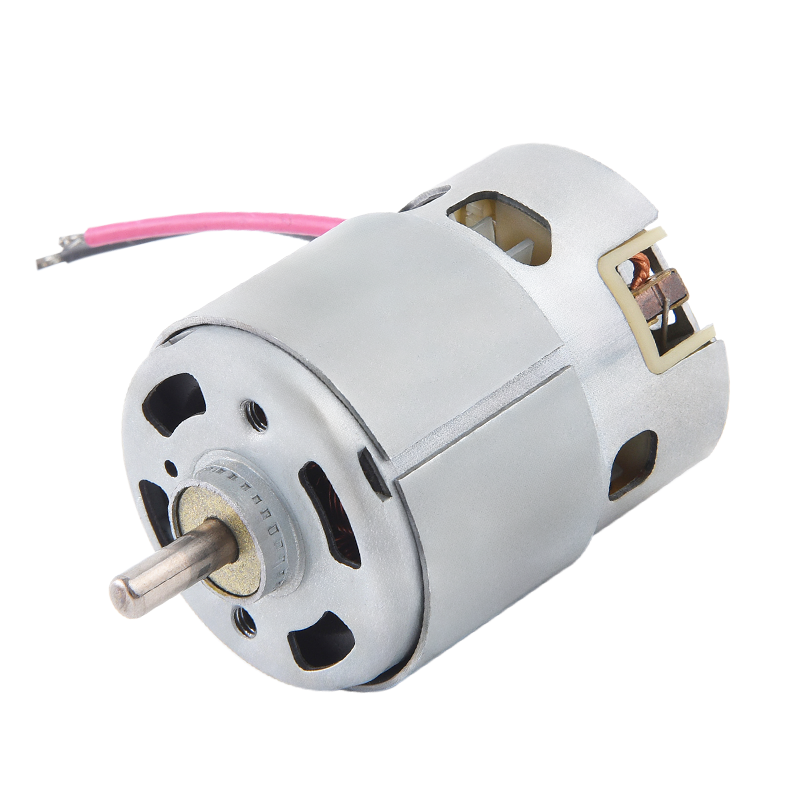
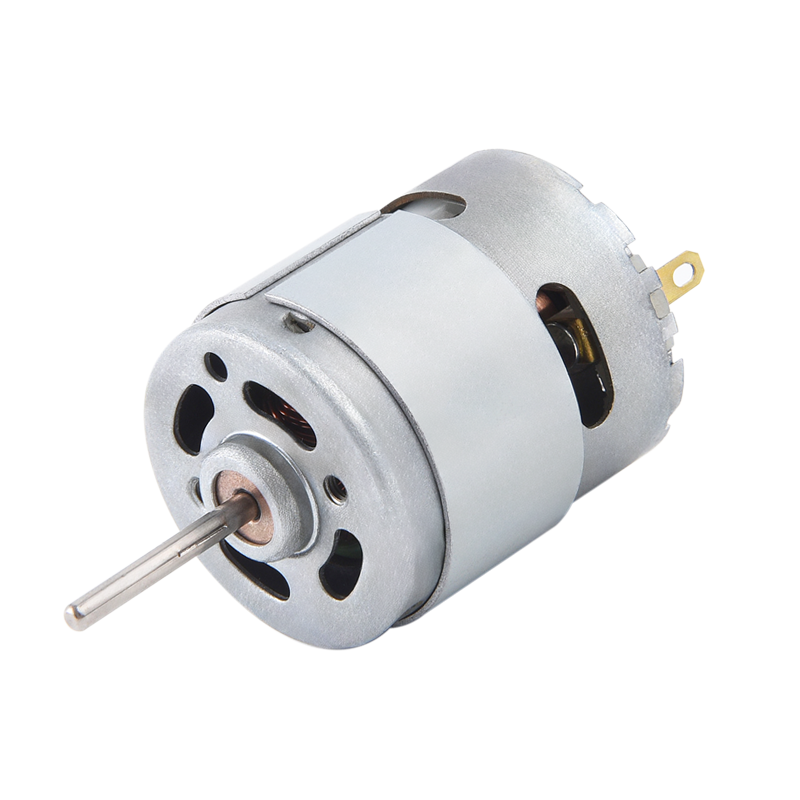
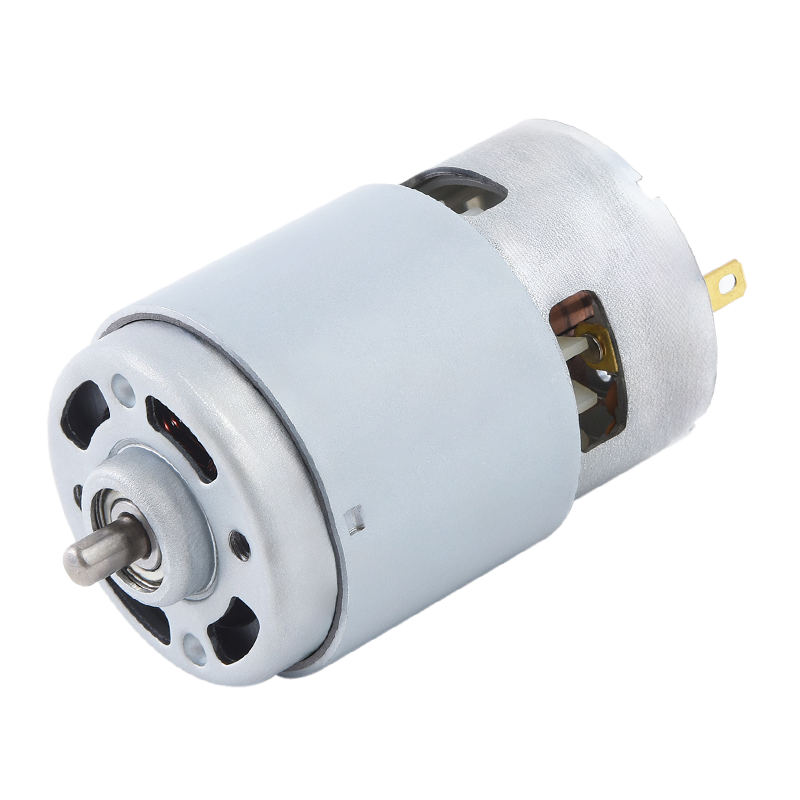
The motor is the heart of a cooling fan. It converts electrical energy into rotational motion and, through the blades, into airflow. Most small fans rely on direct current motors, particularly in portable and battery-operated equipment. A brushed DC motor has a simple construction: a rotating armature, permanent magnets, and a commutator that switches current as the armature turns. The current in the armature creates magnetic fields that push against the magnets, producing continuous rotation. For a cooling fan, a brushed DC motor is often chosen because it is compact, reliable, and cost-effective.
Brushless DC motors, on the other hand, replace the brushes and commutator with an electronic controller. This design reduces friction and noise, and it can improve efficiency and lifespan. In a cooling fan, a brushless motor is especially valuable for continuous operation, such as a fan that must run inside an appliance for years. However, it also requires a small controller board, which adds a little to the system cost.
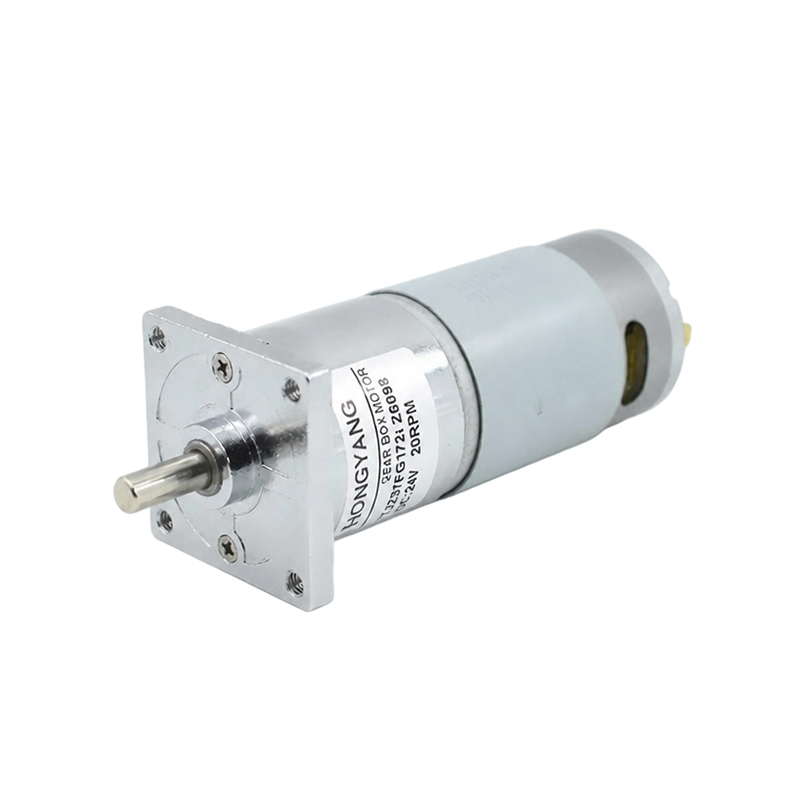
For household fans and many small electronics, the motor must be compact enough to fit into tight spaces, yet powerful enough to move sufficient air. A typical example in our own product line is a high-torque brushed DC motor made for fan applications. It delivers consistent torque while keeping the overall size small.
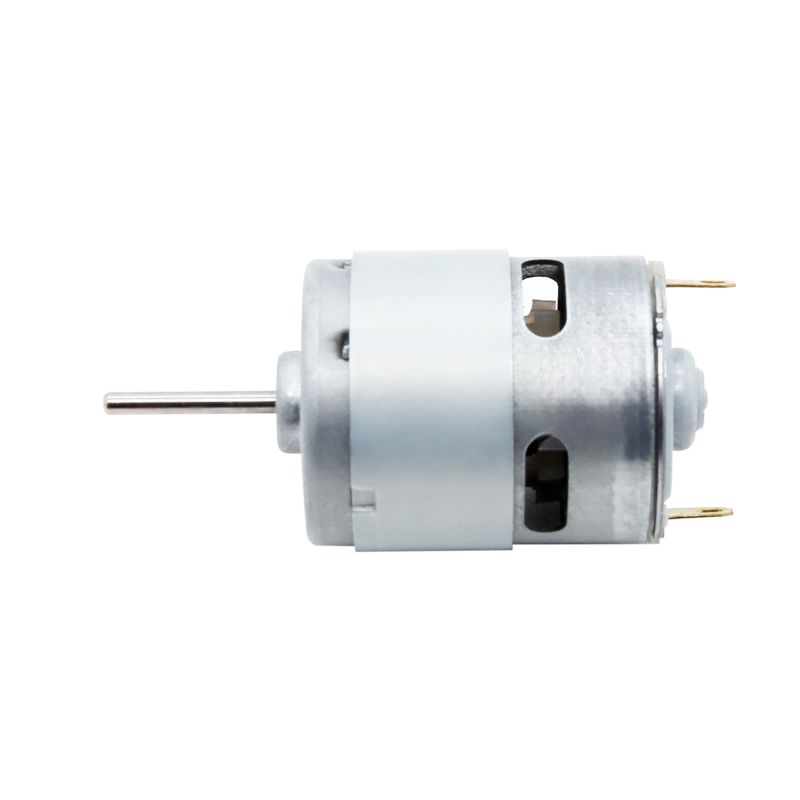 RS-360 Small Brushed DC Motor for Fan ApplicationsThis compact high-torque motor suits tight spaces while delivering consistent airflow. With copper windings and bearing options, it supports continuous operation in cooling systems.View Product →
Cooling Fans in Common Applications
Cooling fans can be found in everything from car radiators to laptop chassis. In an automobile, the radiator fan moves air through the cooling pack when the car is stopped or moving slowly. It ensures that the engine coolant still loses heat to the atmosphere even when the forward speed of the car cannot provide enough natural airflow. Many electric radiator fans are controlled by a temperature switch or the engine control unit, so they switch on only when the coolant temperature rises.
In a laptop or desktop PC, the cooling fan draws air through a heat sink placed on the processor. A temperature sensor adjusts fan speed to balance cooling and noise. In handheld fans, a tiny motor spins plastic blades that move air toward your face or neck; the airflow does not lower the room temperature, but it makes the person feel cooler by supporting sweat evaporation.
Home appliances offer some of the most familiar examples. The electric fan in a living room is a direct illustration of the same principle: a motor spins the blades, the blades move air, and the air carries heat away from your skin. Selecting the right motor for each of these applications depends on voltage, airflow requirements, and the expected operating life.
Selecting a Motor for a Cooling Fan
When designing a cooling system, the fan blade and the motor should be considered together. The motor must be able to supply enough torque to spin the blades at the desired speed, especially if the fan faces airflow resistance from filters or grilles. Key selection factors include:
- Nominal voltage and power consumption
- Running speed and torque at the intended load
- Noise and vibration limits
- Size and mounting constraints
- Expected lifetime and operating duty cycle
Another simple rule is to allow a margin of reserve torque. A motor that barely starts at a lower voltage may fail in the field, especially as dust and wear increase friction. Our factory has manufactured a wide range of micromotors for fans and other small appliances for over three decades. That experience gives us a good grasp of how motor construction, magnetic materials, and commutator quality affect long-term fan performance.
Durability and Maintenance
Dust is the most common reason a cooling fan eventually slows down or stops. It accumulates on the blades and bearings, adds weight and drag, blocks airflow, and forces the motor to work harder. Over time, bearings can wear out and produce noise or wobble. A well-designed fan motor with durable bearings will last much longer in challenging environments. Regular cleaning, reasonable operating temperatures, and a motor chosen for the correct voltage range can all extend the life of a cooling system.
The cooling fan is a beautifully simple machine, but the details of its design matter. Airflow physics sets the stage, blade geometry shapes the airflow, and the motor provides the driving force. Whether you are troubleshooting an overheating device or developing a new product, a clear picture of how the cooling fan works makes it easier to choose the right components and the right partner. If you are working on a cooling fan project, a well-chosen micromotor can make the difference between a product that simply works and one that stays reliable for years.
News
-
Brush DC Motor Origins and Physical Foundations The Brush DC Motor is a pioneer in converting electrical energy into mechanical motion, and its history is closely intertwined with ...
READ MORE -
Who Is Still Using Brushed DC Motors These Days? Brushed DC motors in small appliances Despite the growing adoption of brushless motor technology, small appliances remain a major c...
READ MORE -
Brush DC Motor Applications in Consumer Electronics and Smart Devices Brush DC Motor Role in Consumer Electronics Design Brush DC Motor plays a critical role in the design and func...
READ MORE

Quick Links
 Home


Copyright © Yuyao Hongyang Micromotor Co., Ltd. All rights reserved.

