

 Eng

 русский
 Español


 Home / News / Industry News / how does a planetary gear work: Applications, Selection Criteria, and Practical Guidance
how does a planetary gear work: Applications, Selection Criteria, and Practical Guidance
 2026.10.22
 Industry News
Planetary gears are everywhere, even though most people never notice them. They sit inside power tools, car seats, robot vacuums, and countless other machines that need reliable torque in a small space. If you have ever wondered how a planetary gear works, the short answer is that it divides load, changes speed, and multiplies torque by passing rotation through a neat arrangement of gears. At Hongyang Micromotor, we have spent decades building micro motors and gear motors around this principle, so let us walk you through it.
What Is a Planetary Gear?
A planetary gear set, also called an epicyclic gear train, gets its name from the way the gears move like planets around a sun. The whole system is built around four main parts:
- Sun gear: the central gear that is usually connected to the input shaft.
- Planet gears: two or more gears that revolve around the sun gear and mesh with it.
- Planet carrier: a frame that holds the planet gears and allows them to orbit.
- Ring gear: an internal gear with teeth on the inside that surrounds the planet gears.
| Component | Position | Typical Role |
|---|---|---|
| Sun gear | Center | Input or output |
| Planet gears | Between sun and ring | Distribute load and transmit torque |
| Planet carrier | Connects planet gears | Output or input |
| Ring gear | Outer housing | Fixed, input, or output |
Because the planet gears are spaced evenly around the sun, they share the load between multiple contact points. That is why planetary gear trains can handle high forces without becoming large or heavy.
How Does a Planetary Gear Work?
The key to a planetary gear is that one of the three main elements can be held stationary while another drives the system. The third element then delivers the output. Depending on which part is fixed, the gear set can reduce speed, multiply torque, or reverse direction.
In the most common configuration, the sun gear is connected to the motor shaft, the ring gear is fixed to the housing, and the planet carrier drives the output. Let us look at the motion step by step:
- The motor turns the sun gear.
- The sun gear pushes the planet gears, making them rotate on their own axes.
- Because the ring gear is fixed, the planet gears also roll around the inside of the ring gear.
- This orbital motion carries the planet carrier around with it, producing a slower output rotation in the same direction.
Three Basic Operating Modes
- Sun input, ring fixed, carrier output: the standard reduction mode used in most gear motors.
- Sun fixed, ring input, carrier output: another reduction option that keeps the arrangement compact.
- Sun input, carrier fixed, ring output: a reversing mode that turns the ring gear in the opposite direction from the sun gear.
If no member is fixed, the gear set becomes a differential. Differential action is useful for splitting speed, but it is less common in micro motor applications.
How to Calculate Planetary Gear Ratio
For the standard configuration — sun gear input, ring gear fixed, and carrier output — the gear ratio is calculated with a simple formula:
Gear Ratio = 1 + (Ring Teeth / Sun Teeth)
The added "1" represents the orbital motion of the planet carrier. In a normal gear pair, the ratio is simply the number of teeth on the driven gear divided by the number of teeth on the driving gear. Here, the carrier contributes an extra rotation because it is always moving around the sun.
Let us use a realistic example. If the ring gear has 72 teeth and the sun gear has 24 teeth, the ratio is:
1 + (72 / 24) = 4
In other words, the sun gear must rotate four times to turn the carrier once. That 4:1 reduction produces roughly four times the output torque, minus efficiency losses.
Common Ratios in Compact Gear Motors
- Ring 60, Sun 30: 3:1 reduction
- Ring 72, Sun 24: 4:1 reduction
- Ring 80, Sun 20: 5:1 reduction
Multiple stages can be stacked. Two 4:1 stages create a 16:1 reduction, and three stages create 64:1. This is how a tiny motor can eventually turn a heavy load with surprising ease.
Advantages of Planetary Gears
Planetary gears offer a combination of benefits that make them ideal for small motor units:
- High torque density: torque is shared by several planet gears, so the gear set can handle more load for its size.
- Compact and coaxial: input and output share the same center line, which simplifies mounting and saves space.
- Wide ratio range: by changing tooth counts or adding stages, ratios from 3:1 to over 1000:1 can be achieved.
- Quiet operation: multiple meshing points reduce vibration and noise compared with a single gear pair.
- High efficiency: a single stage can reach roughly 95% to 97% efficiency, depending on lubrication and load.
Where Planetary Gears Are Used
Planetary gearboxes appear wherever space is tight and torque is critical. Industrial robots use them for precise joint movement. Office equipment such as shredders and printers relies on them to drive rollers. In vehicles, they power seat adjusters, window regulators, and electric tailgates that need smooth, strong motion.
Power tools are one of the most common places to meet a planetary gear. A compact electric screwdriver can drive screws into hard wood because a small brushed motor feeds a multi-stage planetary reduction. At Hongyang, we make the RS735 motor specifically for this demanding job, with a sealed construction that resists dust and debris.
 RS-735 Brushed DC Motor for Power Tools and AppliancesThis compact 42mm motor delivers up to 0.4N.m torque and 25,000 RPM, making it ideal for demanding planetary gear applications like electric screwdrivers.View Product →
Beyond tools, planetary gears are also found in electric curtains, hospital beds, vending machines, and automotive pumps. Whenever a product needs a compact motion solution, a planetary gear is often the first choice.
How Planetary Gears Work with Micro DC Motors
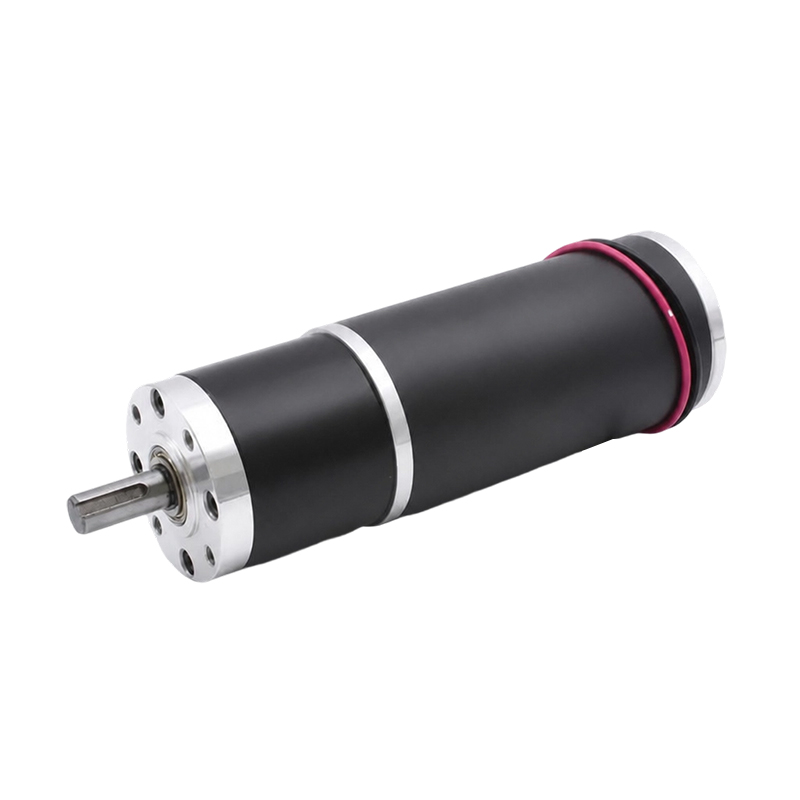
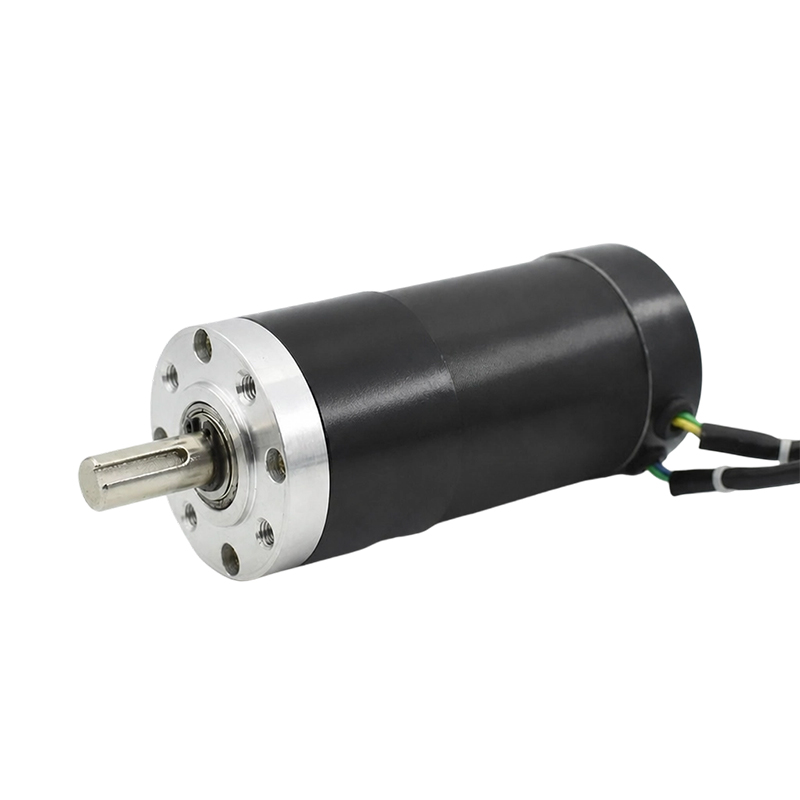
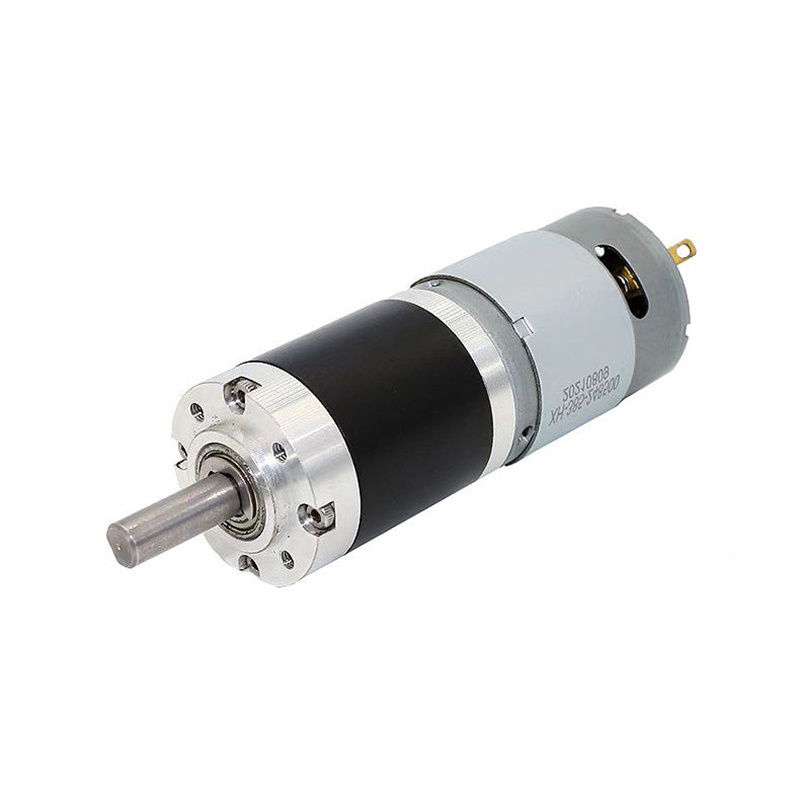
When a planetary gear is attached to a micro DC motor, the result is a gear motor. The motor provides high input speed, and the planetary stage converts it into strong, manageable output torque. This combination is the secret behind many compact automation products.
A gear motor can be arranged in one or multiple stages, depending on the target output speed and torque. Each stage adds significant reduction but also a small amount of friction. This is why careful gear selection matters as much as motor selection.
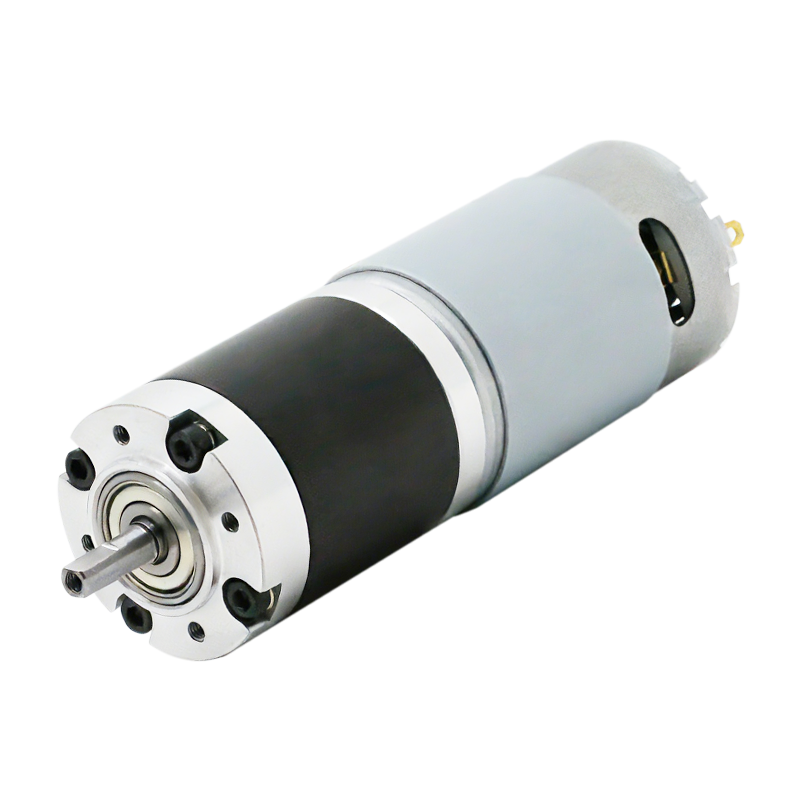 Hongyang Gear Motor Catalog with Customizable OptionsBrowse a range of planetary and worm gear motors, with multiple models, gear materials, encoders, and custom reduction ratios to match your exact motion requirements.View Product →
Understanding how a planetary gear works is the first step in choosing the right motor. The gear ratio, input speed, output torque, and load conditions all have to be evaluated together. That is where our engineering team comes in. With more than 30 years of micro motor experience, we help customers match a planetary gear motor to the exact requirement, whether it is a robotic actuator, a vending machine spiral, or an electric screwdriver.
Planetary Gears at Work Every Day
Planetary gears may look complex, but the core idea is simple: small gears rolling around a central gear create a compact and powerful reduction unit. Whether you are designing an electric screwdriver, a car tailgate, or a piece of laboratory automation, understanding this mechanism helps you make better motor choices.
At Hongyang Micromotor, we have been building micro motors and gear motors since 1988. If you are working on a new project and need a motor plus planetary gearbox that fits your budget, load, and speed, our engineers are ready to help.
News
-
Brush DC Motor Origins and Physical Foundations The Brush DC Motor is a pioneer in converting electrical energy into mechanical motion, and its history is closely intertwined with ...
READ MORE -
Who Is Still Using Brushed DC Motors These Days? Brushed DC motors in small appliances Despite the growing adoption of brushless motor technology, small appliances remain a major c...
READ MORE -
Brush DC Motor Applications in Consumer Electronics and Smart Devices Brush DC Motor Role in Consumer Electronics Design Brush DC Motor plays a critical role in the design and func...
READ MORE

Quick Links
 Home


Copyright © Yuyao Hongyang Micromotor Co., Ltd. All rights reserved.

