


 Eng
Eng 
 русский
 Español


Pump Selection Guide
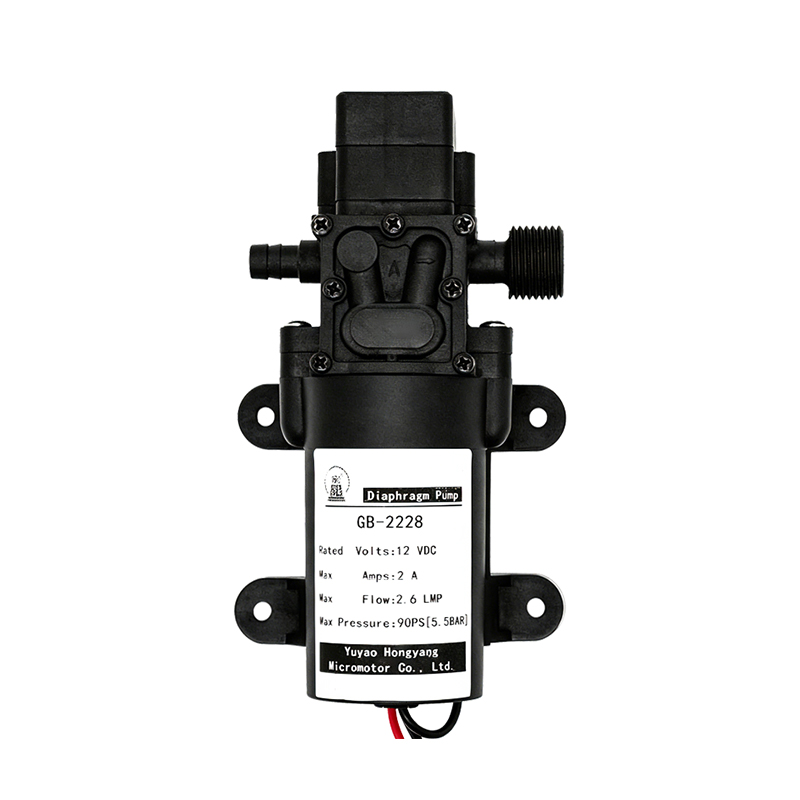
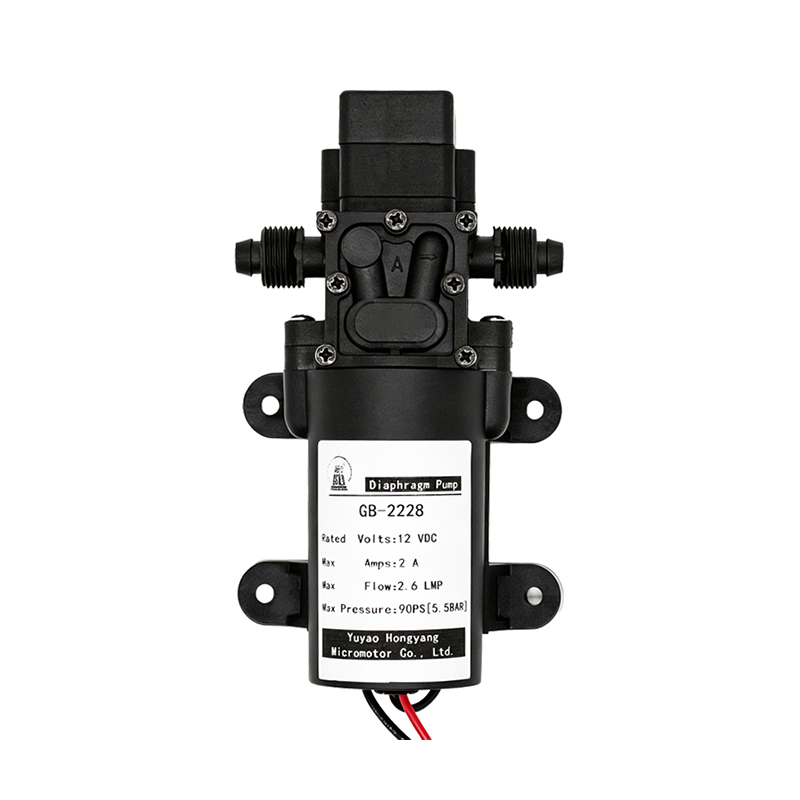
A diaphragm water pump moves fluid by flexing a rubber or thermoplastic membrane back and forth inside a sealed chamber, using check valves to force liquid in one direction only. That single mechanical idea is why diaphragm pumps self-prime without being filled first, run dry without burning out, and handle everything from clean tap water to gritty, chemical-laden liquid that would wreck a centrifugal impeller in a season.
Direct Answer
If your job involves intermittent use, variable suction lift, or fluid that isn't perfectly clean, a diaphragm pump is very likely the right tool. If you need continuous high-volume flow of clean water with minimal noise, a centrifugal pump usually costs less to run over the same period.
Most 12V/24V DC diaphragm pumps on the market today deliver 1–5.5 GPM at 45–100 PSI, draw 2–17A, and self-prime from 4–6 vertical feet — figures worth checking against your own tank height, hose run, and daily duty cycle before you buy.
How a Diaphragm Pump Actually Moves Water
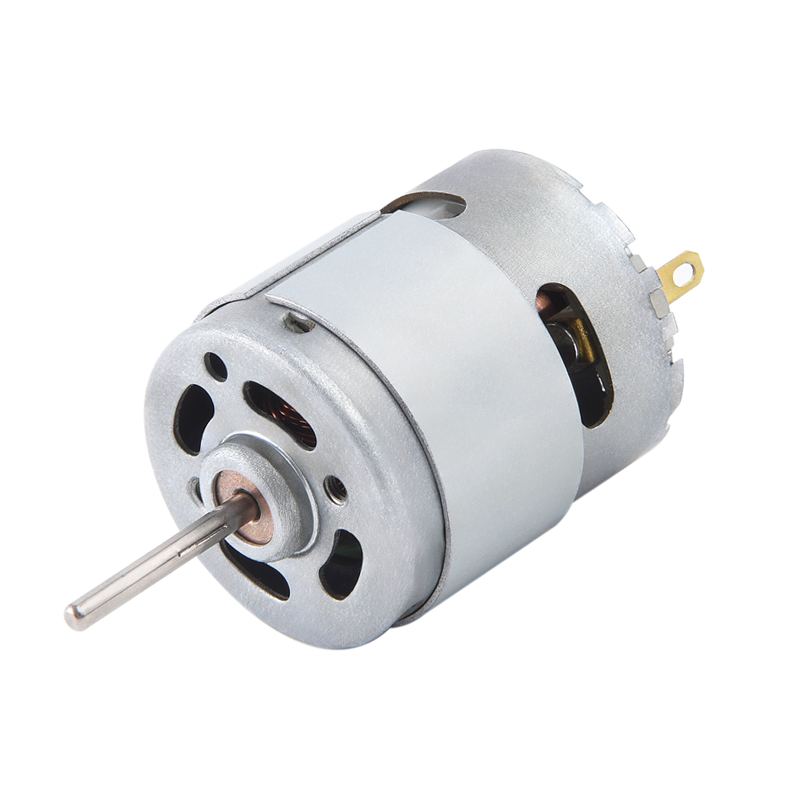
Inside the pump head sits a flexible diaphragm connected to a drive mechanism — typically an eccentric cam or a wobble plate turned by a brushed or brushless DC motor. As the motor spins, the diaphragm pulls back, dropping pressure in the chamber and drawing water in through an inlet check valve. On the return stroke, the diaphragm pushes forward, closing the inlet valve and forcing water out through the outlet valve. Most consumer and light-industrial units use three or five diaphragm chambers firing in sequence, which smooths out the pulsation that a single-chamber design produces.
Because the diaphragm itself creates the seal, there's no rotating shaft seal to wear out and no impeller clearance to maintain — the two most common failure points in centrifugal pumps. This is also why diaphragm pumps tolerate running dry for short periods: there's no spinning metal-on-metal contact generating heat.
Matching Flow Rate and Pressure to the Job
Undersizing a diaphragm pump is the single most common installation mistake — the pump runs constantly at its ceiling, overheats, and wears out early. Oversizing wastes battery capacity and adds cost for headroom you'll never use. The table below reflects typical DC diaphragm pump output ranges by voltage class, drawn from current specifications across major manufacturers.
| Voltage | Flow Rate | Rated Pressure | Current Draw | Typical Use |
|---|---|---|---|---|
| 12V DC | 1.0–3.5 GPM | 45–80 PSI | 2–7.5A | RV, small boat, portable sprayers |
| 12V DC, high output | 5.0–5.5 GPM | 60–100 PSI | 10–17A | Pressure washing, deck cleaning, larger RVs |
| 24V DC | 3.0–6.0 GPM | 50–90 PSI | 5–9A | Commercial vehicles, agricultural spraying |
| Micro DC (mini diaphragm) | 0.1–1.0 GPM | 15–45 PSI | 0.3–1.5A | Dosing, misting, small appliances, instruments |
As a sizing rule: take your fixture's required flow rate (in GPM) at the pressure it needs to operate correctly, then choose a pump rated at least 15–20% above that figure. Diaphragm pump output drops as backpressure rises, so the flow rate printed on the box is almost always the open-flow number — measured with no restriction on the outlet — not what you'll see once water is pushing through a hose, fittings, and a nozzle.
Common Sizing Error
A pump rated "5.5 GPM" at 70 PSI will not deliver 5.5 GPM once it's working against a long hose run and a restrictive spray nozzle. Size against the pressure you actually need at the point of use, not the headline flow number.
Diaphragm vs. Centrifugal: Choosing the Right Type
These two pump families cover the large majority of water-handling applications, and they're suited to genuinely different jobs rather than one simply outperforming the other.
Diaphragm Pump
- Self-primes without manual filling
- Runs dry briefly without damage
- Handles solids, sediment, and viscous or corrosive fluid
- Delivers steady pressure at variable flow (demand-switch capable)
- Compact and lightweight for its output
Centrifugal Pump
- Higher continuous flow at lower cost per gallon moved
- Smoother, pulsation-free output
- Quieter at sustained high volume
- Must stay primed — loses suction if it runs dry
- Impeller wears quickly with abrasive or gritty fluid
In practice, many larger water systems run both: a centrifugal pump handles bulk transfer of clean water, while a diaphragm pump manages demand-based delivery, dosing, or any line carrying fluid that isn't perfectly clean.
Brushed vs. Brushless DC Motors in Diaphragm Pumps
The motor driving the diaphragm affects the pump's lifespan and efficiency as much as the pump head design does. This matters directly when comparing two pumps with identical GPM and PSI ratings on paper.
Brushed DC Motors
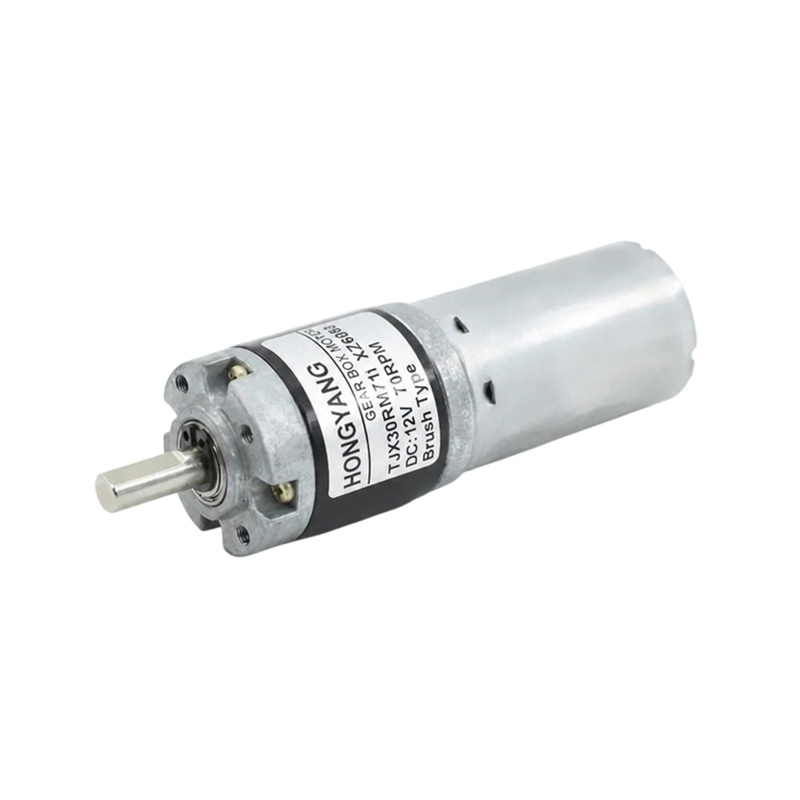
Lower upfront cost and simple control circuitry make brushed motors common in entry-level and mid-range diaphragm pumps. The tradeoff is physical brush wear: carbon brushes contact a spinning commutator, generating friction and eventually needing replacement. For intermittent residential or RV use — a few cumulative hours a week — this is rarely a practical concern within the pump's expected service life.
Brushless DC (BLDC) Motors
Because there's no physical brush-commutator contact, BLDC-driven diaphragm pumps run cooler, quieter, and typically last several times longer under continuous or high-duty-cycle use. They also allow finer electronic speed control, which is why premium dosing and metering diaphragm pumps increasingly specify BLDC drives. The higher unit cost pays for itself in applications running many hours per day — commercial spraying, continuous dosing lines, or vehicle-mounted systems that see daily use.
- Choose brushed for occasional-use pumps where upfront cost matters more than a marginal lifespan gain.
- Choose brushless for pumps that will run for extended periods daily, or where precise flow control is required.
- Check the duty cycle rating on the datasheet — most diaphragm pumps specify a maximum continuous run time (commonly 3–5 hours) regardless of motor type.
Sizing Checklist Before You Buy
Working through these points before ordering avoids the two costliest mistakes: a pump that's too weak for the job, and a pump that's oversized and short-cycles constantly.
- Required flow at working pressure — not the open-flow number on the label.
- Vertical lift from source to pump — confirm it's within the pump's rated self-priming height, typically 4–6 feet.
- Fluid characteristics — clean water, sediment-bearing, or chemically active; this determines diaphragm and valve material (Santoprene, Viton, EPDM, or PTFE).
- Duty cycle — continuous operation needs a pump and motor rated for it, not an intermittent-use unit pushed past its limits.
- Power supply — 12V and 24V DC draw different current for the same output; confirm your wiring and fuse rating match the pump's locked-rotor current, not just its running current.
- Port size and fitting compatibility — most residential units use 1/2 inch MNPT; mismatched fittings are a common source of leaks at installation.
Maintenance That Extends Service Life
Diaphragm pumps need less maintenance than most positive-displacement designs, but a handful of habits meaningfully extend service life:
- Flush after chemical use. Running clean water through the pump after dosing or spraying chemicals prevents residue from stiffening the diaphragm material over time.
- Inspect the inlet strainer regularly. A clogged strainer forces the pump to work harder against restricted suction, which is a common cause of premature motor wear.
- Avoid running dry beyond the rated limit. Brief dry-running is safe by design, but sustained dry operation still generates heat that shortens diaphragm life.
- Match the diaphragm material to the fluid. EPDM suits general water use; Viton handles fuels and stronger chemicals; verify compatibility before switching applications.
Choosing Between Pump and Motor Specs
A diaphragm pump's rated output is only as reliable as the motor driving it. When comparing pumps with similar GPM and PSI figures, checking the motor type — brushed or brushless — and its duty-cycle rating gives a clearer picture of real-world service life than the headline flow number alone. For applications where the pump runs daily rather than occasionally, that motor spec is usually the deciding factor.

 Home
Home



