

 Eng
Eng 
 русский
 Español


What Is a Brushless DC Motor? How It Works & Key Types
 2026.03.25
 Industry News
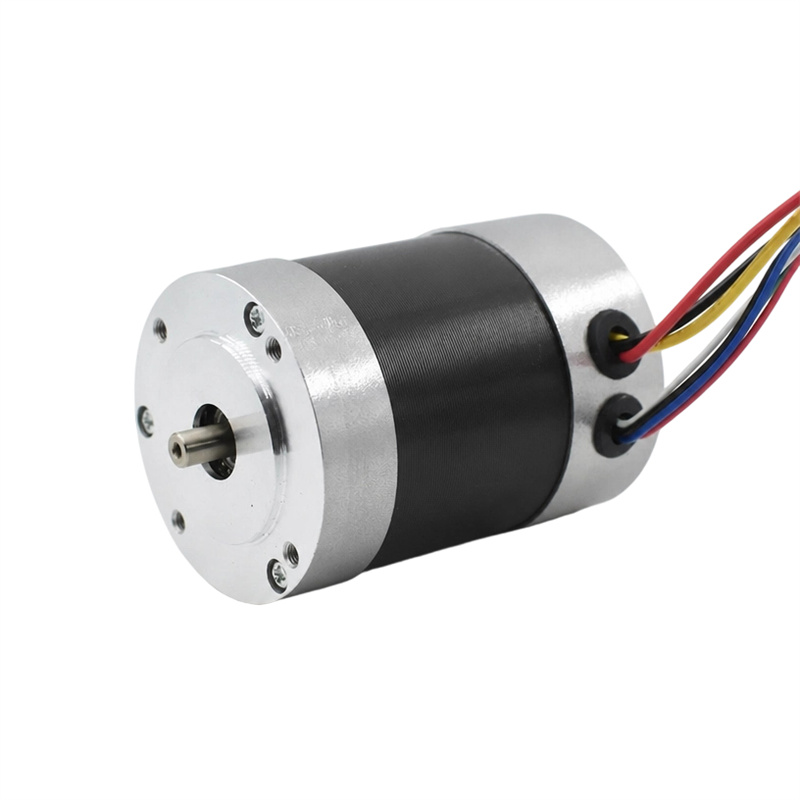
A brushless DC motor (BLDC motor) is an electrically commutated synchronous motor powered by direct current, where the traditional mechanical brush-and-commutator system is replaced by electronic switching. The result is a motor that runs cooler, lasts longer, operates more quietly, and delivers higher efficiency — typically 85–93% compared to 75–80% for equivalent brushed DC motors. These advantages have made BLDC motors the dominant choice in applications ranging from computer cooling fans to electric vehicles and industrial automation.
How a Brushless DC Motor Works
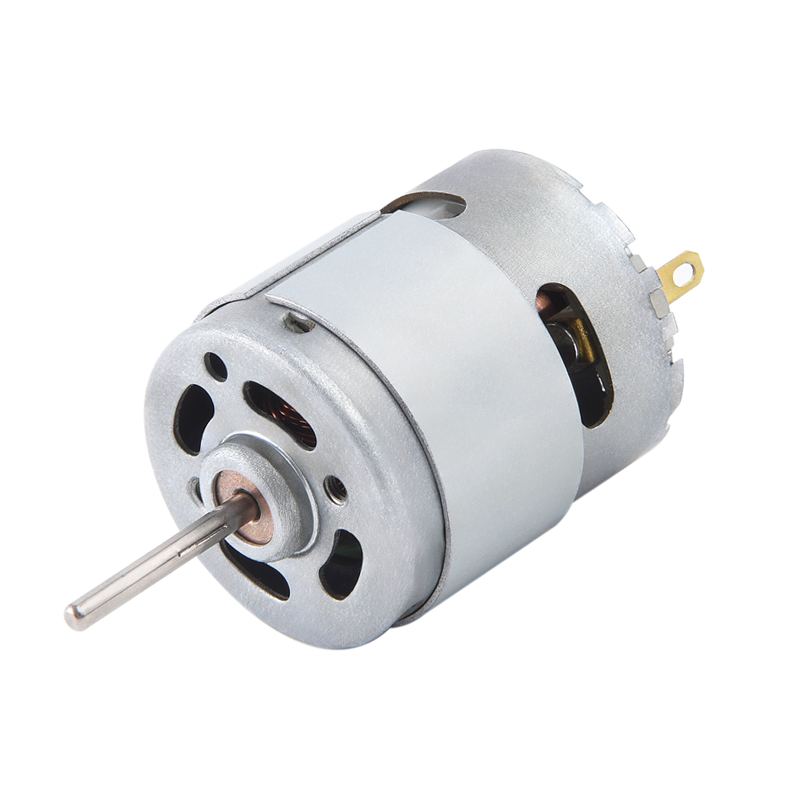
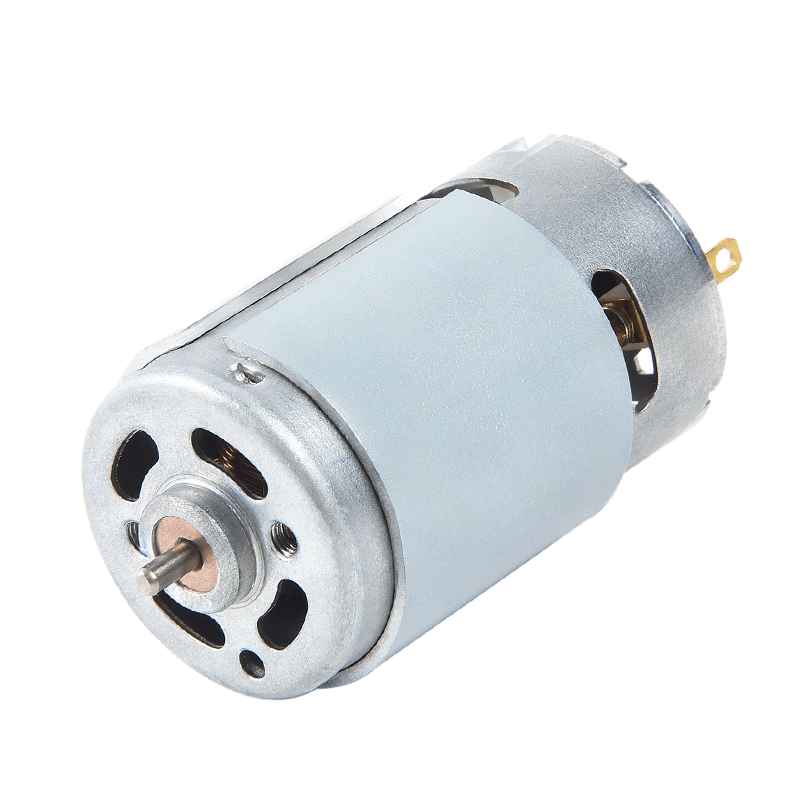
In a conventional brushed DC motor, carbon brushes physically slide against a rotating commutator to switch current direction in the rotor windings, creating continuous rotation. This mechanical contact generates friction, heat, and wear. A brushless DC motor eliminates this entirely.
In a BLDC motor, the permanent magnets are on the rotor and the wound coils (stator windings) are stationary. An electronic controller — typically using MOSFETs or IGBTs — energizes the stator coils in a precise sequence, generating a rotating magnetic field that the rotor's permanent magnets follow. A Hall-effect sensor or encoder monitors rotor position so the controller knows exactly when to switch each phase.
The Commutation Sequence
Most BLDC motors use three-phase winding in a star (Y) or delta configuration. The controller fires two of the three phases at any given moment, cycling through six switching states per electrical revolution. This six-step commutation produces the rotating magnetic field. In sensorless BLDC drives, back-EMF (electromotive force) detected in the unpowered phase replaces Hall sensors — reducing cost and enabling operation in extreme temperatures where sensors would fail.
Core Components of a Brushless DC Motor
- Stator: The stationary outer assembly carrying laminated iron cores wound with copper coils. Core losses and copper losses determine motor efficiency; high-grade silicon steel laminations reduce eddy current losses.
- Rotor: The rotating inner assembly fitted with rare-earth permanent magnets — typically neodymium-iron-boron (NdFeB) — which provide high flux density in a compact volume.
- Hall-Effect Sensors: Three sensors, spaced 120° apart, detect rotor magnetic pole position and feed signals to the ESC/driver for precise commutation timing.
- Electronic Speed Controller (ESC) / Driver: The brain of the system. It interprets position feedback, controls phase switching, regulates speed via PWM (pulse-width modulation), and protects against overcurrent and overtemperature.
- Bearings: Ball bearings (most common) or sleeve bearings support the rotor shaft; bearing quality directly affects noise levels and service life.
Brushless DC Motor vs. Brushed DC Motor: A Direct Comparison
| Parameter | Brushless DC Motor | Brushed DC Motor |
|---|---|---|
| Efficiency | 85–93% | 75–80% |
| Service Life | 10,000–30,000+ hours | 1,000–5,000 hours |
| Maintenance | Minimal (no brush replacement) | Periodic brush inspection/replacement |
| Noise & EMI | Low (no brush arcing) | Higher (brush sparking generates EMI) |
| Speed Control | Precise, wide range via ESC | Simpler voltage control |
| Power Density | Higher (heat in stator, easily dissipated) | Lower (heat generated in rotating rotor) |
| System Cost | Higher (requires driver electronics) | Lower upfront cost |
| Spark/Explosion Risk | None (safe for hazardous environments) | Present (brush arcing) |
Types of Brushless DC Motors by Rotor Configuration
Inner Rotor (Inrunner) BLDC Motor
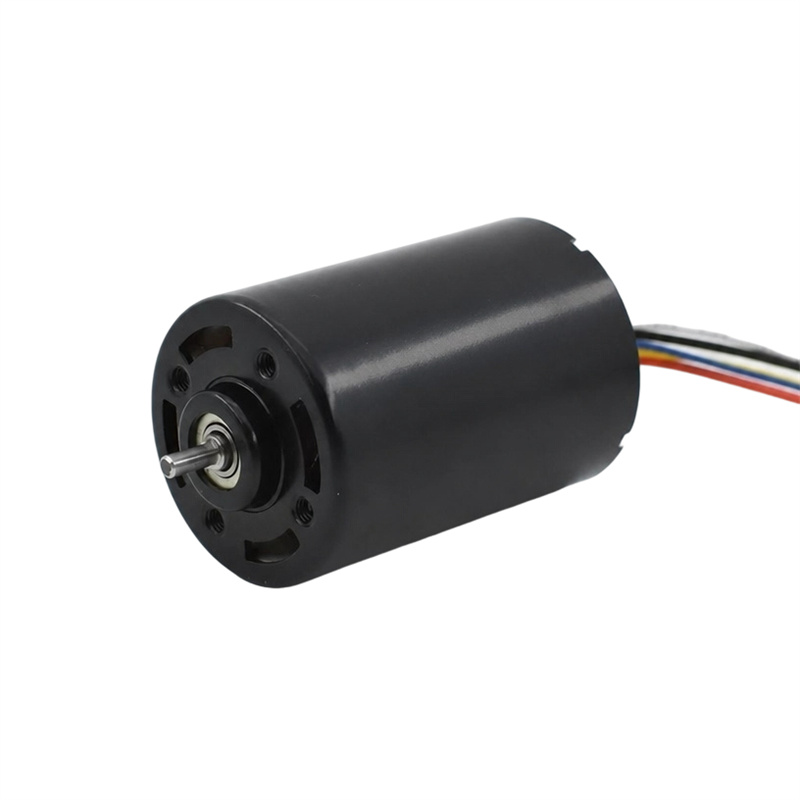
The rotor sits inside the stator, the conventional arrangement. Inrunner motors typically have lower rotor inertia, enabling faster acceleration and deceleration. They are well-suited for high-speed applications such as RC aircraft where RPMs can exceed 50,000 rpm. However, their smaller rotor diameter limits the torque arm, resulting in lower torque at equivalent power.
Outer Rotor (Outrunner) BLDC Motor
The rotor wraps around the outside of the stator. This geometry increases the rotor's effective radius, generating significantly more torque at lower speeds without a gearbox. Outrunner motors are the standard choice for drone propulsion, direct-drive turntables, and e-bike hub motors. A typical outrunner drone motor rated at 1000 KV (1000 rpm/volt) can deliver 3–5× the torque of a comparable inrunner at the same power rating.
Axial Flux BLDC Motor
The magnetic flux travels parallel to the motor shaft rather than radially. This architecture produces an extremely thin, disc-shaped motor with exceptional power-to-weight ratio — some axial flux designs achieve power densities above 5 kW/kg, making them attractive for electric vehicles, aircraft, and space-constrained industrial equipment.
Micro Brushless DC Motor: Precision in a Miniature Package
A micro brushless DC motor applies BLDC technology at a very small scale — typically with outer diameters ranging from 4 mm to 22 mm and output power from under 1 W to around 50 W. The elimination of brushes is especially critical at this scale because miniaturized brushes wear out extremely quickly and generate particle contamination that is unacceptable in medical or optical equipment.
Key Specifications of Micro BLDC Motors
| Diameter | Typical Voltage | No-Load Speed | Continuous Power | Typical Application |
|---|---|---|---|---|
| 4–6 mm | 3.3–5 V | 50,000–100,000 rpm | < 1 W | Micro drones, wearables |
| 8–12 mm | 5–12 V | 20,000–60,000 rpm | 1–5 W | Medical devices, dental tools |
| 16–22 mm | 12–24 V | 10,000–30,000 rpm | 5–50 W | Robotics, lab automation, camera gimbals |
Where Micro Brushless DC Motors Are Used
- Medical and surgical tools: Dental handpieces, endoscopes, infusion pumps, and surgical robots require motors that produce zero particulate contamination and sustain sterilization cycles — demands that only brushless designs can meet reliably.
- Miniature drones and UAVs: Micro BLDC motors in the 8–16 mm range drive propellers on nano-drones and indoor UAVs where weight is measured in grams.
- Camera stabilization (gimbals): Smooth, low-cogging micro BLDC motors maintain camera orientation without introducing vibration into footage.
- Laboratory and analytical instruments: Centrifuges, micropumps, and spectroscopy equipment rely on precise speed control and long maintenance intervals.
- Consumer electronics: Hard disk drive spindle motors, notebook cooling fans, and electric toothbrushes all use miniaturized BLDC technology.
BLDC Motor Performance Parameters You Must Understand
Selecting a brushless DC motor without understanding its core specifications leads to underperformance or premature failure. The most critical parameters are:
- KV Rating (rpm/V): Defines how many RPM the motor produces per volt of supply with no load. A 1500 KV motor at 12 V delivers approximately 18,000 rpm unloaded. Lower KV = more torque; higher KV = more speed.
- Continuous Current Rating (A): The maximum sustained current without exceeding thermal limits. Exceeding this rating degrades winding insulation, causing irreversible damage within minutes.
- Stall Torque (N·m or mN·m): The maximum torque the motor produces at zero speed. This limits what gearboxes or loads can be directly driven.
- Back-EMF Constant (Ke): Closely related to KV; determines how much voltage the motor generates per unit of speed. Critical for driver design and regenerative braking calculations.
- Number of Poles: More poles = smoother torque at low speeds but limits maximum RPM. Two-pole motors can reach extremely high speeds; 14-pole motors provide smooth low-speed torque for direct-drive applications.
- Thermal Resistance (°C/W): Indicates how quickly the motor heats up per watt of loss. Motors with low thermal resistance (good heat dissipation) tolerate higher continuous loads.
How to Select the Right Brushless DC Motor
- Define the load torque and speed requirement. Calculate the operating point: what torque (N·m) is needed at what speed (rpm)? This sets the power requirement: P = T × ω.
- Choose inner rotor or outer rotor. High-speed, low-torque loads favor inrunners. Low-speed, high-torque direct-drive loads favor outrunners. If a gearbox is acceptable, either configuration works.
- Select voltage based on system bus. Match motor KV to your supply voltage so the operating point falls within the motor's efficiency map. Running a high-KV motor on high voltage without load limits wastes energy and risks overspeeding.
- Verify thermal limits. Confirm continuous current rating exceeds your required current at the operating point with a margin of at least 20–30%.
- Choose sensored vs. sensorless commutation. Sensored motors (Hall sensors) excel in variable-load applications requiring smooth startup. Sensorless designs are simpler and more cost-effective for constant-speed applications like fans and pumps.
- Select a compatible driver/ESC. Match the driver's voltage range, current rating, and commutation type (sensored/sensorless) to the motor. A mismatched driver is the most common cause of BLDC system failure in field applications.
Common Applications of Brushless DC Motors by Industry
| Industry | Application | Why BLDC? |
|---|---|---|
| Automotive / EV | Traction motors, power steering, HVAC blowers | High efficiency, long service life, precise control |
| Consumer Electronics | HDD spindles, laptop fans, cordless power tools | Low noise, compact size, reliability |
| HVAC / Appliances | Inverter compressors, fans, washing machine drums | Variable speed control, energy savings up to 30% |
| Industrial Automation | Servo drives, conveyor systems, CNC spindles | Precise positioning, high duty cycle, low maintenance |
| Aerospace / Drones | UAV propulsion, actuators, reaction wheels | Power-to-weight ratio, reliability in harsh environments |
| Medical | Surgical robots, infusion pumps, ventilators | Zero brush particle contamination, sterilization compatibility |
Advantages and Limitations: An Honest Assessment
Advantages
- Longer operational life: Without brushes to wear, BLDC motors routinely achieve 20,000–30,000 hours MTBF (mean time between failures), often outlasting the equipment they are installed in.
- Higher efficiency across the speed range: Electronic commutation is optimized at every operating point; brushed motors lose efficiency at partial loads due to fixed brush contact resistance.
- Better thermal management: Heat is generated in the stationary stator, which can be directly heat-sinked to the motor housing — far more effective than cooling a spinning rotor.
- Low electromagnetic interference (EMI): No brush arcing means BLDC motors meet strict EMI standards (EN 55014, CISPR 11) without extensive external filtering.
- Safe in hazardous environments: No arcing makes BLDC motors suitable for flammable gas or dust environments where brushed motors would be prohibited.
Limitations
- Higher system cost: The motor itself may cost only marginally more than a brushed equivalent, but the required driver/ESC adds 30–100% to total system cost depending on power level.
- More complex control: Implementing smooth startup, torque ripple minimization, and field-weakening for above-rated-speed operation requires sophisticated firmware — a significant engineering effort.
- Rare-earth magnet dependency: NdFeB magnets are subject to supply chain constraints and price volatility; they also demagnetize above their Curie temperature (typically 80–120°C for standard grades).
- Cogging torque: At very low speeds, the interaction between stator slots and rotor magnets creates torque ripple ("cogging"), which must be mitigated through skewing or advanced control algorithms in precision positioning applications.
Future Trends in Brushless DC Motor Technology
BLDC motor technology continues to evolve rapidly, driven by the electrification of transportation and the expansion of robotics. Key development directions include:
- Integrated motor-driver modules: Combining the motor and its driver electronics into a single sealed unit simplifies installation and reduces wiring, already common in 22 mm and smaller micro BLDC motors.
- Wide-bandgap (WBG) semiconductor drivers: Silicon carbide (SiC) and gallium nitride (GaN) switching devices enable higher switching frequencies with lower losses, pushing system efficiency above 97% in premium EV applications.
- Ferrite magnet alternatives: Research into ferrite-based BLDC motors aims to reduce rare-earth dependency while maintaining competitive performance through optimized stator geometry.
- AI-based predictive maintenance: Real-time current and vibration signature analysis enables early detection of bearing wear and winding degradation, extending effective service life further beyond already impressive baseline figures.
News
-
Brush DC Motor Origins and Physical Foundations The Brush DC Motor is a pioneer in converting electrical energy into mechanical motion, and its history is closely intertwined with ...
READ MORE -
Who Is Still Using Brushed DC Motors These Days? Brushed DC motors in small appliances Despite the growing adoption of brushless motor technology, small appliances remain a major c...
READ MORE -
Brush DC Motor Applications in Consumer Electronics and Smart Devices Brush DC Motor Role in Consumer Electronics Design Brush DC Motor plays a critical role in the design and func...
READ MORE

Quick Links
 Home
Home


Copyright © Yuyao Hongyang Micromotor Co., Ltd. All rights reserved.

