

 Eng
Eng 
 русский
 Español


How Brushed DC Motors Work: Parts, Principles & Uses
 2026.04.01
 Industry News
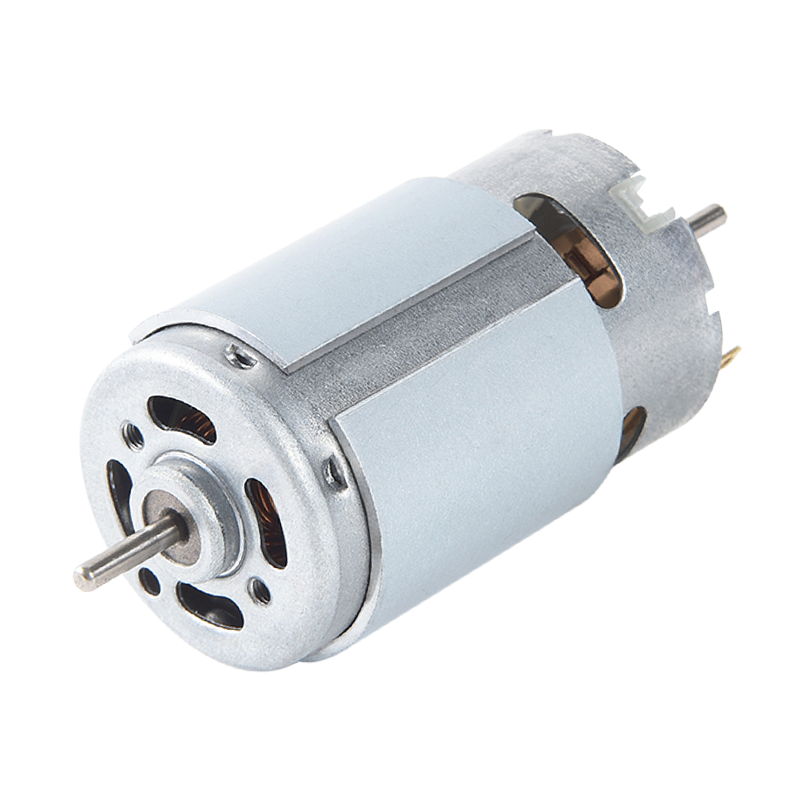
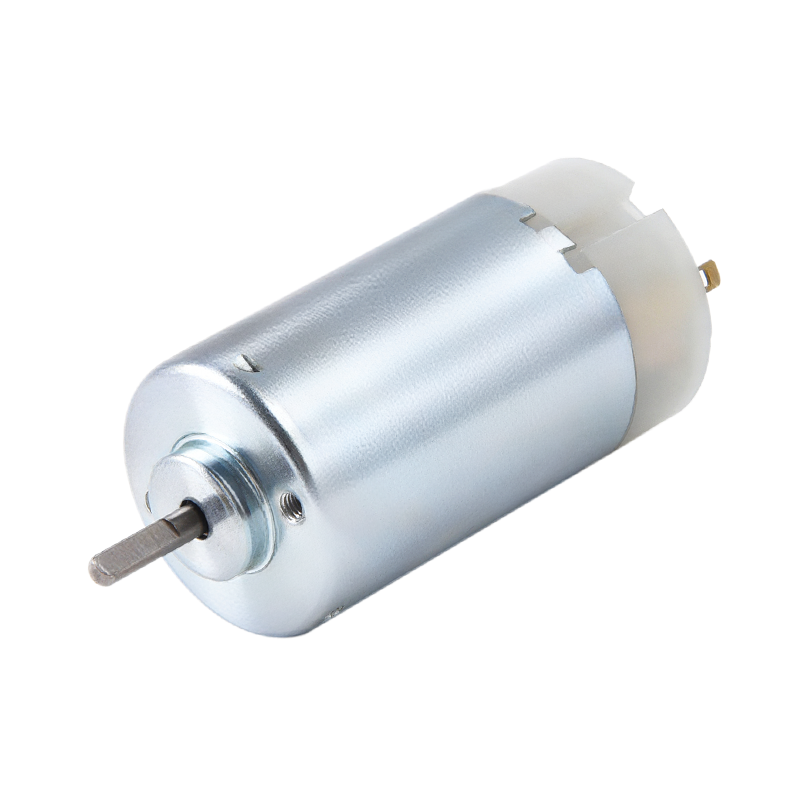
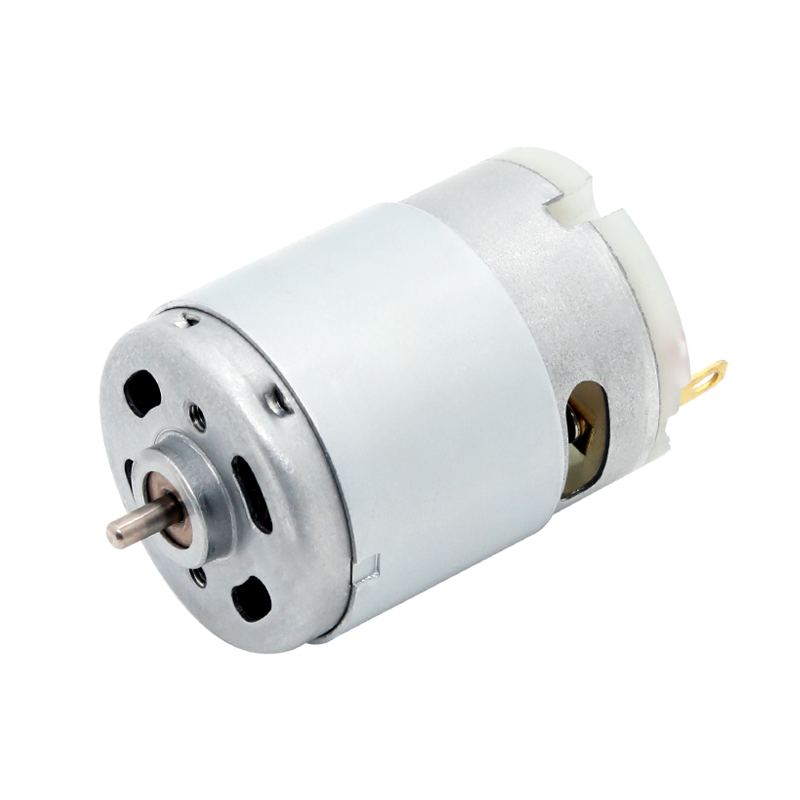
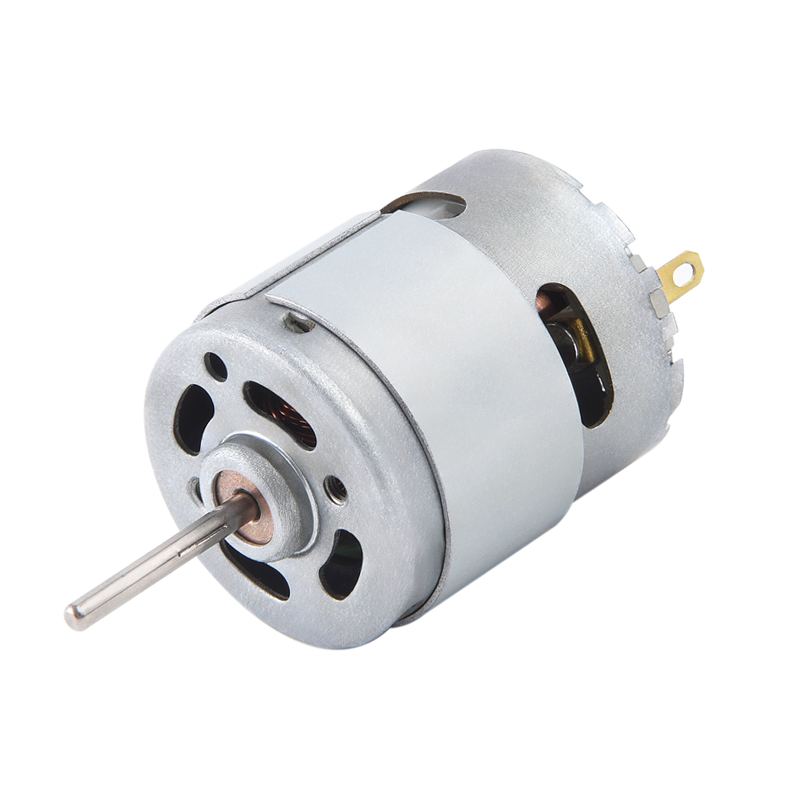
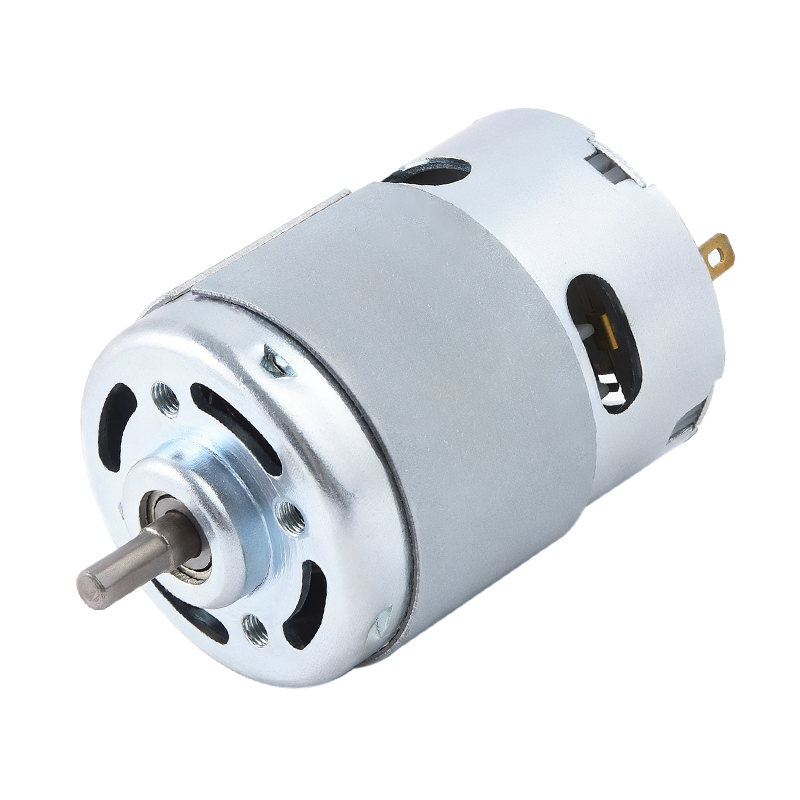
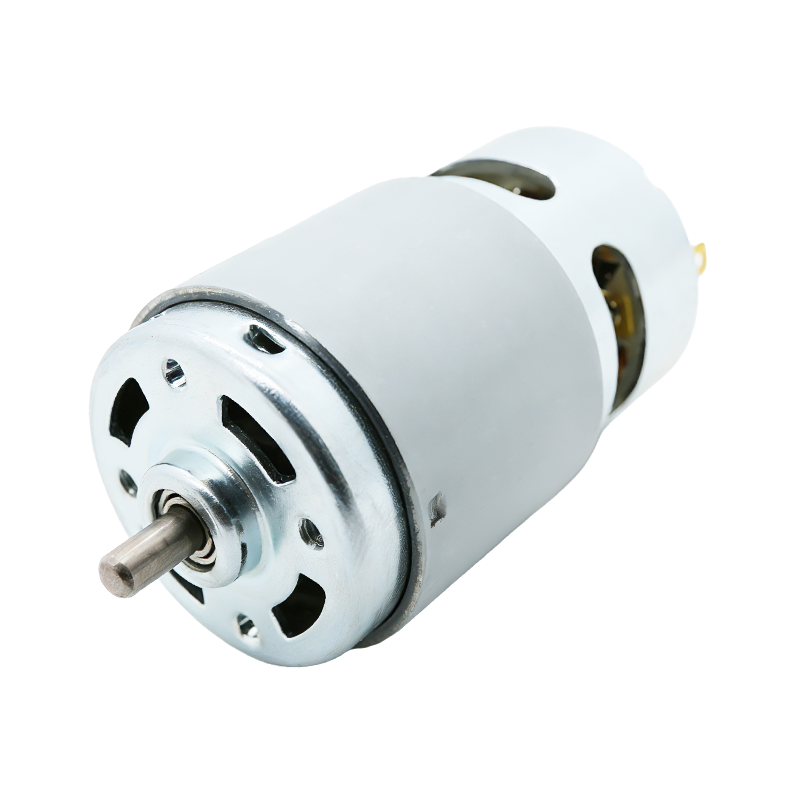
A brushed DC motor converts electrical energy into mechanical rotation by passing direct current through a rotating coil inside a magnetic field — the interaction between the electromagnetic force and the fixed magnetic field produces torque that spins the shaft. The "brush" in its name refers to the carbon or graphite contacts that maintain electrical connection to the rotating coil through a commutator, continuously switching current direction to sustain rotation. Brushed DC electric motors are among the oldest and most widely used motor types in history, powering everything from electric toothbrushes and power tools to automotive accessories and industrial actuators.
Core Components of a Brushed DC Electric Motor
Every brushed DC motor — regardless of size or application — contains the same fundamental parts working together. Understanding each component clarifies why the motor behaves the way it does under different operating conditions.
Stator (Field Magnet)
The stator is the stationary outer casing of the motor. It contains permanent magnets (in small motors) or wound field coils (in larger motors) that create a fixed magnetic field through which the rotor turns. Permanent magnet stators are used in motors up to roughly 2 kW; wound field stators appear in motors from fractional horsepower to hundreds of kilowatts where field strength must be adjustable.
Rotor (Armature)
The rotor — also called the armature — is the rotating component. It consists of a laminated iron core wound with multiple coils of copper wire. Lamination reduces eddy current losses by up to 60–70% compared to a solid iron core. The coils are connected to the commutator segments at specific intervals determined by the winding pattern. When current passes through the armature coils, the coils become electromagnets that react against the stator field, generating rotational force.
Commutator
The commutator is a cylindrical assembly of copper segments mounted on the rotor shaft and insulated from each other by mica strips. Each segment connects to a specific armature coil. As the rotor turns, different segments come into contact with the brushes, automatically reversing the current direction through the active coil — a process called commutation. Without commutation, the rotor would stall after a half-turn as the magnetic forces reversed direction. A typical small motor commutator has 3 to 12 segments; large industrial motors may have over 100.
Brushes
Brushes are stationary conductive blocks — usually made from carbon, graphite, or a carbon-copper composite — that press against the commutator surface with controlled spring force (typically 15–30 kPa contact pressure). They carry current from the external circuit into the rotating commutator. Carbon is the preferred material because it is self-lubricating, electrically conductive, and soft enough to wear before damaging the commutator surface. Brush life ranges from 500 hours in high-current motors to over 5,000 hours in lightly loaded applications.
Bearings and End Bells
The rotor shaft is supported at each end by ball or sleeve bearings housed in end bells (end caps). These maintain the precise air gap — typically 0.5mm to 2mm — between rotor and stator that is critical for magnetic efficiency. The air gap must be uniform; a variation of even 0.1mm can cause vibration, uneven torque, and premature wear.
How a Brushed DC Motor Works: Step-by-Step
The operating sequence of a brushed DC electric motor follows electromagnetic principles discovered by Michael Faraday and André-Marie Ampère in the early 19th century. Here is exactly what happens from power-on to steady rotation:
- DC voltage is applied to the brush terminals. Current flows from the positive brush, through the commutator segment in contact with it, into the armature coil, and back out through the negative brush.
- The current-carrying coil generates a magnetic field around itself according to the right-hand rule — the coil becomes an electromagnet with a north and south pole.
- The Lorentz force acts on the coil — the interaction between the armature's magnetic field and the stator's fixed field produces a force (F = BIL, where B is field strength, I is current, and L is conductor length) that pushes the coil sideways, generating torque.
- The rotor begins to spin as the force turns it toward magnetic alignment. If current stayed fixed in direction, rotation would stop at the aligned position.
- The commutator switches the current — just as the coil reaches alignment (the point of zero torque), the brushes cross from one commutator segment to the next, reversing current direction in the coil. The coil's poles flip, and the repulsion-attraction cycle restarts.
- Continuous rotation is sustained because the commutator keeps reversing current in each coil as it passes the neutral position, ensuring torque always acts in the same rotational direction.
With multiple armature coils — a typical motor has 9 to 24 coils — torque ripple is minimized, producing smooth, nearly constant output. The more coils present, the smoother the torque curve.
Back-EMF: The Motor's Built-In Speed Regulator
As the armature spins within the magnetic field, it acts simultaneously as a generator — the rotating coils cut through magnetic field lines and produce a voltage that opposes the applied supply voltage. This is called back electromotive force (back-EMF), and it is central to understanding brush DC motor behavior.
The governing equation is: V = E_back + I × R, where V is supply voltage, E_back is back-EMF, I is armature current, and R is armature resistance. At startup, back-EMF is zero, so current — and therefore torque — is at maximum. A 12V motor with 1Ω armature resistance draws 12 amperes at startup. As speed increases, back-EMF rises and limits current. At no-load steady speed, back-EMF nearly equals supply voltage and current drops to just enough to overcome friction losses.
This self-regulating behavior means that if load increases and the motor slows, back-EMF drops, current rises automatically, and torque increases to compensate — all without any external control circuit. It is one of the most practical advantages of brush DC motors.
Types of Brushed DC Motors and How They Differ
Brushed DC electric motors are classified by how their field winding (stator coil) is connected relative to the armature. Each configuration produces a distinctly different speed-torque relationship.
| Motor Type | Field Connection | Speed Regulation | Starting Torque | Typical Use |
|---|---|---|---|---|
| Permanent Magnet (PMDC) | No field winding; fixed magnets | Good (linear speed-torque) | Moderate | Toys, automotive, small tools |
| Series Wound | Field in series with armature | Poor (speed varies widely with load) | Very high | Cranes, traction, starters |
| Shunt Wound | Field in parallel with armature | Excellent (near-constant speed) | Moderate | Lathes, pumps, fans |
| Compound Wound | Both series and shunt windings | Good (balanced characteristic) | High | Elevators, compressors, presses |
Series Wound Motors: Maximum Starting Torque
In a series wound brushed DC motor, the field winding carries the full armature current. At startup, both field strength and armature current are at maximum simultaneously, producing starting torque 3 to 5 times higher than rated torque. This is why series motors powered diesel locomotives and early electric trams. The critical danger: under no-load conditions, field current drops and the motor can accelerate to destructive speeds — series wound motors must always operate under load.
Shunt Wound Motors: Near-Constant Speed
In a shunt wound motor, the field winding is connected directly across the supply voltage and draws constant current regardless of armature load. Field strength remains nearly fixed, so speed stays nearly constant from no-load to full load — typically varying less than 5–10% across the operating range. This makes shunt motors ideal for machine tools where spindle speed must remain steady.
Speed Control Methods for Brush DC Motors
One of the most significant practical advantages of brushed DC motors is how easily their speed can be controlled. Unlike AC induction motors that require variable frequency drives, brush DC motors respond to straightforward voltage and current manipulation.
Voltage Control (PWM)
Pulse Width Modulation (PWM) is the most efficient speed control method. A PWM controller rapidly switches supply voltage on and off — at frequencies typically between 1 kHz and 20 kHz — varying the duty cycle to adjust average voltage delivered to the motor. At 50% duty cycle, average voltage is half the supply; at 75%, three-quarters. The motor's inductance smooths the pulsed current into nearly continuous flow. PWM controllers achieve 90–97% efficiency, compared to 60–80% for resistive voltage dividers.
Armature Resistance Control
Adding resistance in series with the armature reduces voltage across it, lowering speed. This method is simple and inexpensive but wastes energy as heat across the resistor — efficiency drops proportionally with speed reduction. It is mainly used for low-cost, intermittent-duty applications where fine speed control is unnecessary.
Field Weakening (Above Base Speed)
In wound-field motors, reducing field current weakens the stator magnetic field. With less opposition from back-EMF, the motor accelerates beyond its rated base speed — a technique called field weakening. Speed increases of 2× to 4× base speed are achievable, though torque decreases proportionally. This is commonly used in industrial drives requiring wide speed range at constant power output.
H-Bridge for Reversible Control
Reversing a brushed DC motor simply requires reversing current direction through the armature. An H-bridge circuit — four switching transistors arranged in an H configuration — accomplishes this electronically. Combined with PWM, an H-bridge provides full four-quadrant control: forward drive, reverse drive, regenerative braking, and dynamic braking. H-bridge ICs like the L298N or DRV8833 are standard components in robotics and embedded systems.
Performance Characteristics: Torque, Speed, and Efficiency
The speed-torque curve of a brushed DC motor is one of its most important practical characteristics. For a permanent magnet DC motor, this relationship is linear and predictable:
- No-load speed (ω₀): Maximum speed when output shaft carries zero load; back-EMF nearly equals supply voltage; current is minimal
- Stall torque (T_stall): Maximum torque at zero speed; occurs when shaft is held stationary; current equals V/R (maximum possible); can be 5–10× rated continuous torque
- Rated operating point: The manufacturer-specified speed and torque where efficiency is optimized, typically at 70–80% of no-load speed
- Peak efficiency: Brushed DC motors typically achieve 75–85% efficiency at their rated operating point; permanent magnet types perform toward the higher end
A concrete example: a 24V PMDC motor rated at 100W with a no-load speed of 3,000 rpm and stall torque of 0.5 Nm delivers peak power at approximately 1,500 rpm and 0.25 Nm, drawing roughly 4.2 amperes at 80% efficiency.
| Power Class | Voltage Range | Typical Speed | Peak Efficiency | Common Applications |
|---|---|---|---|---|
| <10W (micro) | 1.5–9V | 3,000–15,000 rpm | 50–65% | Toys, hobby, small fans |
| 10W–500W | 12–48V | 1,000–6,000 rpm | 70–83% | Power tools, robotics, automotive |
| 500W–10kW | 48–300V | 500–3,000 rpm | 80–88% | Industrial machinery, forklifts |
| >10kW (large) | 250–750V | 300–1,500 rpm | 85–92% | Rolling mills, traction drives |
Where Brushed DC Motors Are Used Today
Despite competition from brushless DC and AC induction motors, brushed DC electric motors remain dominant in applications where simplicity, low cost, or high starting torque outweigh their maintenance drawbacks. The global brushed DC motor market was valued at approximately $12 billion in 2023 and continues to serve critical roles across industries.
Automotive Applications
- Starter motors: series wound brush DC motors delivering stall torques of 100–300 Nm to crank internal combustion engines
- Window regulators, seat adjusters, mirror motors: low-voltage PMDC motors (12V, 10–30W)
- Windshield wiper motors: shunt wound for near-constant speed across varying blade loads
- HVAC blower motors: typically 12V PMDC, 50–150W, with resistive speed control
Power Tools and Consumer Products
- Cordless drills and screwdrivers: 12–20V PMDC motors producing 30–80 Nm torque at the chuck via gearbox reduction
- Angle grinders and circular saws: universal motors (a form of series wound DC motor that also runs on AC) at 5,000–10,000 rpm
- Vacuum cleaners: universal motors at 15,000–30,000 rpm for high suction power from a small package
- Electric toothbrushes and shavers: miniature PMDC motors below 1W operating at 3–6V
Industrial and Robotics Applications
- Conveyor and actuator drives where PWM control and simple reversing are needed
- Robotic joints in educational and entry-level platforms where cost and controllability matter more than efficiency
- Servo systems with encoder feedback for precise position control in CNC and medical devices
- Rolling mill drives and crane hoists where series wound motors provide massive starting torque
Brushed DC Motor vs Brushless DC Motor: Key Differences
The brushless DC (BLDC) motor uses electronic commutation via a controller rather than physical brushes and commutator. Both motor types are powered by DC and share similar electromagnetic principles, but their practical trade-offs differ substantially.
| Factor | Brushed DC Motor | Brushless DC Motor |
|---|---|---|
| Commutation | Mechanical (brushes + commutator) | Electronic (controller + sensors) |
| Efficiency | 75–88% | 85–95% |
| Maintenance | Regular brush replacement required | Virtually maintenance-free |
| Cost (motor only) | Low | Higher (30–100% more) |
| Controller required | Optional (simple resistive or PWM) | Mandatory (ESC or BLDC driver) |
| Lifespan | 500–5,000 hours (brush-limited) | 10,000–50,000+ hours |
| Noise and EMI | Higher (brush arcing generates EMI) | Lower |
| Speed control simplicity | Very simple (voltage adjustment) | Complex (requires firmware/sensors) |
The verdict: choose a brushed DC motor when low upfront cost, simple control, and high starting torque are priorities. Choose BLDC when the application demands long service life, high efficiency, or operation in sealed, spark-sensitive environments.
Common Failure Modes and How to Extend Brush DC Motor Life
Understanding failure modes helps engineers and technicians prevent costly downtime. The brushed DC electric motor has well-documented wear patterns that are predictable and manageable with proper maintenance.
Brush Wear
Brushes wear at a rate of approximately 0.01–0.05mm per hour of operation depending on current density, speed, and spring pressure. When brushes wear below their minimum length (typically 25–30% of original length), contact pressure drops, arcing increases, and commutator damage accelerates. Inspect brushes at every scheduled maintenance interval and replace them before they reach minimum length — replacing brushes costs a fraction of replacing a damaged commutator.
Commutator Damage
Excessive arcing — caused by worn brushes, contamination, or overcurrent — erodes commutator copper and pits the surface. A pitted commutator increases vibration, causes uneven brush wear, and reduces efficiency. Minor pitting can be corrected by machining the commutator on a lathe and undercutting the mica insulation to 0.5–1.0mm below the copper surface. Severe damage requires commutator replacement or motor rewinding.
Armature Winding Failure
Overheating from sustained overcurrent (operating above rated current for extended periods) degrades winding insulation. Class B insulation (standard) is rated to 130°C maximum winding temperature; Class F to 155°C; Class H to 180°C. Every 10°C above rated temperature roughly halves insulation life. Use motors with adequate thermal ratings for the duty cycle and install thermal protection (PTC thermistors or bimetallic switches) in critical applications.
Practical Life Extension Tips
- Never operate a brushed motor at stall for more than a few seconds — stall current is 5–10× rated current and generates extreme heat
- Keep brush spring pressure within the manufacturer's specified range — too light causes arcing; too heavy accelerates mechanical wear
- Run the motor through a "bedding-in" period at light load for the first 10–20 hours so brushes conform to the commutator surface profile
- Keep the motor clean and dry — carbon dust from brush wear is conductive and can cause short circuits if allowed to accumulate in the housing
- Add a snubber capacitor (typically 0.1µF ceramic) across brush terminals to suppress arcing-induced EMI in sensitive electronic environments
News
-
Brush DC Motor Origins and Physical Foundations The Brush DC Motor is a pioneer in converting electrical energy into mechanical motion, and its history is closely intertwined with ...
READ MORE -
Who Is Still Using Brushed DC Motors These Days? Brushed DC motors in small appliances Despite the growing adoption of brushless motor technology, small appliances remain a major c...
READ MORE -
Brush DC Motor Applications in Consumer Electronics and Smart Devices Brush DC Motor Role in Consumer Electronics Design Brush DC Motor plays a critical role in the design and func...
READ MORE

Quick Links
 Home
Home


Copyright © Yuyao Hongyang Micromotor Co., Ltd. All rights reserved.

