

 Eng
Eng 
 русский
 Español


Brushed vs Brushless DC Motor: Key Differences Explained
 2026.05.27
 Industry News
The core difference between brushed and brushless DC motors is how they transfer electrical current to generate motion. A brush DC motor uses physical carbon brushes and a commutator to deliver current to the rotor, while a brushless DC motor uses electronic controllers to switch current through fixed stator windings — eliminating mechanical contact entirely. This single design difference cascades into significant gaps in efficiency, lifespan, noise, maintenance, and cost.
In practical terms: brushless DC motors are more efficient (by 20–30%), last significantly longer (up to 6x), and run quieter — but cost more upfront and require more complex control electronics. Brushed DC motors are simpler, cheaper, and easier to control, making them the right choice in many cost-sensitive or low-duty-cycle applications. This guide breaks down every dimension of the comparison so you can choose the right motor for your needs.
How a Brush DC Motor Works
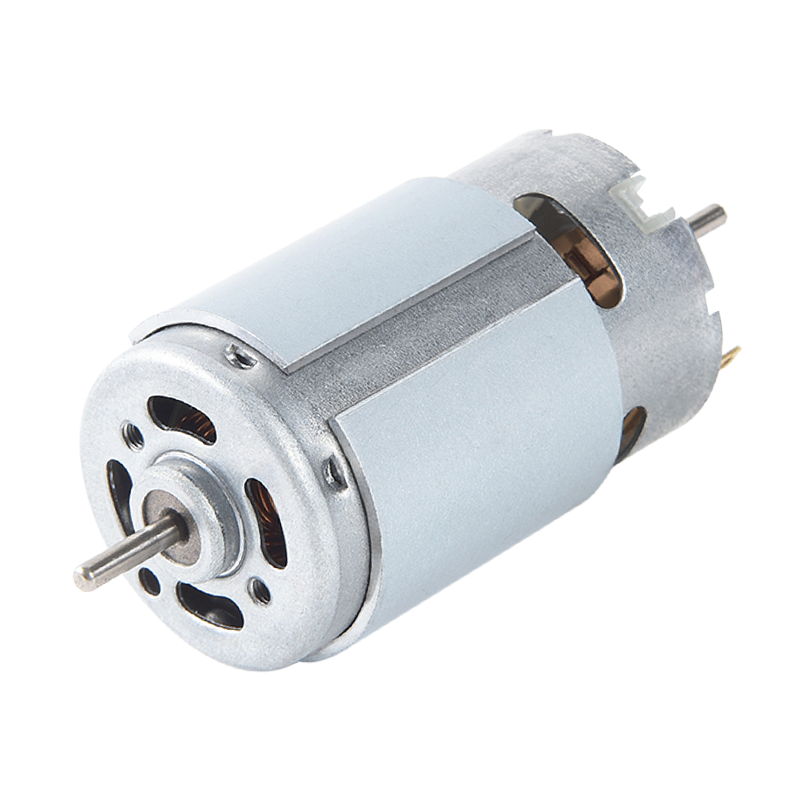
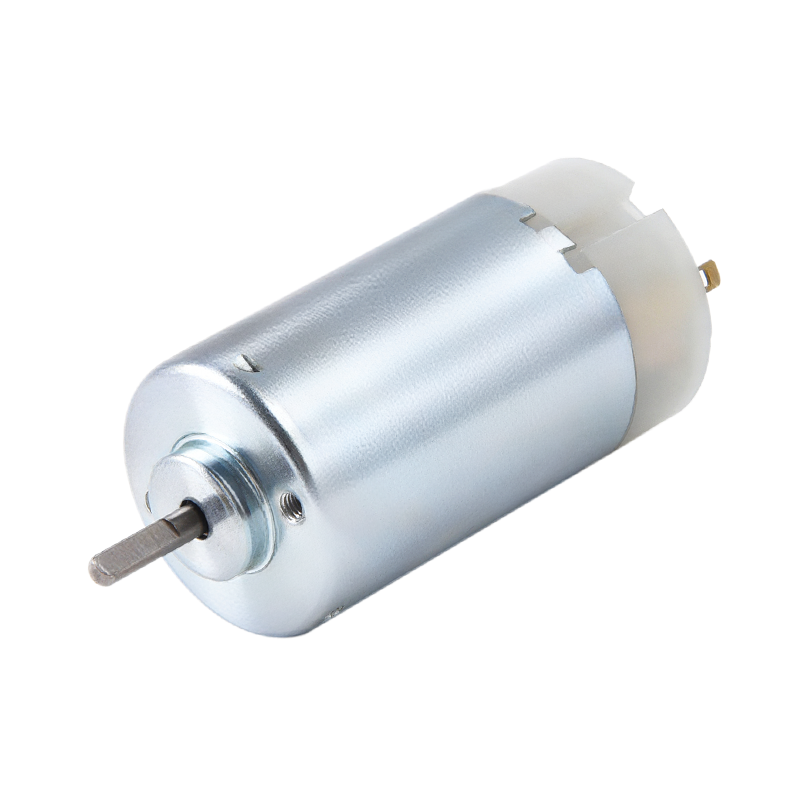
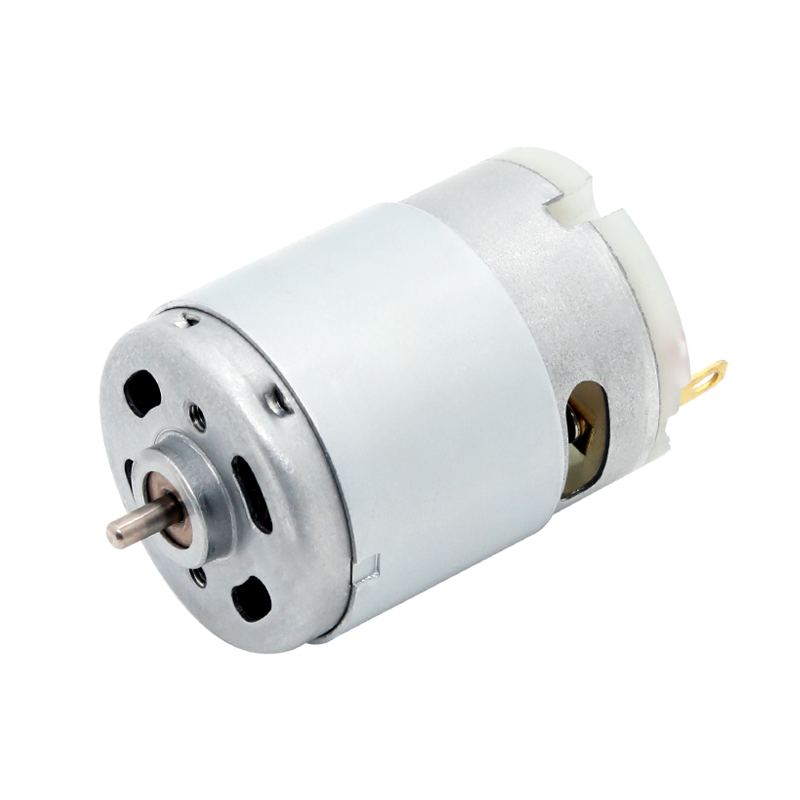
A brush DC motor operates on a straightforward electromagnetic principle. Current flows from an external power source through stationary carbon brushes, which press against a rotating commutator — a segmented copper ring mounted on the rotor shaft. As the rotor turns, the commutator segments switch the direction of current through the rotor windings, maintaining continuous rotation.
The rotor (armature) carries the windings and sits inside a stator made of permanent magnets. The interaction between the magnetic field of the stator and the electromagnet created by the current-carrying rotor windings generates torque.
Key Structural Components of a Brush DC Motor
- Rotor (armature): Carries the copper windings; rotates within the stator field
- Stator: Permanent magnets or wound field coils that create the fixed magnetic field
- Commutator: Segmented copper ring that mechanically switches current direction
- Carbon brushes: Spring-loaded contacts that press against the commutator to deliver current
- Brush holders and springs: Maintain consistent brush-to-commutator contact pressure
The friction between brushes and commutator is the defining limitation of this design. It generates heat, causes wear, produces electrical noise (arcing), and requires periodic brush replacement — typically every 1,000 to 5,000 operating hours depending on load and speed.
How a Brushless DC Motor Works
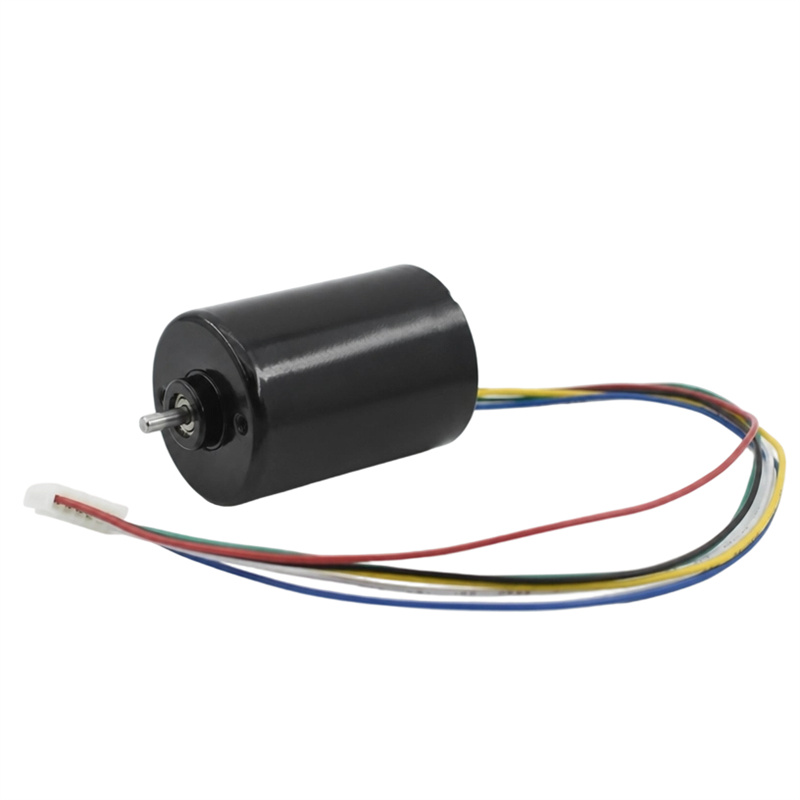
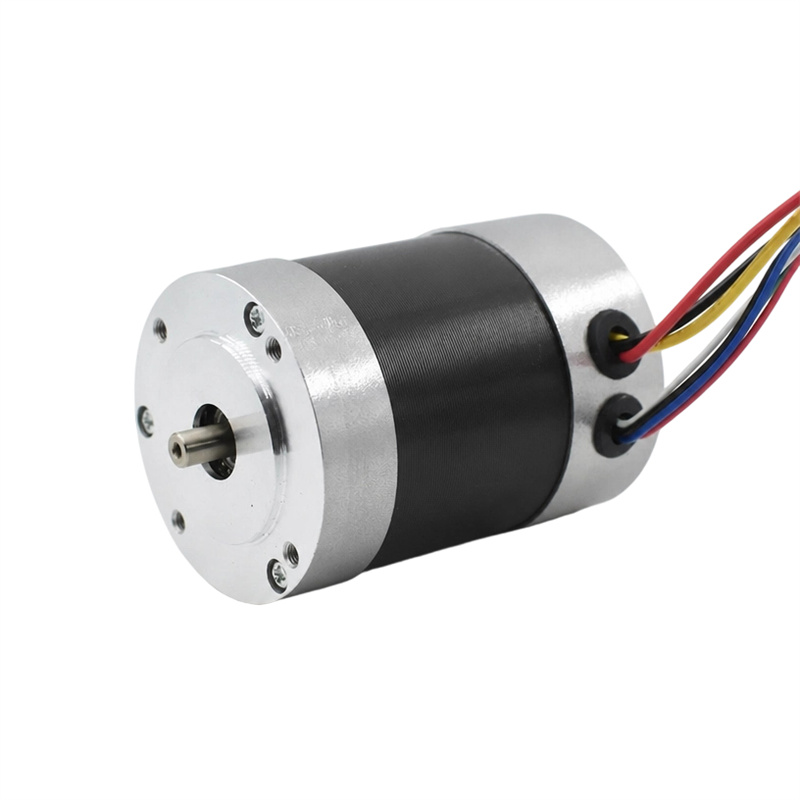
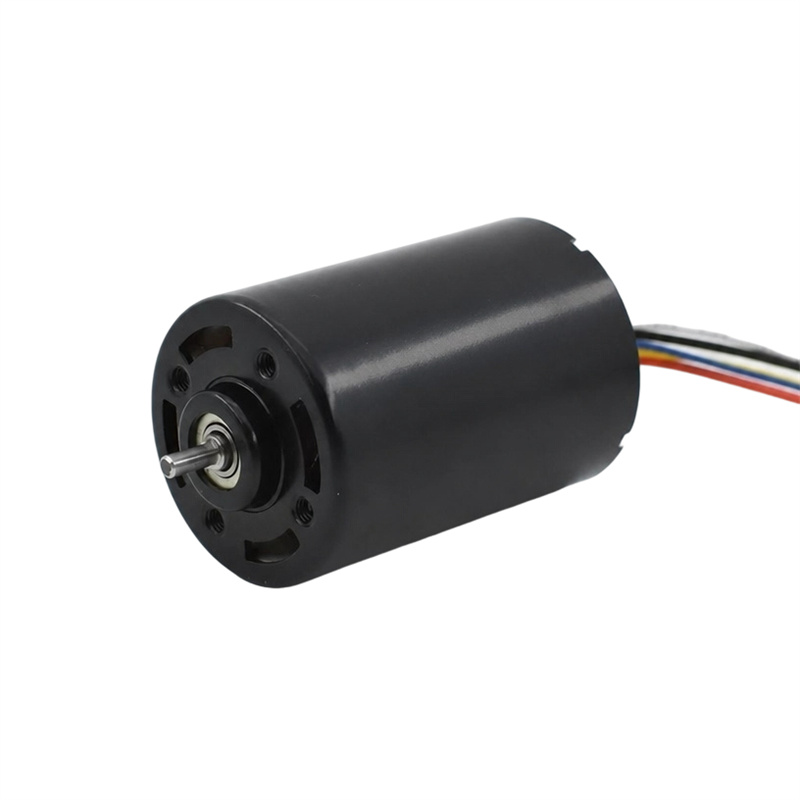
A brushless DC motor (BLDC) inverts the traditional architecture. The permanent magnets are on the rotor, and the windings are on the stator. Because the windings are stationary, there is no need for brushes or a commutator. Instead, an electronic speed controller (ESC) or motor driver detects rotor position — typically via Hall effect sensors or back-EMF sensing — and energizes the correct stator winding pairs in sequence to maintain rotation.
This electronic commutation is faster, more precise, and generates no mechanical friction. The only moving part is the rotor bearing, which dramatically extends service life.
Key Structural Components of a Brushless DC Motor
- Rotor: Carries permanent magnets; rotates within the stator
- Stator: Contains the copper windings; stationary and externally cooled
- Hall effect sensors: Detect rotor magnet position and send signals to the controller
- Electronic speed controller (ESC): Switches current to the correct windings based on sensor feedback
- Bearings: The only mechanical wear point in the entire system
Because heat is generated in the stator (not the rotating rotor), brushless motors dissipate heat more effectively, allowing them to sustain higher continuous power output without thermal throttling.
Brushed vs Brushless DC Motor: Side-by-Side Comparison
The table below summarizes the most important performance and practical differences between brush DC motors and brushless DC motors:
| Attribute | Brush DC Motor | Brushless DC Motor |
|---|---|---|
| Commutation Method | Mechanical (brushes + commutator) | Electronic (ESC + sensors) |
| Typical Efficiency | 75–80% | 85–95% |
| Lifespan | 1,000–5,000 hours | 10,000–30,000+ hours |
| Maintenance | Regular brush replacement needed | Virtually maintenance-free |
| Noise Level | Higher (brush arcing, friction) | Lower (no mechanical contact) |
| Speed Control | Simple (vary supply voltage) | Complex (requires ESC/driver) |
| Upfront Cost | Lower | Higher |
| Power Density | Moderate | High |
| Heat Management | Heat in rotor (harder to dissipate) | Heat in stator (easier to dissipate) |
| EMI / Electrical Noise | High (arcing at brushes) | Low |
| Use in Hazardous Environments | Limited (sparking risk) | Suitable (no sparking) |
Efficiency: Where the Performance Gap Is Most Visible
Efficiency is one of the most compelling reasons engineers and designers choose brushless DC motors over brushed alternatives. A typical brush DC motor operates at 75–80% efficiency, while a brushless DC motor routinely achieves 85–95% efficiency under comparable load conditions. That 10–20 percentage point difference translates directly into:
- Longer battery runtime in portable or battery-powered devices
- Lower heat generation, reducing the risk of thermal damage
- Reduced electricity consumption in high-duty industrial systems
- More consistent torque output across a wider RPM range
In an EV drivetrain or industrial conveyor running thousands of hours per year, this efficiency gap can account for tens of thousands of dollars in energy savings annually. For a consumer power tool running 30 minutes a week, the gap barely matters.
Lifespan and Maintenance: The Long-Term Cost Difference
Brush DC motors have an inherent wear mechanism built into their design. The carbon brushes gradually erode with every rotation, and the commutator surface wears from constant friction. In typical applications, brushes need replacement every 1,000 to 5,000 hours of operation. In high-speed or high-load environments, this interval shrinks further.
Brushless DC motors have no brushes to wear out. Their operational lifespan is limited primarily by bearing fatigue, with most quality units rated for 10,000 to 30,000+ operating hours. In sealed or lubricated bearing configurations, some brushless motors run for decades without any intervention.
Total Cost of Ownership Example
Consider an industrial pump running 8 hours per day, 250 days per year (2,000 hours annually):
- Brush DC motor: Requires brush replacement every ~2 years; motor replacement likely needed within 5–7 years; ongoing maintenance labor costs add up significantly
- Brushless DC motor: No brush replacements; typical motor lifespan of 10–15 years in same application; maintenance limited to periodic bearing inspection
The higher upfront cost of a brushless DC motor — often 2x to 3x the price of an equivalent brushed unit — is frequently recovered within 2–4 years of operation when maintenance and energy savings are factored in.
Speed Control and Torque Characteristics
Speed control is one area where brushed motors have a traditional simplicity advantage. Because the rotor windings receive current directly, speed can be varied simply by adjusting supply voltage or using a basic PWM (pulse-width modulation) signal — no complex feedback system required.
Brushless DC motors require an electronic speed controller that monitors rotor position and adjusts commutation timing accordingly. While this adds cost and complexity, it also enables superior performance characteristics:
- Flat torque curve: BLDC motors maintain near-constant torque from near-zero RPM to rated speed
- Higher peak torque: Electronic commutation can optimize switching timing for maximum torque output
- Precise speed control: Closed-loop feedback enables speed regulation within ±0.1% in high-end implementations
- Regenerative braking: The ESC can recover kinetic energy as the motor decelerates — valuable in EVs and robotics
Brush DC motors, by contrast, tend to have a drooping torque characteristic at higher speeds, and their speed regulation is inherently less precise without additional feedback circuitry.
Noise, EMI, and Suitability for Sensitive Environments
The physical contact between carbon brushes and the commutator creates two types of unwanted output: acoustic noise from mechanical friction and vibration, and electromagnetic interference (EMI) from the small electrical arcs that occur as each brush segment makes and breaks contact.
This EMI can disrupt nearby sensitive electronics — radio receivers, microcontrollers, sensors, and communication modules. In medical devices, precision instrumentation, and consumer audio equipment, this is a disqualifying characteristic for brush DC motors.
Brushless DC motors produce significantly lower EMI because there is no arcing. They also run much quieter at equivalent loads. For applications in medical equipment, drones, HVAC systems, and robotic arms — where noise or interference affects performance or user experience — brushless motors are the standard choice.
The brush arcing also creates a spark hazard. In environments where flammable gases, vapors, or fine dust particles may be present — such as paint spray booths, grain elevators, or chemical processing facilities — brush DC motors are typically prohibited, and brushless designs are mandated.
Real-World Applications: Which Motor Is Used Where
Both motor types have well-established niches. Understanding where each thrives clarifies which is appropriate for a given design:
Common Brush DC Motor Applications
- Automotive window lifts, seat adjusters, and windshield wipers — low cost, intermittent duty
- Budget RC cars and entry-level hobby vehicles
- Low-cost consumer appliances (basic fans, toys, simple conveyor systems)
- Starter motors in internal combustion engines
- Prototyping and educational robotics kits where simplicity matters
Common Brushless DC Motor Applications
- Electric vehicles (EVs): Main traction motors in Tesla, BYD, and other platforms
- Drones and UAVs: All modern quadcopters use BLDC motors for high efficiency and power density
- Cordless power tools: DeWalt, Makita, and Milwaukee premium tool lines all use brushless motors
- Hard disk drives and cooling fans: Require precise, quiet, long-life operation
- Industrial automation and CNC machines: Servo motors in robotic arms and machining centers
- Medical equipment: Surgical tools, infusion pumps, ventilators — where reliability is non-negotiable
- HVAC compressors and pumps: Running 24/7 with minimal downtime tolerance
Cost Analysis: Upfront Price vs. Long-Term Value
Cost is often the deciding factor for designers working within a budget. Here's a realistic breakdown:
| Cost Factor | Brush DC Motor | Brushless DC Motor |
|---|---|---|
| Motor Purchase Price | Low ($5–$50 typical) | Medium–High ($20–$200+) |
| Controller Cost | Low (simple PWM circuit) | Higher (ESC required) |
| Maintenance Over 5 Years | Moderate (brush replacement) | Minimal |
| Energy Cost (high-duty use) | Higher (lower efficiency) | Lower (higher efficiency) |
| Downtime / Replacement Risk | Higher | Lower |
| Best Value Scenario | Low-duty, budget-constrained | Continuous or high-performance use |
For a one-time-use device or a product with a very short duty cycle, the cheaper brushed motor often wins economically. For anything running hundreds or thousands of hours per year, the total cost of ownership almost always favors the brushless DC motor.
How to Choose Between a Brushed and Brushless DC Motor
Use the following decision framework to identify the right motor type for your application:
Choose a Brush DC Motor When:
- Budget is the primary constraint and duty cycle is low (less than a few hundred hours per year)
- The control system must be simple — a basic variable voltage or PWM signal is all that's available
- The application is a prototype, educational project, or short-lifespan consumer product
- Replacement and maintenance are easy to perform and downtime is acceptable
- The operating environment does not have flammable gases or EMI-sensitive equipment nearby
Choose a Brushless DC Motor When:
- Long operational lifespan and minimal maintenance are critical
- The application is battery-powered and runtime per charge is important
- High precision speed or torque control is required
- The device operates in a noise-sensitive, EMI-sensitive, or spark-hazard environment
- Continuous duty operation is required (HVAC, industrial pumps, EV drivetrains)
- Power density matters — brushless motors deliver more power per unit of weight and volume
The Trend: Why Brushless DC Motors Are Becoming the Default
The global brushless DC motor market was valued at approximately $14.8 billion in 2023 and is projected to surpass $28 billion by 2032, growing at a CAGR of around 7.3%. Several converging forces are accelerating this shift away from brushed designs:
- EV adoption: Every electric vehicle uses brushless motors; global EV sales exceeded 14 million units in 2023
- Falling ESC costs: The price of electronic speed controllers has dropped by over 60% in the last decade due to integrated circuit advances
- Energy regulations: Stricter efficiency mandates in HVAC, industrial, and consumer electronics markets are pushing designers toward higher-efficiency brushless solutions
- Miniaturization: Modern BLDC motors achieve high torque in compact form factors that brushed designs can't match at the same size
- Drone and robotics expansion: Both sectors are growing rapidly and exclusively use brushless motor technology
Brushed DC motors remain relevant in specific, well-defined niches — particularly automotive auxiliary systems and low-cost consumer goods — but the long-term trajectory of motor technology strongly favors the brushless DC motor as costs continue to decline and performance expectations rise.
News
-
Brush DC Motor Origins and Physical Foundations The Brush DC Motor is a pioneer in converting electrical energy into mechanical motion, and its history is closely intertwined with ...
READ MORE -
Who Is Still Using Brushed DC Motors These Days? Brushed DC motors in small appliances Despite the growing adoption of brushless motor technology, small appliances remain a major c...
READ MORE -
Brush DC Motor Applications in Consumer Electronics and Smart Devices Brush DC Motor Role in Consumer Electronics Design Brush DC Motor plays a critical role in the design and func...
READ MORE

Quick Links
 Home
Home


Copyright © Yuyao Hongyang Micromotor Co., Ltd. All rights reserved.

