

 Eng
Eng 
 русский
 Español

 Home / News / Industry News / How Do Brushed DC Electric Motors Work? The Guide to Micro Brush DC Motors
 How Do Brushed DC Electric Motors Work? The Guide to Micro Brush DC Motors
 2026.07.08
 Industry News
The short answer: a brushed DC motor works by feeding current through a spinning coil (the rotor) via stationary carbon or metal contacts called brushes, which press against a rotating segmented ring called a commutator. As the rotor spins, the commutator automatically reverses the current direction in the coil at the right moment, keeping the magnetic force pushing in the same rotational direction — this self-switching action is what lets a brushed motor spin continuously from a simple, unregulated DC power source. No external circuitry is required to make it turn, which is exactly why brushed DC motors, including micro brush DC motors as small as 4mm in diameter, remain one of the most widely used and cost-effective ways to convert electrical energy into rotational motion. The rest of this guide breaks down the mechanism in detail, what's inside a micro brush motor, and what to weigh when choosing one for a project.
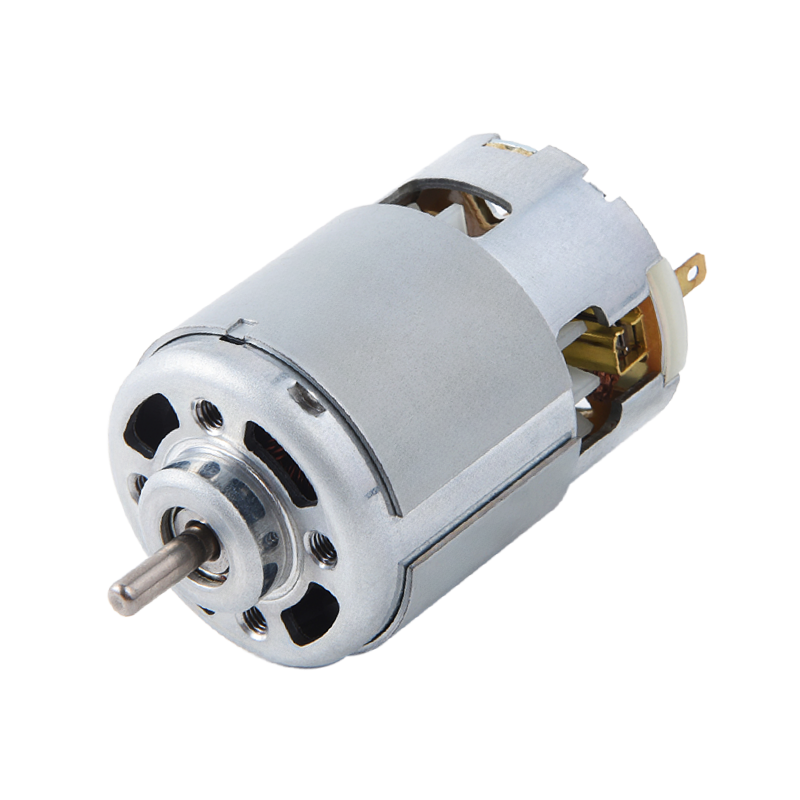
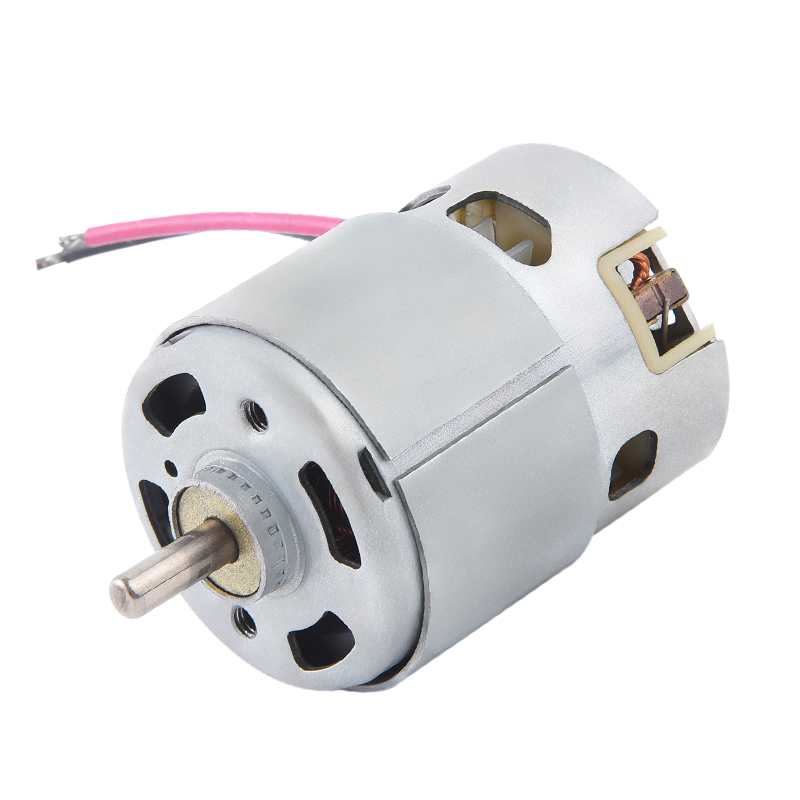
The Core Components of a Brushed DC Motor
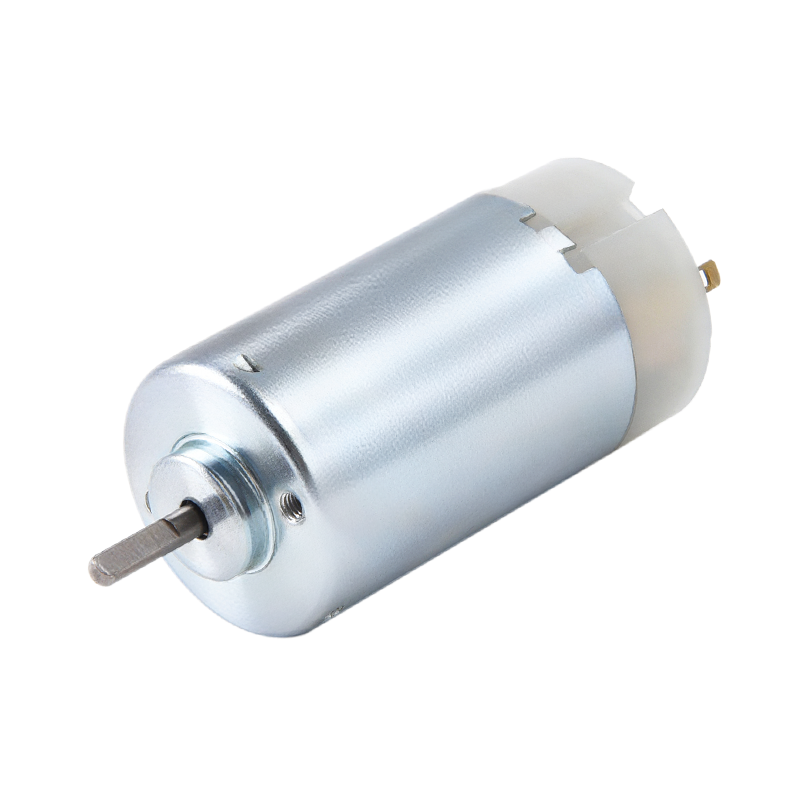
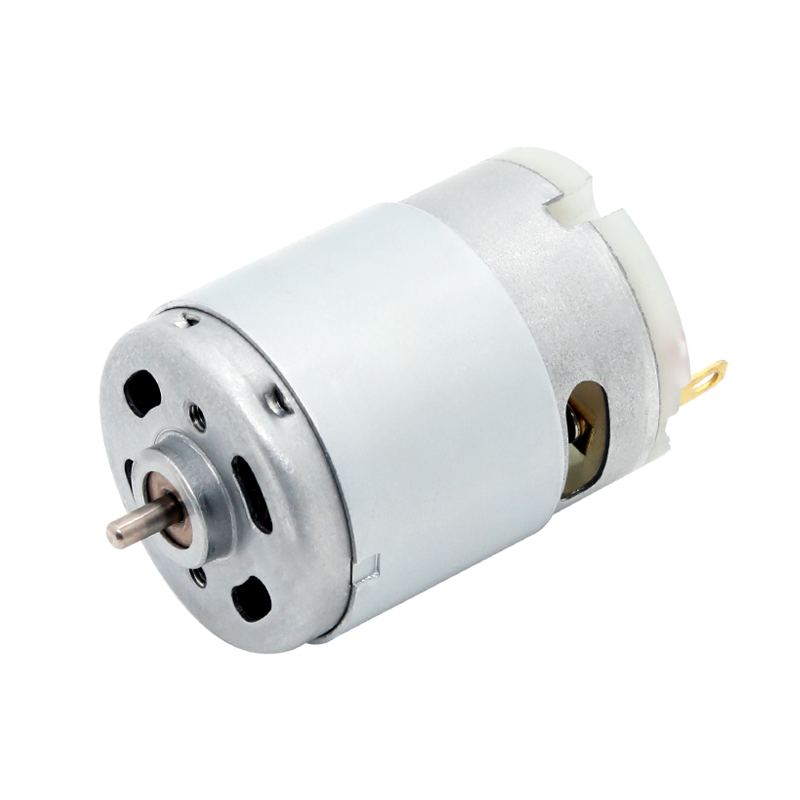
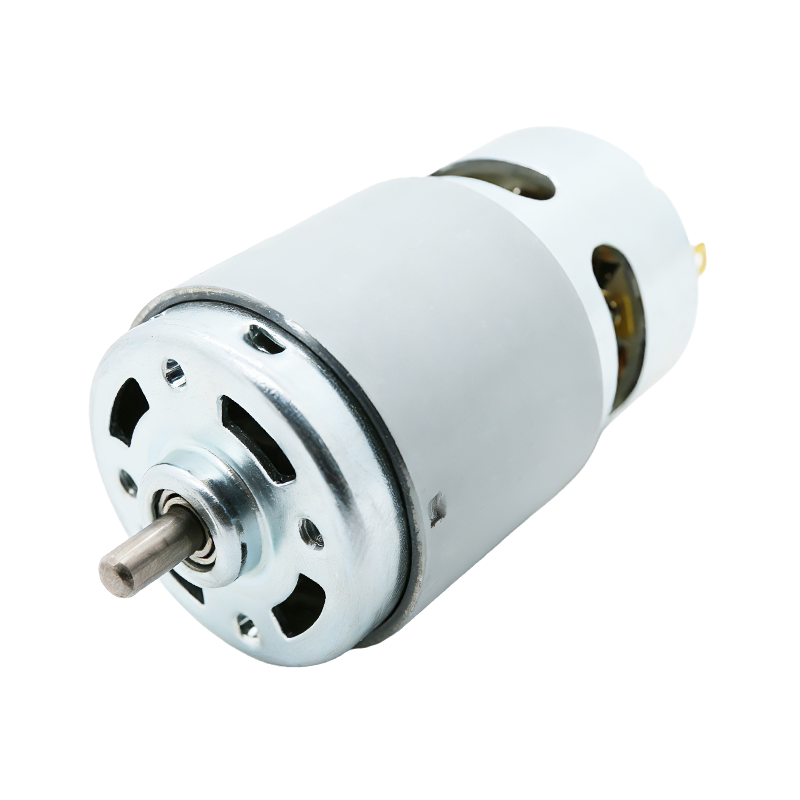
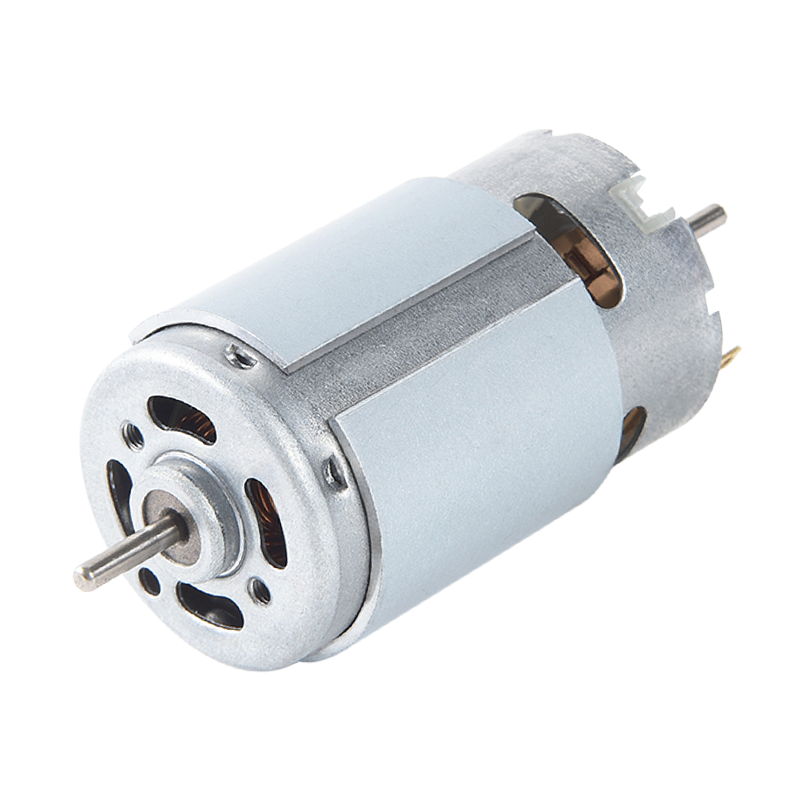
Every brushed DC electric motor, from a toy-sized unit to an industrial gear motor, is built from the same four essential parts.
| Component | Location | Function |
|---|---|---|
| Stator | Stationary outer housing | Generates a fixed magnetic field via permanent magnets or electromagnetic windings |
| Rotor (armature) | Rotates on the shaft | Wound coil that becomes an electromagnet when current flows through it |
| Commutator | Mounted on the rotor shaft | Segmented copper ring that reverses current direction as the rotor turns |
| Brushes | Fixed, spring-loaded against the commutator | Carry current from the power supply into the rotating commutator |
Carbon or graphite is the standard brush material rather than solid metal, because carbon is self-lubricating and wears preferentially — meaning the brush erodes gradually over time while the more expensive commutator surface stays largely intact. This wear pattern is deliberately maintenance-friendly: replacing a worn brush is far simpler and cheaper than replacing a damaged commutator.
How the Motor Actually Spins: Step by Step
The working principle rests on two physics concepts: Faraday's law of electromagnetic induction and the Lorentz force. In practice, the cycle looks like this:
- DC voltage is applied across the two brush terminals, and current flows from the brushes into the commutator segments they're touching.
- Current passing through the rotor's coil turns it into an electromagnet, generating its own magnetic field.
- This rotor field interacts with the fixed field from the stator's permanent magnets — like poles repel, opposite poles attract — producing a torque that pushes the rotor to turn.
- As the rotor approaches alignment with the stator field (roughly every 180 degrees of rotation), the brushes slide onto the next commutator segment, which reverses the current direction in the coil.
- Reversing the current flips the rotor's magnetic polarity at exactly the right instant, so the magnetic push continues in the same rotational direction instead of stalling out.
- This switch-and-push cycle repeats continuously, producing smooth, ongoing rotation for as long as power is applied.
There's a brief instant during each cycle when the brushes bridge two commutator segments and momentarily short-circuit part of the winding — this is the source of the small sparks visible inside an operating brushed motor, and it's also the origin of most of the electrical noise these motors generate.
What Makes a Micro Brush DC Motor Different
A micro brush DC motor uses the exact same commutation principle described above, just scaled down dramatically. Industry sources generally classify any motor under roughly 30mm in diameter as a micro motor, and the smallest commercially available brushed units are as small as 4mm in diameter, used in applications like micro-drones and miniature locking mechanisms.
Coreless vs. Iron-Core Micro Motors
Most micro brush motors use a coreless (ironless) rotor design rather than the traditional iron-core armature found in larger motors. Instead of windings wrapped around an iron core, the coil is a self-supporting, hollow structure. This eliminates iron losses and cogging (the notchy resistance felt when manually turning a motor with iron teeth), which gives coreless micro motors very low rotational inertia and fast acceleration — a meaningful advantage in devices like pipettes, camera focus mechanisms, or small pumps where quick, precise starts and stops matter.
Typical Specifications
Specifications vary widely by manufacturer and intended use, but the table below shows representative figures across common micro motor diameters to illustrate the range.
| Diameter | Rated Power | No-Load Speed |
|---|---|---|
| 4 mm | Fractional watt | Up to ~47,750 RPM |
| 13 mm | 1.7–2.8 W | ~12,000–13,000 RPM |
| 17 mm | 3.5–7.5 W | ~11,000 RPM |
| 24 mm | 9.5 W | ~10,000 RPM |
At the small end, some coreless brushed micro motors reach efficiencies of up to 90%, though this peak is only achieved at high speed and drops off at low speed or heavy load. Many micro motors are also paired with a gearbox to trade raw RPM for higher usable torque, which is common in applications like precision balances, valve actuators, and small robotic joints.
Controlling Speed and Direction
One of the defining advantages of brushed DC motors is how simple they are to control compared to brushless alternatives.
- Speed is roughly proportional to applied voltage — increase the voltage and the motor spins faster, decrease it and the motor slows down, with no additional electronics required for a basic on/off application.
- Direction is reversed simply by swapping the polarity of the two supply leads, since this reverses the current direction the commutator is switching between.
- For variable-speed applications, pulse-width modulation (PWM) is the standard control method — rather than continuously varying the voltage, the supply is switched on and off rapidly, and the ratio of on-time to off-time sets the effective average voltage the motor sees.
- PWM frequency matters for micro motors specifically: driving at frequencies below roughly 20 kHz can induce audible ultrasonic vibration in the rotor, so manufacturers commonly recommend frequencies in the 40–120 kHz range to keep current ripple low and protect brush life.
This voltage-proportional behavior is also why brushed motors are a natural fit for battery-powered devices — a simple linear regulator or basic PWM driver is enough to get usable speed control, without the dedicated commutation electronics a brushless motor requires just to spin at all.
Lifespan and What Actually Wears Out
The brush-commutator interface is both the feature that makes brushed motors simple to drive and the component that ultimately limits their working life. Two wear mechanisms operate at once: mechanical friction from the brush sliding against the commutator, and electro-erosion from the small sparks generated every time the brush bridges between segments.
| Motor Category | Typical Lifespan |
|---|---|
| Miniature / micro brush motors | ~100–500 hours |
| General industrial brushed motors | ~1,000–3,000 hours |
| Heavy-duty industrial units | Up to ~5,000 hours |
By comparison, brushless DC motors can reach tens of thousands of operating hours because there's no brush-commutator contact to wear down — their limiting factor shifts to bearing wear instead. This lifespan gap is the single biggest trade-off to weigh when choosing between brushed and brushless: brushed motors cost less upfront and are simpler to drive, but they need periodic brush replacement in continuous-duty applications, while brushless motors cost more initially but largely avoid that maintenance cycle.
Where Brushed and Micro Brush Motors Are Actually Used
Despite competition from brushless designs, brushed DC motors remain common because their low cost, simple control, and high starting torque are exactly what many applications need — especially where continuous duty cycles or ultra-long lifespan aren't the priority.
- Power tools and small household appliances, where high starting torque and low unit cost matter more than maximum lifespan.
- Toys, RC vehicles, and hobby drones, where micro coreless motors in the 8–20mm range deliver high RPM in a lightweight package.
- Automotive auxiliary systems such as window lifts, seat adjusters, and small pumps.
- Medical and laboratory instruments — pipettes, sample-handling platforms, and precision balances frequently use small coreless brush motors paired with a gearbox and encoder for controlled, repeatable motion.
- Robotics and factory automation for lower-cost joints or actuators where periodic brush replacement is an acceptable maintenance item.
Choosing a Micro Brush DC Motor: Key Factors
Selecting the right micro brush DC motor for a project comes down to matching a handful of specifications to your application's real constraints, rather than simply picking the smallest or cheapest option available.
- Match the supply voltage to your power source — common micro motor ratings run from about 1.5V up to 24V, so confirm the motor's rated voltage aligns with your battery or supply.
- Check available space against the motor's diameter and length, since micro motors are commonly available from roughly 4mm up to 24mm and beyond.
- Decide whether raw speed or torque matters more — a coreless motor without a gearbox favors high RPM and fast acceleration, while adding a gearbox trades top speed for significantly higher usable torque.
- Estimate duty cycle and required lifespan — an intermittent-use consumer device can comfortably use a lower-cost brush motor, while a continuous-duty application may justify the higher upfront cost of a brushless motor instead.
- Consider electrical noise sensitivity — if the motor will share a circuit with sensitive electronics, budget for basic EMI suppression, since brush commutation inherently generates electrical noise that brushless designs avoid.
News
-
Brush DC Motor Origins and Physical Foundations The Brush DC Motor is a pioneer in converting electrical energy into mechanical motion, and its history is closely intertwined with ...
READ MORE -
Who Is Still Using Brushed DC Motors These Days? Brushed DC motors in small appliances Despite the growing adoption of brushless motor technology, small appliances remain a major c...
READ MORE -
Brush DC Motor Applications in Consumer Electronics and Smart Devices Brush DC Motor Role in Consumer Electronics Design Brush DC Motor plays a critical role in the design and func...
READ MORE

Quick Links
 Home
Home


Copyright © Yuyao Hongyang Micromotor Co., Ltd. All rights reserved.

