

 Eng

 русский
 Español


 Home / News / Industry News / How Does a Permanent Magnet DC Motor Work? A Complete Guide to Its Working Principle
How Does a Permanent Magnet DC Motor Work? A Complete Guide to Its Working Principle
 2026.10.27
 Industry News
Every time a small motor spins a fan, moves a car window, or drives a pump, there is a good chance it is a permanent magnet DC motor. These motors are compact, reliable, and easy to control, which is why they appear in so many everyday products. But how does a permanent magnet DC motor work? The short answer is by using a fixed magnetic field, a rotating armature, and a commutator to keep the rotation in the right direction. The longer answer is more interesting, and it helps when you are choosing a motor for a product or trying to understand why a design behaves the way it does.
At Yuyao Hongyang Micromotor, we have spent more than three decades manufacturing micro DC motors. In our experience, when engineers understand the working principle, they make better decisions about voltage, torque, noise, and life. So let's walk through it step by step.
What Is a Permanent Magnet DC Motor?
A permanent magnet DC motor is a brushed DC motor that uses permanent magnets on the stator to create the magnetic field. Older or larger DC motors sometimes use wound field coils for the same purpose, but a PMDC motor gets its magnetism from fixed magnets. The rotor, called the armature, sits inside this magnetic field and carries a set of copper windings. When direct current passes through those windings, it produces a second magnetic field. The interaction between the two fields produces force and rotation.
Main Components
To understand how the motor works, it helps to know each component's job. Here is the part list we usually show when customers ask.
| Component | Function |
|---|---|
| Permanent magnets | Supply the stationary magnetic field on the stator |
| Armature | Rotating winding set that carries current and produces another magnetic field |
| Commutator | Segmented switch that reverses the current direction in the armature |
| Brushes | Stationary contacts that deliver current to the commutator |
| Shaft and bearings | Support the rotor and transmit torque to the load |
| Housing | Keeps the magnets, brushes, and bearings aligned |
The permanent magnets are often made from ferrite or similar magnetic materials, depending on the torque and temperature requirements. The choice of magnet material affects the motor's strength, cost, and resistance to demagnetization, so it is one of the first details we consider when a customer brings us a new application.
How Does a Permanent Magnet DC Motor Work?
The operating principle is straightforward: a current-carrying conductor placed in a magnetic field experiences a mechanical force. Because the armature winding sits inside the field produced by the permanent magnets, every time current flows through the winding, that section of wire is pushed. In a motor, that push creates torque on the shaft.
In a typical brushed PMDC motor, the sequence looks like this:
- DC power is connected to the brush terminals.
- The brushes press against the commutator and feed current into the armature winding.
- Current in the armature creates a magnetic field around the conductors.
- That field interacts with the permanent magnet field and produces torque.
- The rotor begins to turn, and the commutator segments slide under the brushes.
- Just before the rotor would lock onto the permanent magnet field, the commutator switches the current to a different set of windings.
- The torque direction stays the same, so the armature keeps rotating.
Why the Commutator Is So Important
If the commutator did not reverse the current, the armature would only turn a fraction of a revolution and then stop. The aligned magnetic fields would prevent further motion. The commutator solves that problem by changing the active winding at exactly the right moment. That is why the motor can spin continuously in one direction.
What Back EMF Means in a PMDC Motor
As the armature rotates, the copper windings also move through the permanent magnet field. This movement generates a voltage that opposes the applied voltage. We call it back electromotive force, or back EMF. At startup, the rotor is still, so there is no back EMF and the motor draws a relatively high current. As speed rises, the back EMF grows and limits the current to a more normal operating level.
This behavior gives PMDC motors a natural self-regulating characteristic. If the load increases, the motor slows down, back EMF drops, and more current flows to generate more torque. If the load is removed, the speed rises until the back EMF almost equals the supply voltage. That balance between voltage, current, speed, and torque is what makes these motors so convenient to use.
Speed, Torque, and Control in a PMDC Motor
One reason permanent magnet DC motors remain popular is the simple relationship between voltage, current, speed, and torque. For most PMDC motors, speed is roughly proportional to applied voltage, while torque is roughly proportional to armature current. That gives a fairly linear speed-torque curve across the motor's working range.
Because the permanent magnet field is fixed, reversing the rotation direction is also simple: swap the two supply leads. For many small applications, speed control is just a matter of varying the voltage, often through PWM. That ease of control makes permanent magnet DC motors a natural fit for pumps, fans, actuators, and other equipment where simple and predictable motion is required.
Compared with wound-field DC motors, a PMDC motor also responds more quickly. There is no field control lag because the magnet field is already present. That fast response can be important in applications like robot drives, where the motor needs to speed up, slow down, or reverse without much hesitation.
Advantages and Limitations
No motor is ideal for every job, and the permanent magnet DC motor has both strengths and constraints.
Advantages
- Compact and lightweight because no field winding is needed.
- High starting torque for its size.
- Simple speed control through voltage adjustment.
- No field copper losses, so efficiency is often better in small sizes.
- Fast dynamic response for applications that need quick changes in speed or direction.
Limitations
- Brushes and commutator wear over time, so service life is related to brush life.
- Excessive heat can weaken or demagnetize the permanent magnets.
- Like all brushed motors, it can generate electrical noise from brush contact.
- High continuous loads require careful matching of duty cycle and cooling.
When these limitations are managed, a PMDC motor can give excellent performance at a reasonable cost. The key is selecting the right frame size, voltage, and torque rating for the duty the product demands.
Where You Will Find Permanent Magnet DC Motors
Because they are compact, efficient, and inexpensive, PMDC motors appear in a wide range of consumer and industrial products. The most common places include power tools, household appliances, pumps, garden equipment, office machines, and automotive accessories.
Take a typical electric vacuum cleaner: the motor must spin a fan fast enough to create suction while keeping noise and size inside the product envelope. A permanent magnet motor with well-balanced speed and torque handles this task efficiently.
Pumps are another natural fit. A pump motor needs a quick start, good stall torque when pressure is high, and stable running at the target speed. The energy-saving design of a PMDC motor also helps prevent heat build-up in a sealed pump housing.
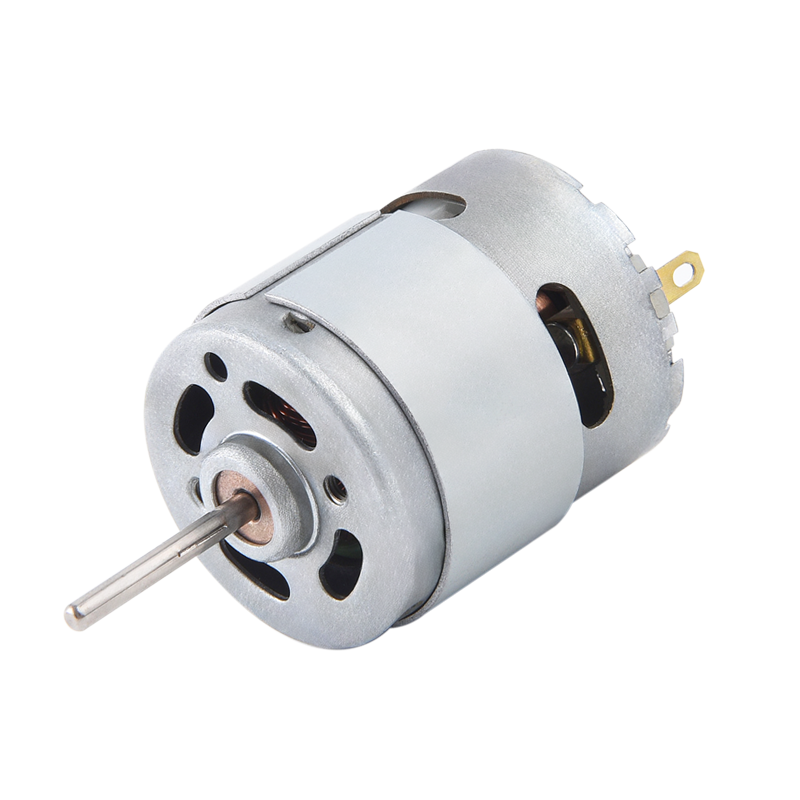
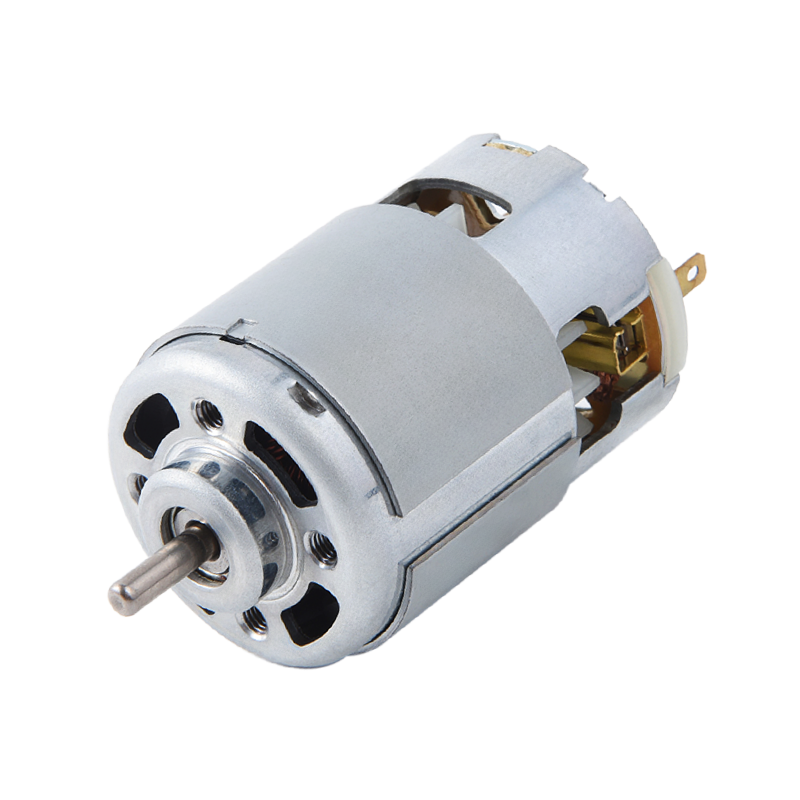
 RS-540 Long-Lasting Brushed PMDC MotorThis compact brushed DC motor suits pumps and small appliances with quick starts, stall torque, and energy-saving operation, making it ideal for sealed pump housings.View Product →
Small robots and automated equipment often use permanent magnet DC motors because their response is quick and their direction can be reversed simply by swapping the supply leads. A quiet, stable motor also improves the experience of a machine that moves on its own.
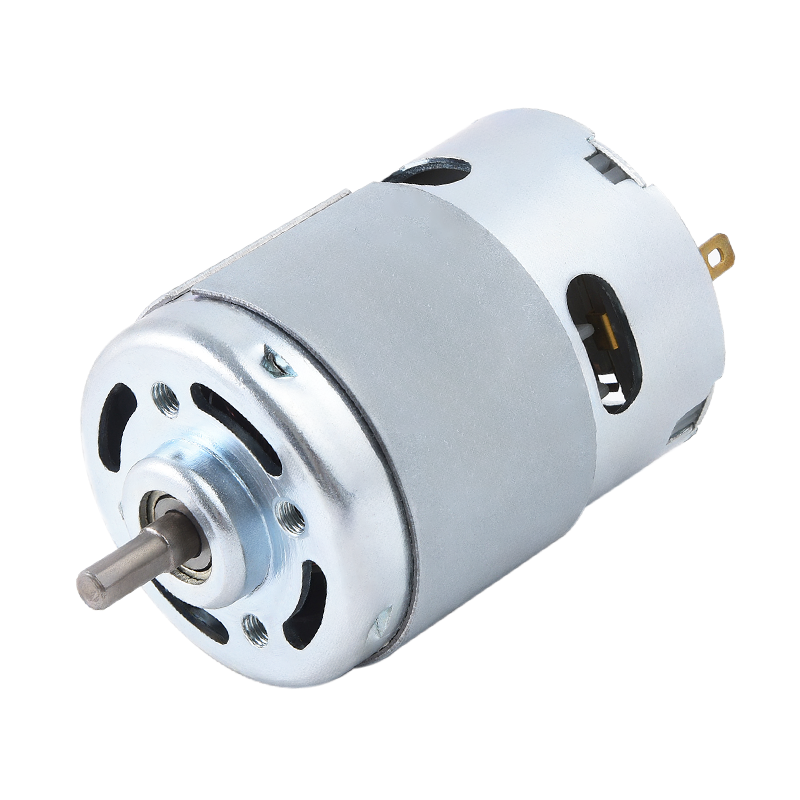
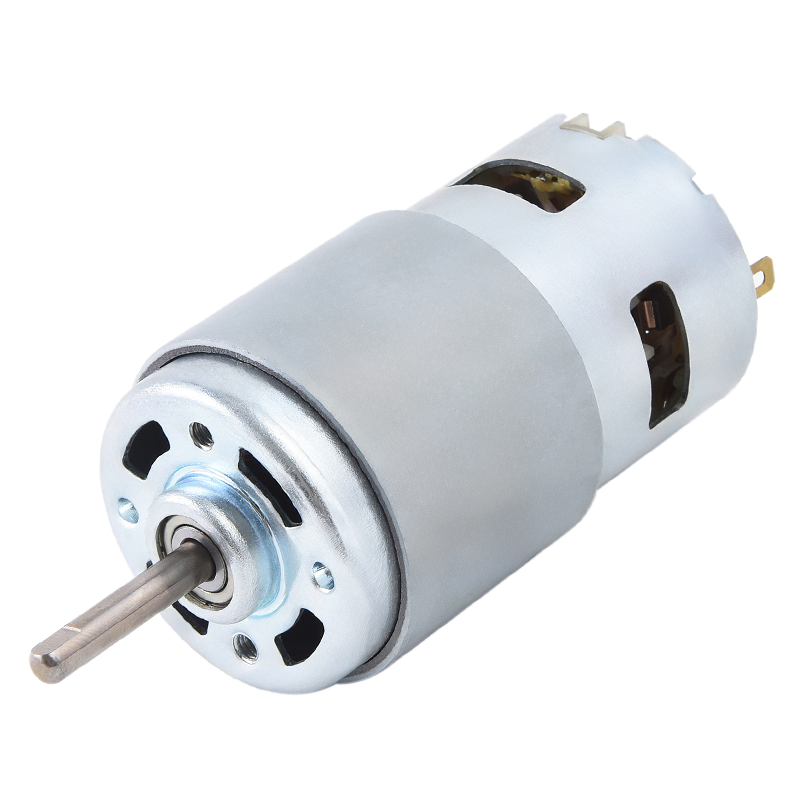
 RS-785SL High-Torque Brush DC MotorA robust 42mm motor offering strong output and low noise, fits power tools and garden equipment needing speed, torque, or long continuous service life.View Product →
The same motor family shows up in power tools, garden tools, office machines, and automotive care products. In each product, the design requirements shift: some need more speed, some need more torque, and some need a long service life under continuous operation.
How to Choose the Right Permanent Magnet DC Motor
When you are selecting a PMDC motor, start with the real operating point of your product rather than the no-load speed printed on the catalog.
- What is the rated voltage? 6 V, 12 V, and 24 V are common in micro motor applications.
- What speed and torque are needed at the working point?
- What is the duty cycle? Continuous running and intermittent running place different demands on heat dissipation.
- What surrounding temperature will the motor see?
- What noise level is acceptable for the market you are targeting?
- What mounting, shaft, terminal, and lead-wire options match the product assembly?
At Yuyao Hongyang Micromotor, we use frame sizes ranging from the compact 300 series to the larger 900 series, plus steel-tube designs for more demanding structural requirements. We have learned that careful attention to these details is what prevents most field failures. A motor that looks identical on paper can behave very differently if the magnet grade, winding turn count, brush material, or mounting tolerances are not matched to the application.
Conclusion
So how does a permanent magnet DC motor work? It works by combining a fixed magnetic field from permanent magnets with a rotating armature winding, and by using a commutator and brushes to keep the current direction in sync with the rotor movement. The result is a simple, responsive, and efficient motor that powers everything from tiny vacuum cleaners to medical instruments and industrial actuators.
The more you understand that fundamental sequence, the easier it becomes to choose the right motor, interpret a datasheet, and avoid common mistakes in product development. And if you are working on a new design that needs a reliable micro DC motor, a conversation with an experienced manufacturer can save time, cost, and patience.
News
-
Brush DC Motor Origins and Physical Foundations The Brush DC Motor is a pioneer in converting electrical energy into mechanical motion, and its history is closely intertwined with ...
READ MORE -
Who Is Still Using Brushed DC Motors These Days? Brushed DC motors in small appliances Despite the growing adoption of brushless motor technology, small appliances remain a major c...
READ MORE -
Brush DC Motor Applications in Consumer Electronics and Smart Devices Brush DC Motor Role in Consumer Electronics Design Brush DC Motor plays a critical role in the design and func...
READ MORE

Quick Links
 Home


Copyright © Yuyao Hongyang Micromotor Co., Ltd. All rights reserved.

