

 Eng

 русский
 Español


 Home / News / Industry News / How Efficient Are Electric Motors? A Practical Guide to Losses and Gains
How Efficient Are Electric Motors? A Practical Guide to Losses and Gains
 2026.11.12
 Industry News
If you have ever touched a motor housing after a few minutes of running, you already know that not all electrical energy becomes motion. Some becomes heat. That does not mean the motor is badly designed. It means efficiency is a practical balance between output, cost, size, and the way the motor is used.
Electric motors are generally efficient machines, but the useful number depends heavily on context. A small motor in a handheld device and a large industrial motor are both called “efficient,” yet they may operate at very different percentages. This guide explains what motor efficiency means, where the losses go, and how to judge a motor for a real product rather than a catalog headline.
What Motor Efficiency Really Means
In simple terms, motor efficiency is the ratio of mechanical power delivered at the shaft to electrical power drawn from the supply. A motor that consumes 100 W and produces 80 W of shaft work is 80% efficient. The other 20 W is not missing; it leaves as heat, vibration, and sound.
The basic calculation is: efficiency equals mechanical output power divided by electrical input power, multiplied by 100%. That sounds straightforward, but two cautions matter.
First, motor efficiency is not the same as system efficiency. A gearbox, belt, impeller, or controller adds its own losses. A 90% motor inside a 70% efficient drive system does not make the product 90% efficient overall.
Second, a single peak efficiency figure can mislead. A motor may reach 82% at its best operating point but run at 65% for most of its life because it was oversized, underloaded, or poorly matched to the machine.
- Rated efficiency describes performance at a defined condition.
- Part-load efficiency describes what happens during normal use.
- System efficiency includes the motor, driver, transmission, and load.
Typical Efficiency Ranges for Electric Motors
The ranges below are indicative, not universal specifications. Small motors usually have more losses relative to their output, while large continuous-duty motors can be optimized more aggressively. Measurement conditions also vary.
| Motor category | Typical efficiency range | Common context |
|---|---|---|
| Small brushed DC motors | 50% to 80% | Toys, small appliances, automotive accessories |
| Brushless DC motors | 75% to 90% or more | Drones, battery tools, variable-speed equipment |
| Industrial AC induction motors | 80% to 95% | Pumps, fans, conveyors, general machinery |
| Premium efficiency industrial motors | 90% to 96% | Continuous-duty, high-energy applications |
| Universal or AC series motors | 50% to 75% | Power tools and small household appliances |
These figures show why the question “how efficient are electric motors” has no single answer. A tiny brushed motor may be perfectly adequate at 60% in a low-cost intermittent application, while a large industrial motor may need to exceed 90% to meet energy and thermal targets.
Where the Losses Go
Motor losses generally fall into four families: copper loss, magnetic loss, mechanical loss, and stray or electronic loss. Understanding them helps explain why two motors of similar size can perform differently.
Copper loss
Current flowing through the windings produces heat. This loss rises with the square of current, so high-torque or overload conditions increase it quickly. Winding resistance, wire gauge, and temperature all affect the result.
Magnetic loss
The magnetic field in the iron core changes as the rotor turns. This creates hysteresis and eddy-current losses in the core material. Lamination design, steel grade, and operating frequency all influence these losses.
Mechanical and brush loss
Bearings, seals, and air resistance consume some energy. In brushed motors, brush friction and voltage drop add another loss path. At low voltage, that brush drop can be a meaningful share of the total input.
Driver and stray loss
Brushless motors need electronic commutation. The driver can improve control and efficiency, but its switching and conduction losses must be counted. In small battery-powered products, the electronics may matter as much as the motor itself.
Why the Same Motor Can Perform Differently in Different Products
Motors are usually most efficient near their intended operating region, not at extremely light load. An oversized motor may run cool and quietly, but it can be inefficient because its magnetic and friction losses remain while the useful output is small. An undersized motor may run near its limit, increasing copper loss and temperature rise.
Voltage, speed, ambient temperature, duty cycle, and control method all shift the result. Gearboxes change speed and torque, but they also add losses. The load itself matters: a fan or pump has a different torque curve from a conveyor or a reciprocating mechanism.
Pump applications are a clear example. The motor, impeller, and flow path form one system, so the best motor is not simply the one with the highest standalone efficiency. It is the one that delivers the required flow and pressure without wasting energy or creating excessive heat.
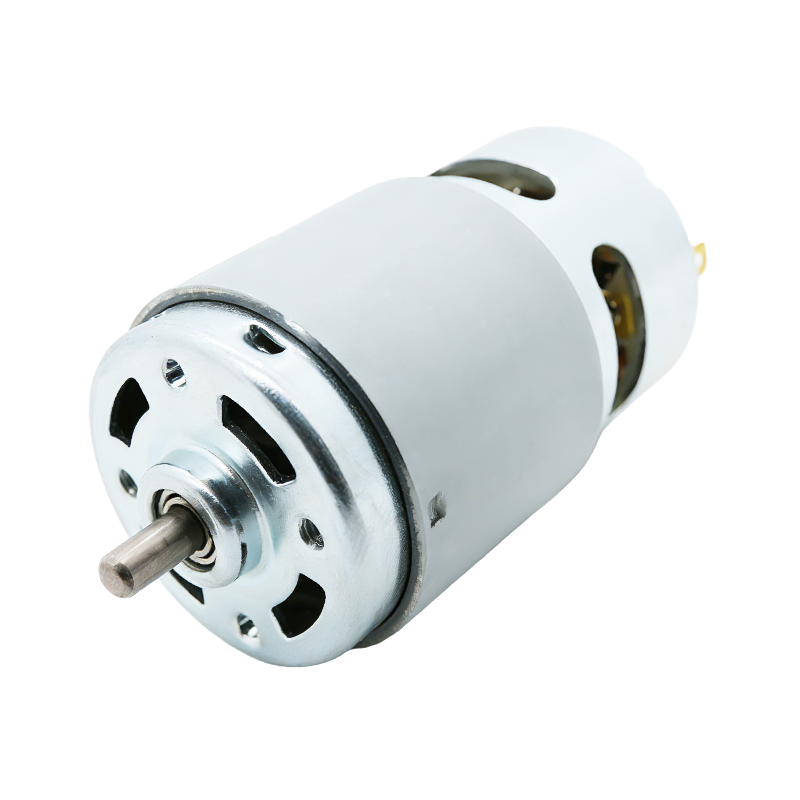
 RS-540/545 Long Lifespan Brushed DC MotorBrushed permanent-magnet DC motor for vacuum cleaners and air pumps, offering customizable shaft and broad voltage, speed and torque ranges for application matching.View Product →
Brushed or Brushless? The Trade-Off Is Not Only Efficiency
Brushless DC motors often deliver higher efficiency because electronic commutation replaces brush friction and allows better thermal design. They can also offer longer life and more precise speed control. However, a brushless motor is not automatically the right choice in every product.
Brushed motors remain simple, cost-effective, and easy to drive across a wide voltage range. A well-matched brushed motor can be very practical in appliances, tools, and accessories where the duty cycle is modest and the control budget is tight.
In coffee makers, for instance, smooth and quiet operation can matter as much as a fraction of a percentage point of efficiency. The motor must fit the pump, handle repeated heating cycles, and keep noise pleasant for the user.
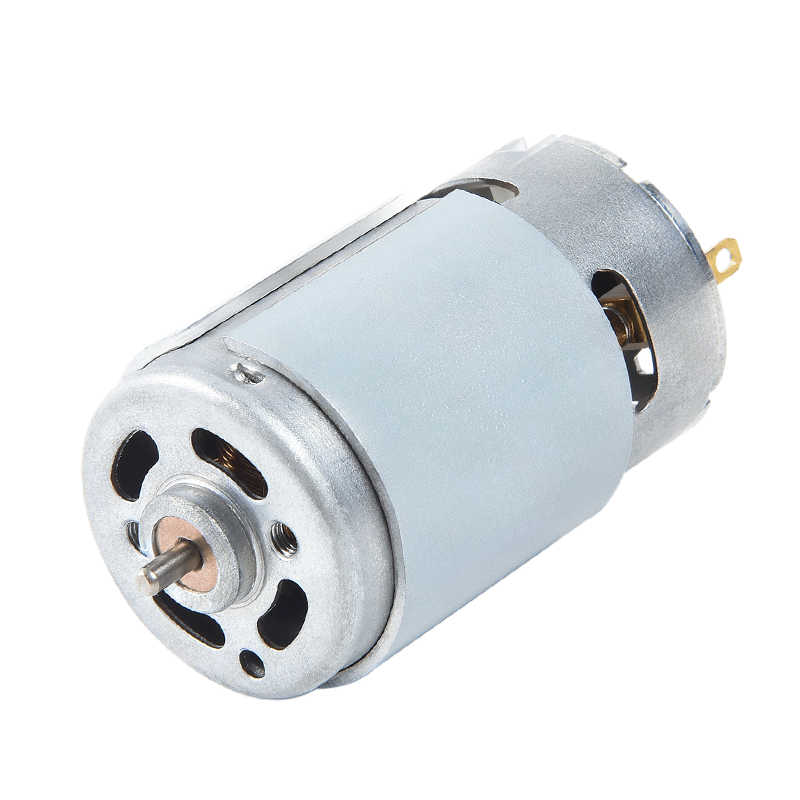
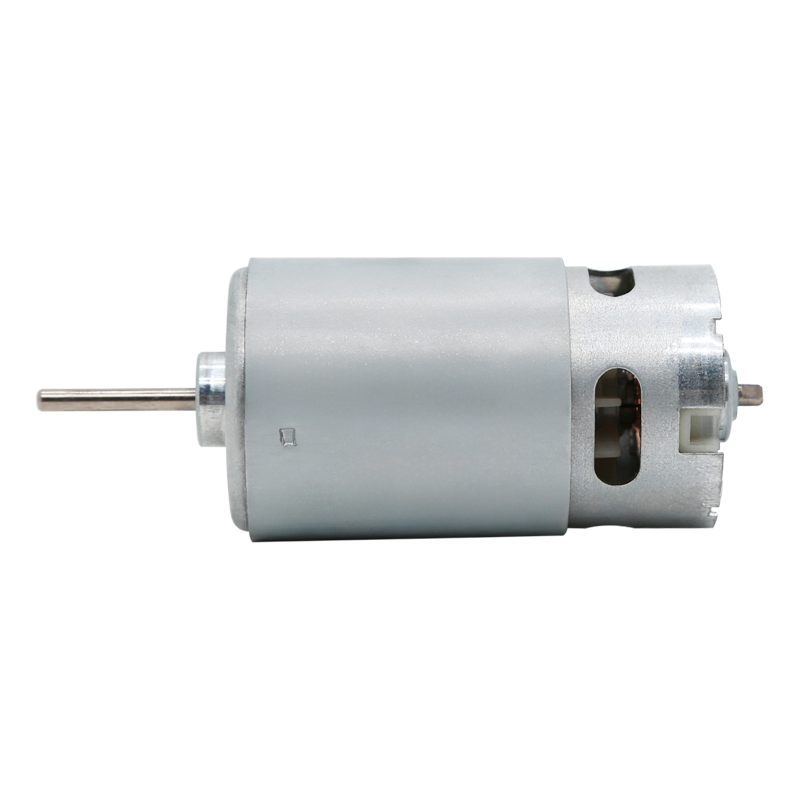 RS-550SL Low Noise Brushed DC MotorLow-noise brushed DC motor for compact appliances, described for coffee-machine auxiliary drives and repetitive start-stop use with stable torque and thermal stability.View Product →
For battery-powered or weight-sensitive designs, the balance often shifts toward brushless technology. We work with product teams across home appliances and smart home devices, where the right answer depends on runtime, noise, cost, and how often the motor runs.
How to Judge Efficiency in a Real Design
A peak efficiency number on a catalog page is a starting point, not a final answer. Ask for the efficiency curve at the voltage, speed, and load your product actually uses. If the motor has a driver or gearbox, ask whether those losses are included.
- Define the real operating point. Many products spend time at part load, start-up, or standby.
- Compare at the same conditions. Voltage, temperature, and measurement method change results.
- Include the full drive train. Gearbox, belt, impeller, and controller all consume energy.
- Check heat and lifetime. A slightly less efficient motor that runs cooler and lasts longer can be the better engineering choice.
- Match the motor to the duty cycle. Short bursts and continuous running need different designs.
For automated equipment and other continuous-duty products, this system view is especially important. A conveyor or sorting mechanism may run for hours, so small differences in motor and gearbox efficiency add up. We often discuss these trade-offs with teams developing automated equipment, from motor selection through prototype testing.
What Efficiency Looks Like in Micro Motor Applications
In small devices, a few points of efficiency can change the user experience. In a battery-powered tool, improving motor efficiency from 70% to 80% can extend theoretical runtime by about 14% for the same mechanical output and battery energy, assuming the rest of the system is unchanged. It also reduces heat inside a compact housing, which can help bearings, lubricant, and plastic parts last longer.
In mains-powered products, efficiency still matters, but the priorities may be noise, service life, speed stability, and cost. A vacuum cleaner, hair dryer, or power tool may need high speed; a vending machine or medical instrument may need precise, repeatable motion. The best motor meets the application without making the whole product heavier, hotter, or more complex than necessary.
For drone and other weight-sensitive designs, brushless motors are common because they combine good efficiency with high power density. A lighter motor can allow a larger battery or more useful payload, so the efficiency gain improves more than one part of the design.
Hongyang Micromotor has been making micro DC motors since 1988. Our experience is practical: efficiency is not a single number to maximize in isolation. It is one part of voltage, load profile, noise, life, assembly, and cost. That is why we offer both brushed and brushless options rather than treating one technology as universally better.
A Practical Efficiency Checklist
- Use the real load profile, not only the maximum rating.
- Ask for input power and output power at the same operating point.
- Separate motor, driver, and gearbox losses.
- Check temperature rise and continuous-duty limits.
- Consider control strategy, including voltage, current limiting, and speed regulation.
- Verify performance with a prototype in the actual product.
This last point matters. A motor that looks excellent on a bench can behave differently once it is inside a sealed housing, behind a gearbox, or driving an impeller with a less-than-ideal flow path.
The Short Answer: How Efficient Are Electric Motors?
Most electric motors are efficient compared with many other energy conversion devices, but there is no single number. Small brushed DC motors often fall in the 50% to 80% range; brushless DC motors can reach 75% to 90% or more; well-designed industrial motors can exceed 90%. The exact figure depends on size, speed, load, design, and the rest of the system.
If you need to improve efficiency, start with the operating point and the whole drive train, not just the motor label. A well-matched motor, running near its comfortable load, with low-loss transmission and sensible control, will usually outperform a theoretically superior motor that is badly applied.
Have a specific application in mind? Our team is happy to talk through motor options at the prototype stage, when changes are still simple and inexpensive.
News
-
Brush DC Motor Origins and Physical Foundations The Brush DC Motor is a pioneer in converting electrical energy into mechanical motion, and its history is closely intertwined with ...
READ MORE -
Who Is Still Using Brushed DC Motors These Days? Brushed DC motors in small appliances Despite the growing adoption of brushless motor technology, small appliances remain a major c...
READ MORE -
Brush DC Motor Applications in Consumer Electronics and Smart Devices Brush DC Motor Role in Consumer Electronics Design Brush DC Motor plays a critical role in the design and func...
READ MORE

Quick Links
 Home


Copyright © Yuyao Hongyang Micromotor Co., Ltd. All rights reserved.

