

 Eng
Eng 
 русский
 Español


Types of DC Motors: Brushed vs Brushless and How They Work
 2026.05.20
 Industry News
There are five main types of DC motors: brushed DC motors (including series, shunt, compound, and permanent magnet subtypes) and brushless DC motors (BLDC). Each type operates on the same fundamental principle — converting direct current electrical energy into mechanical rotation — but differs significantly in construction, control method, efficiency, and application suitability. If you need a simple, low-cost motor for basic applications, a brush DC motor is the practical choice. If you need high efficiency, long service life, and precise speed control in a demanding environment, a brushless DC motor is the superior solution. This guide covers every major type in detail so you can make the right decision.
How DC Motors Work: The Foundation
All DC motors operate on the same electromagnetic principle: when a current-carrying conductor is placed within a magnetic field, it experiences a mechanical force — described by the Lorentz force law. This force causes the rotor (the rotating part) to turn, converting electrical energy into rotational mechanical energy.
The key distinction between different DC motor types lies in how the magnetic field is created and how current is delivered to the rotating armature. In brush DC motors, carbon brushes maintain physical sliding contact with a commutator on the rotor shaft to transfer current. In brushless DC motors, this mechanical commutation is replaced by electronic switching through a dedicated controller, eliminating the brushes entirely.
DC motors are characterized by several key performance parameters: torque (measured in Nm or oz-in), speed (RPM), efficiency (%), and power rating (watts or horsepower). Understanding how different motor types perform across these parameters is essential for matching the motor to the application.
Overview of All DC Motor Types
The following table provides a high-level comparison of the primary DC motor types to orient the discussion before each is examined in depth.
| Motor Type | Field Source | Brushes | Typical Efficiency | Speed Regulation | Primary Application |
|---|---|---|---|---|---|
| Series DC | Series winding | Yes | 75–85% | Poor | Traction, cranes, starters |
| Shunt DC | Parallel winding | Yes | 80–88% | Good | Lathes, fans, conveyors |
| Compound DC | Series + parallel | Yes | 78–87% | Moderate | Presses, elevators, compressors |
| Permanent Magnet DC | Permanent magnet | Yes | 80–90% | Good | Power tools, toys, automotive |
| Brushless DC (BLDC) | Permanent magnet | No | 85–97% | Excellent | Drones, EVs, HVAC, robotics |
Brush DC Motors: Construction and How They Work
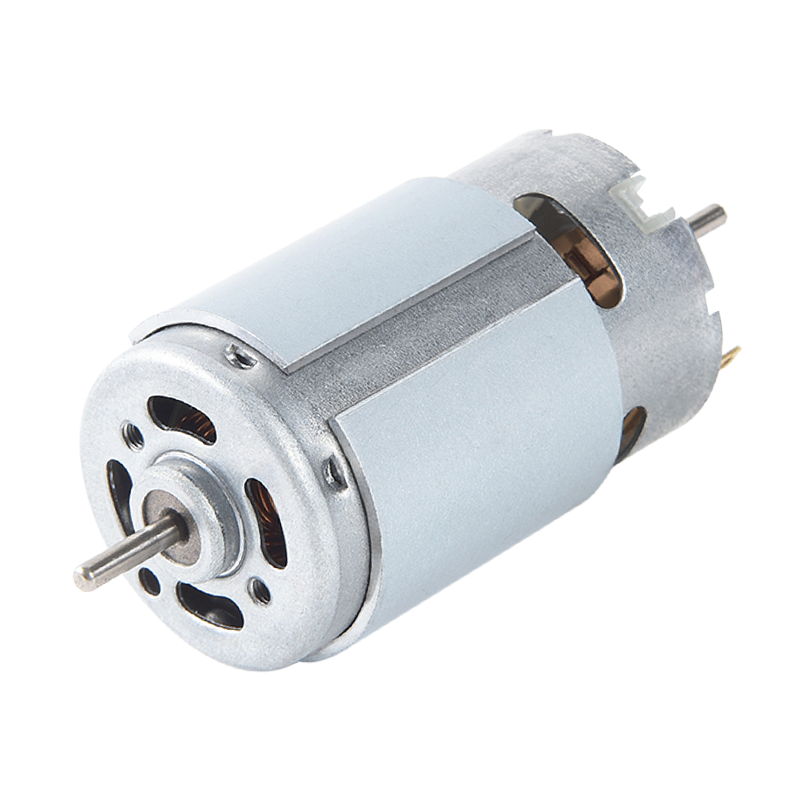
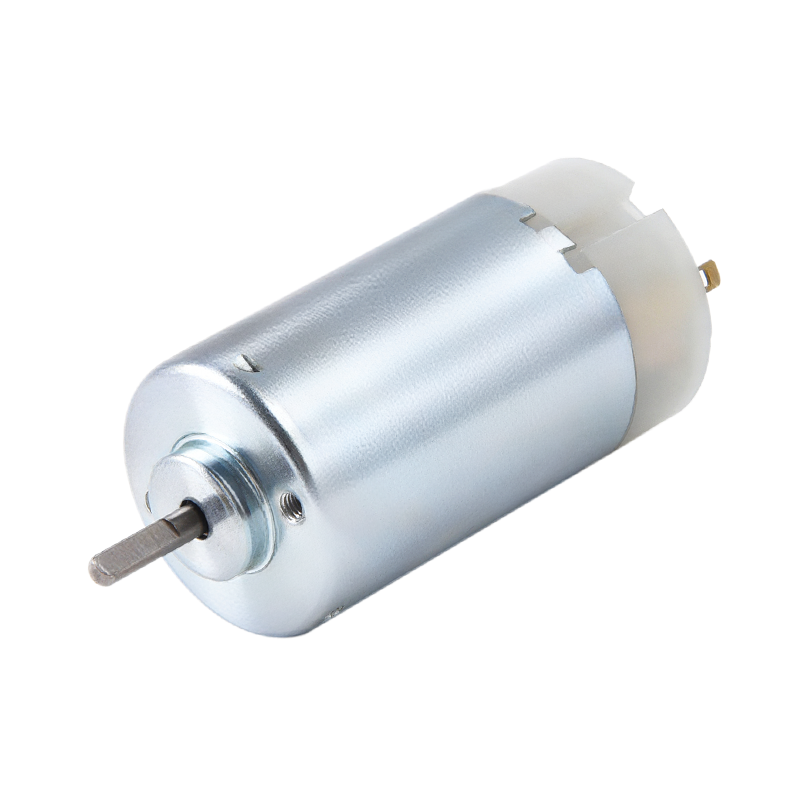
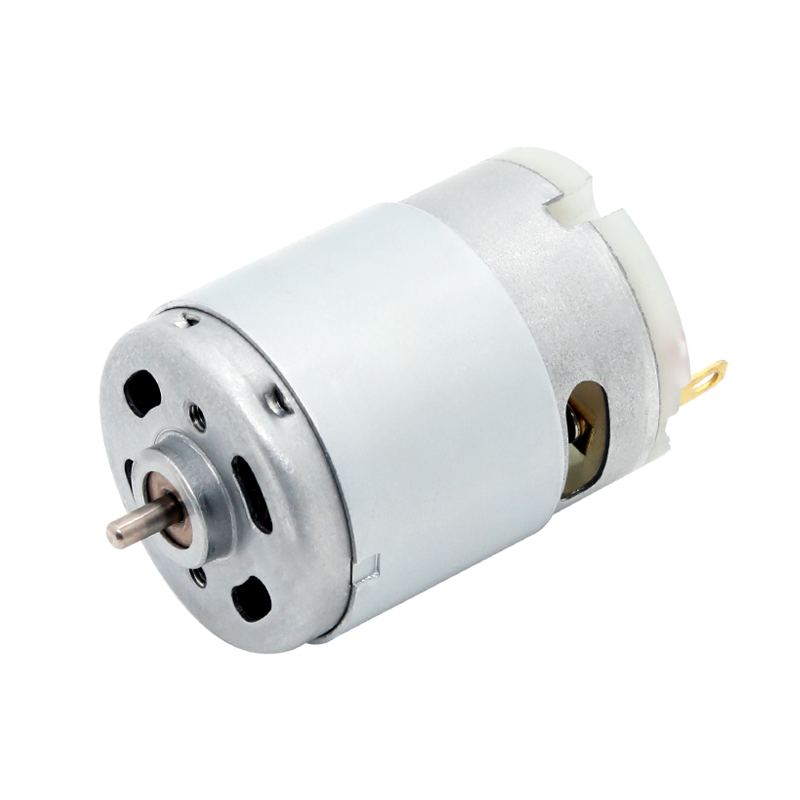
A brush DC motor consists of four core components: a stator (the stationary outer frame holding field windings or permanent magnets), a rotor (the rotating armature wound with copper coils), a commutator (a segmented copper cylinder on the rotor shaft), and carbon brushes (stationary conductive blocks pressed against the commutator by springs).
As DC current passes through the brushes into the commutator, it energizes specific armature coils in sequence. The interaction between the armature's magnetic field and the stator's field produces torque that rotates the shaft. The commutator mechanically switches which coils are energized as the rotor turns, maintaining continuous rotation. This mechanical commutation is what gives the brush DC motor its name — and its main limitation.
The sliding contact between brushes and commutator causes friction, heat, and gradual wear. Most carbon brushes require replacement after 500 to 1,000 operating hours in demanding applications, though low-speed motors may see brush life exceeding 3,000 hours. Brush wear also generates carbon dust, which can contaminate sensitive environments.
The Four Types of Brush DC Motors
1. Series DC Motor
In a series DC motor, the field winding is connected in series with the armature winding — meaning the same current flows through both. This configuration produces extremely high starting torque, often 5 to 8 times the rated running torque. However, speed varies dramatically with load: as load decreases, speed increases without limit, creating a dangerous runaway condition if the load is removed entirely.
- Starting torque: Very high — ideal for applications requiring heavy initial loads
- Speed regulation: Poor — speed falls sharply as load increases
- Must never run unloaded: Dangerous overspeed can damage the motor and pose safety risks
- Typical applications: Electric locomotive traction motors, automotive starter motors, crane hoists, electric trams
2. Shunt DC Motor
In a shunt DC motor, the field winding is connected in parallel (shunt) with the armature across the power supply. Because the field winding receives constant voltage regardless of armature current, the magnetic field remains nearly constant. This gives the shunt motor its defining characteristic: near-constant speed across a wide load range, typically varying by only 5–10% from no-load to full load.
- Speed regulation: Excellent — well-suited for applications requiring consistent speed
- Starting torque: Moderate — lower than series type
- Speed control: Achievable by varying armature voltage or field current
- Typical applications: Machine tool drives, lathes, milling machines, centrifugal pumps, fans, conveyors
3. Compound DC Motor
A compound DC motor combines both series and shunt field windings on the same stator poles, blending the characteristics of both types. In a cumulative compound configuration (the most common), the series and shunt fields reinforce each other, providing higher starting torque than a pure shunt motor while maintaining better speed regulation than a pure series motor.
A differential compound configuration has the two fields opposing each other, producing very stable speed but low starting torque — a less common arrangement used in specific constant-speed applications.
- Starting torque: High — better than shunt, lower than series
- Speed regulation: Moderate — better than series, slightly worse than shunt
- Versatility: Best choice when both good starting torque and reasonable speed stability are needed
- Typical applications: Punch presses, shears, elevators, air compressors, rolling mills
4. Permanent Magnet DC Motor (PMDC)
Instead of wound field coils, the permanent magnet DC motor uses fixed permanent magnets to create the stator field. This eliminates field winding copper losses entirely, making PMDC motors more efficient and more compact than their wound-field counterparts at the same power rating. The trade-off is that field strength cannot be varied, limiting speed control to armature voltage adjustment only.
PMDC motors are the most widely produced brush DC motor type globally, appearing in hundreds of everyday products. A typical automotive window lift motor is a PMDC unit rated at 12V DC, producing 5–15 Nm of torque at speeds of 30–100 RPM after gearing. Modern rare-earth magnet PMDC motors achieve efficiencies of up to 90% in optimized designs.
- Efficiency: Higher than wound-field types due to eliminated field winding losses
- Size and weight: More compact for a given power output
- Limitation: Permanent magnets can demagnetize at high temperatures (>150°C for ferrite; >120°C for some rare-earth types)
- Typical applications: Cordless power tools, automotive actuators, toys, small appliances, medical devices
Brushless DC Motor (BLDC): How It Works and Why It's Different
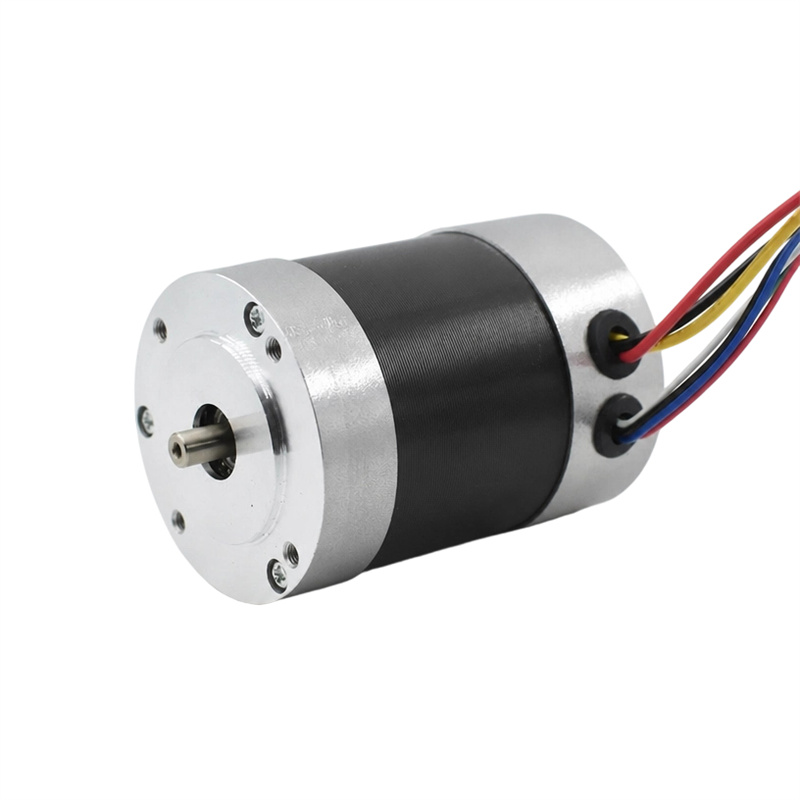
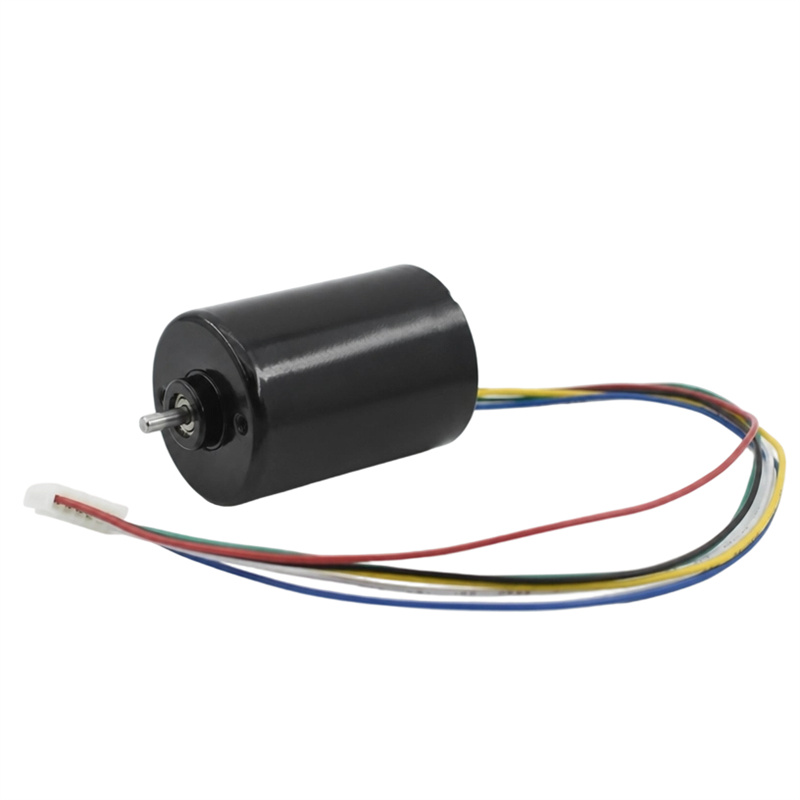
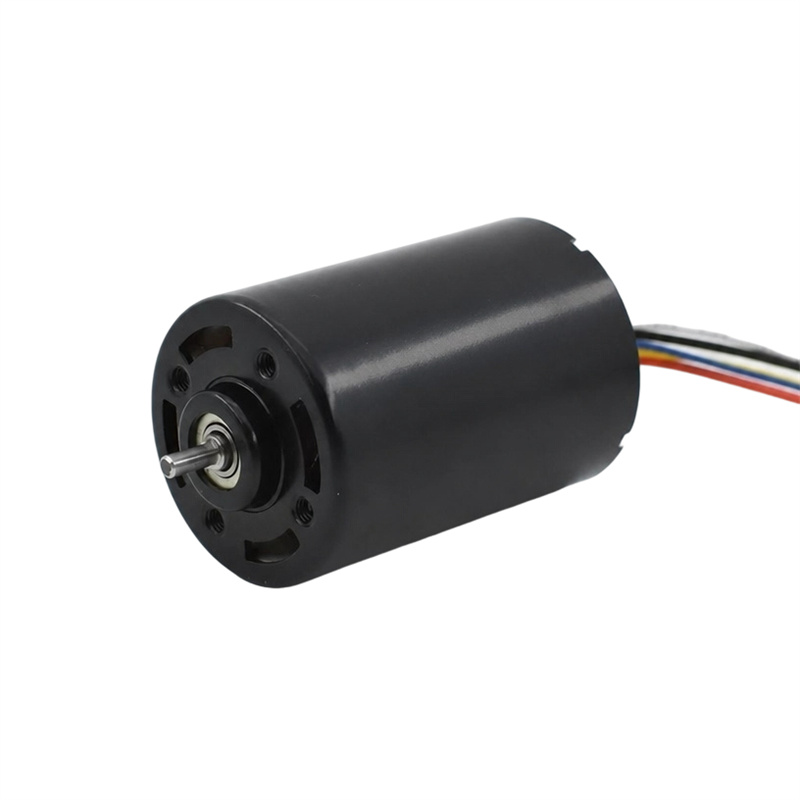
A brushless DC motor eliminates the commutator and carbon brushes entirely. Instead, the rotor carries permanent magnets and the stator carries the copper windings — the inverse of a brush DC motor's arrangement. Current switching to the stator windings is performed electronically by a dedicated motor controller, which uses rotor position feedback (typically from Hall effect sensors or back-EMF detection) to energize the correct stator coils at precisely the right moment.
This electronic commutation removes all sliding contact from the motor itself, eliminating brush wear, reducing electrical noise, and dramatically increasing service life. A well-designed BLDC motor can operate for 10,000 to 30,000 hours without maintenance — compared to 500–3,000 hours for a comparable brush DC motor under similar conditions.
Inrunner vs. Outrunner BLDC Motors
Brushless DC motors come in two physical configurations based on which part rotates:
- Inrunner BLDC: The permanent magnet rotor spins inside the stator — high speed, lower torque. Common in applications like RC cars, drones (inner rotor designs), and spindle motors. Typical speeds of 10,000–50,000 RPM.
- Outrunner BLDC: The permanent magnet housing rotates around the outside of the inner stator — lower speed, higher torque. Dominant in drone propulsion and direct-drive wheel motors. Typical speeds of 500–5,000 RPM with much higher torque density.
Sensorless vs. Sensored BLDC Control
Sensored BLDC motors use Hall effect sensors embedded in the stator to detect rotor position in real time, enabling precise commutation from standstill. They are preferred in applications requiring strong low-speed torque and controlled starting, such as electric vehicles and industrial servo drives.
Sensorless BLDC motors infer rotor position from back-EMF voltage generated as the rotor spins. They are simpler and less expensive but require the motor to be running above a minimum speed (typically 5–10% of rated speed) before stable commutation is established. Common in fans, pumps, and drone applications where starting from standstill under load is not required.
Brush DC Motor vs. Brushless DC Motor: Detailed Comparison
The choice between a brush DC motor and a brushless DC motor is one of the most common decisions in motor selection. The following comparison covers the factors that matter most in real-world applications.
| Factor | Brush DC Motor | Brushless DC Motor |
|---|---|---|
| Efficiency | 75–90% | 85–97% |
| Service Life | 500–3,000 hours (brush-limited) | 10,000–30,000+ hours |
| Maintenance | Regular brush replacement needed | Virtually maintenance-free |
| Speed Control | Simple — vary supply voltage | Requires dedicated ESC/controller |
| Torque at Low Speed | Good (especially series type) | Excellent with sensored control |
| Electrical Noise (EMI) | High — brush arcing generates EMI | Low — no brush arcing |
| Heat Generation | Higher — rotor windings harder to cool | Lower — stator windings easier to cool |
| Motor Cost | Lower | Higher |
| System Cost (with controller) | Low | Moderate to High |
| Use in Flammable Environments | Not suitable (sparking risk) | Suitable |
| Power-to-Weight Ratio | Moderate | High |
Real-World Applications of Each DC Motor Type
Understanding where each motor type excels in practice helps translate the technical comparisons into actionable selection decisions.
Series DC Motor Applications
- Electric railway traction motors — classic application exploiting massive starting torque
- Automotive starter motors — high cranking torque at low voltage
- Crane and hoist drives — variable heavy loads requiring maximum starting force
Shunt and Compound DC Motor Applications
- Industrial machine tools (lathes, milling machines) — shunt motors for constant cutting speed
- Printing presses — compound motors for reliable speed with variable paper loads
- Elevators — cumulative compound for smooth acceleration and reliable stopping
Permanent Magnet DC Motor Applications
- Cordless power drills and screwdrivers — compact, efficient, simple speed control via trigger
- Automotive window lifts, seat adjusters, and wiper motors
- Medical devices including infusion pumps and ventilator blowers
- Consumer electronics and toy motors
Brushless DC Motor Applications
- Electric vehicles: BLDC motors power the drivetrain in many EVs; the Tesla Model 3 rear motor produces 211 kW (283 hp) from a BLDC design
- Drones and UAVs: Outrunner BLDC motors provide the high power-to-weight ratio essential for flight; a typical racing drone motor weighs under 30g but produces over 1 kg of thrust
- HVAC systems: BLDC fan and compressor motors reduce energy consumption by 20–40% compared to AC induction motors in variable-speed applications
- Industrial robotics: Servo-grade BLDC motors with encoder feedback enable sub-millimeter positioning accuracy in robotic arms
- Computer hard drives and cooling fans: BLDC spindle motors in HDDs spin at 5,400–15,000 RPM continuously for years without maintenance
How to Choose the Right DC Motor Type for Your Application
Selecting the correct DC motor type requires evaluating your application against five key criteria. Work through these systematically to narrow your selection.
- Define your torque and speed requirements: Calculate the torque needed at the shaft (including gearing) and the required speed range. If you need very high starting torque with variable speed under heavy load, a series or compound brush DC motor is appropriate. If you need constant speed under variable load, a shunt or BLDC motor is better suited.
- Assess the duty cycle and service life expectation: For motors running continuously or for thousands of hours per year, the maintenance-free nature of a BLDC motor justifies its higher initial cost. For intermittent use in a low-cost product, a PMDC brush motor is more economical.
- Evaluate the operating environment: Dusty, humid, or potentially flammable environments rule out brush DC motors due to arcing and carbon dust. BLDC motors are required in explosion-proof or cleanroom applications.
- Consider control system complexity and cost: If your system budget is tight and speed control is simple (on/off or basic PWM), a brush DC motor with a simple driver is the right choice. If you need precision speed or position control, invest in a BLDC motor with an appropriate controller.
- Factor in total system cost over the product lifecycle: A BLDC motor may cost 2–3 times more than a comparable brush DC motor upfront, but eliminates brush replacement costs and downtime over the product's life. For a motor running 8 hours per day, the BLDC typically reaches cost parity within 1 to 3 years of operation.
The Shift Toward Brushless DC Motors in Modern Applications
The global brushless DC motor market was valued at approximately $15 billion in 2023 and is projected to exceed $25 billion by 2030, driven primarily by electric vehicle adoption, industrial automation, and energy efficiency regulations in HVAC equipment. Meanwhile, the market for brush DC motors remains significant — particularly in low-cost consumer goods and automotive auxiliary applications — but new design wins increasingly favor brushless technology.
The falling cost of power electronics and motor controllers has been the key enabler. A basic BLDC motor driver chip that cost $8–12 in 2010 is now available for under $2, making brushless technology economically viable in products previously dominated by brush DC motors. Cordless power tools are a clear example: the majority of professional-grade cordless tools launched after 2018 use brushless motors, replacing the PMDC brush motors that dominated the category for decades.
Despite this trend, brush DC motors will remain relevant for many years. Their simplicity, low system cost, and ease of control ensure a place in cost-sensitive, low-duty-cycle applications where the operating economics of brushless technology cannot be justified.
News
-
Brush DC Motor Origins and Physical Foundations The Brush DC Motor is a pioneer in converting electrical energy into mechanical motion, and its history is closely intertwined with ...
READ MORE -
Who Is Still Using Brushed DC Motors These Days? Brushed DC motors in small appliances Despite the growing adoption of brushless motor technology, small appliances remain a major c...
READ MORE -
Brush DC Motor Applications in Consumer Electronics and Smart Devices Brush DC Motor Role in Consumer Electronics Design Brush DC Motor plays a critical role in the design and func...
READ MORE

Quick Links
 Home
Home


Copyright © Yuyao Hongyang Micromotor Co., Ltd. All rights reserved.

