

 Eng
Eng 
 русский
 Español


DC Motor vs Gear Motor: Which One Fits Your Application?
 2026.08.19
 Industry News
A standard DC motor spins fast but produces low torque, while a gear motor pairs that same DC motor with a gearbox to trade speed for torque. If your application needs to lift, pull, or turn something under load at low RPM, a gear motor is almost always the better choice. If you need high-speed rotation with light loads — like a cooling fan — a plain DC motor works fine and costs less.
The confusion between these two isn't really about which one is "better." It's about matching motor output to the mechanical demands of the job. Below is a practical breakdown of how they differ, where each one fits, and how to size a small gear motor correctly the first time.
What Actually Separates a DC Motor from a Gear Motor
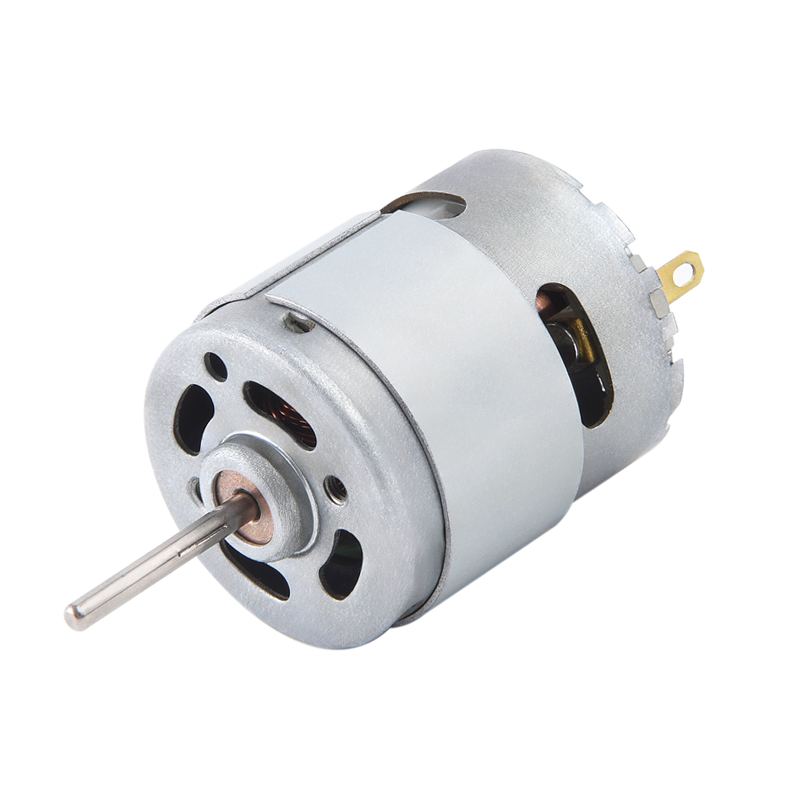
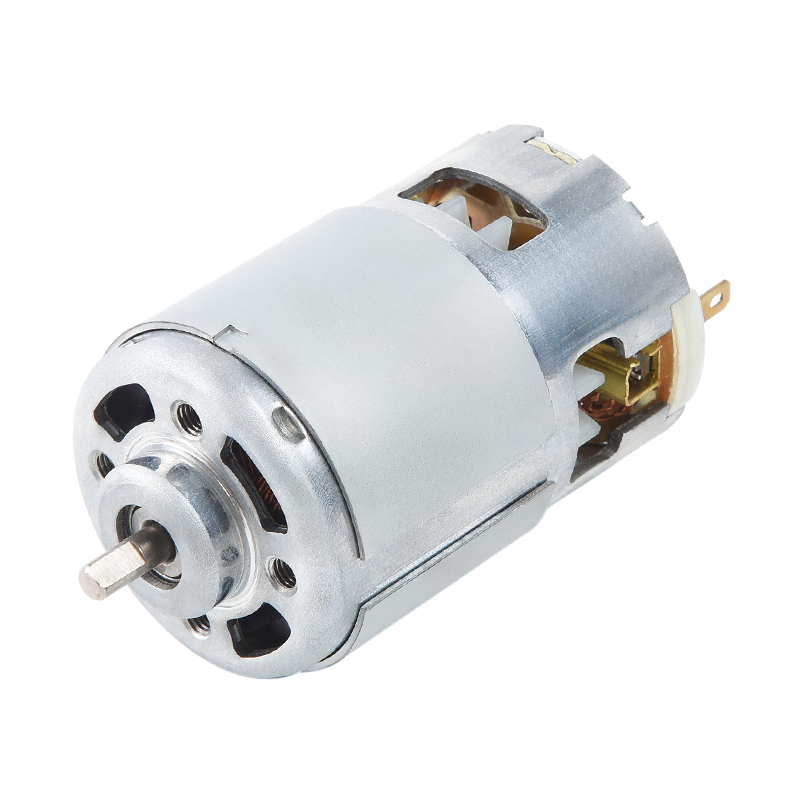
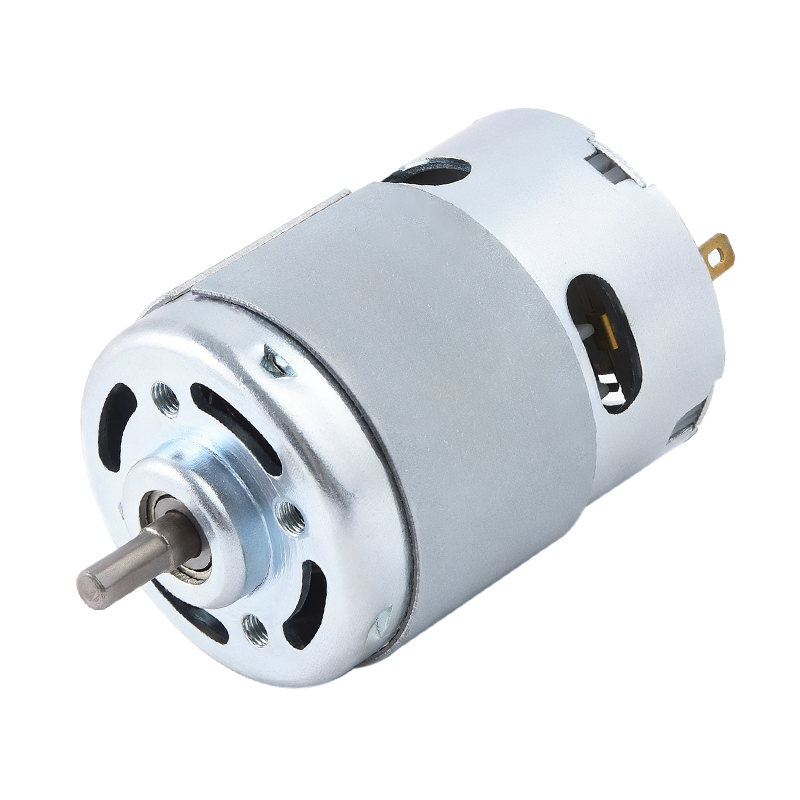
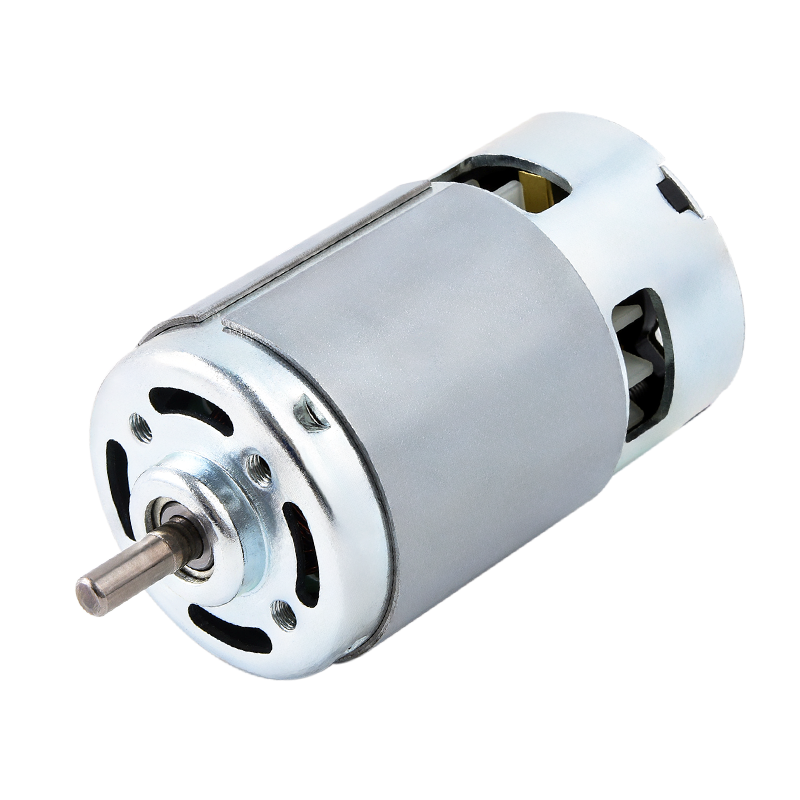
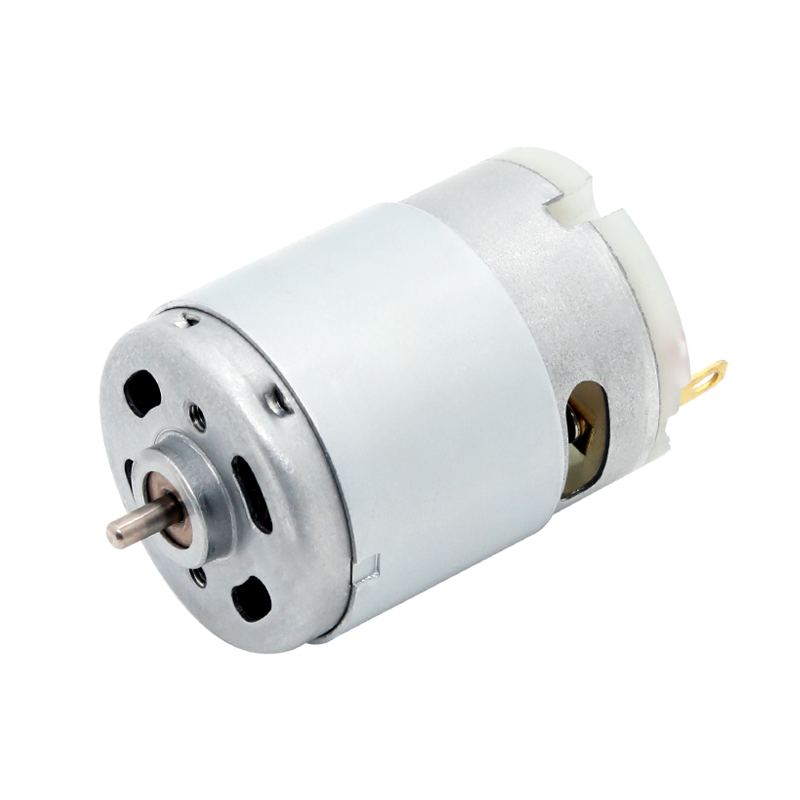
A DC motor converts electrical energy into rotational motion directly. Its output shaft spins at whatever speed the motor's internal winding and voltage produce — often 3,000 to 12,000 RPM for small hobby and industrial motors. That's fast, but the torque at the shaft is low because there's no mechanical advantage involved.
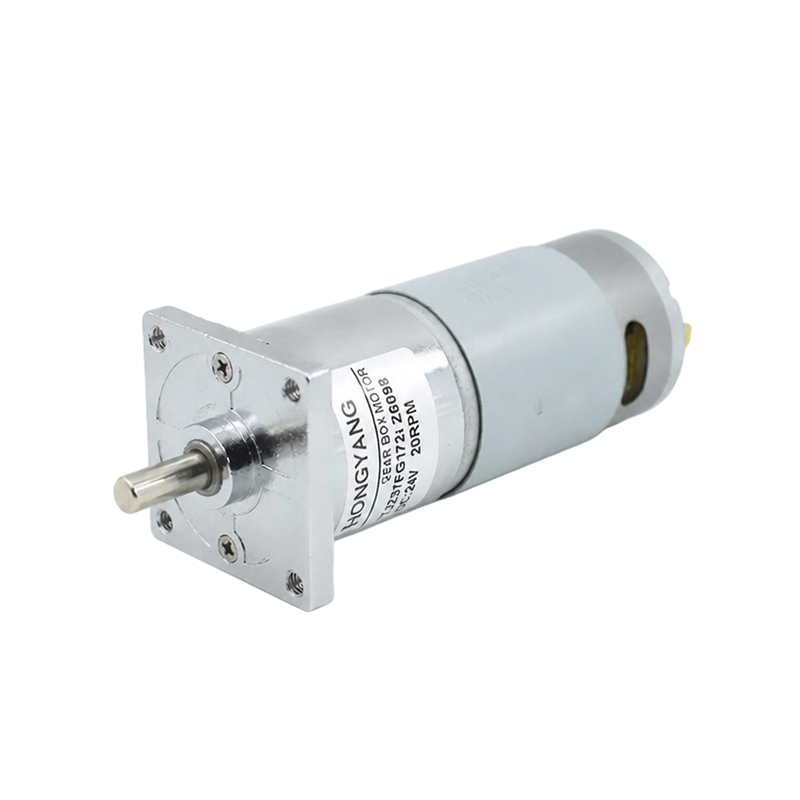
A gear motor takes that same rotating shaft and runs it through a gear train — spur gears, planetary gears, or worm gears — before the output reaches the final shaft. Each gear stage reduces speed and multiplies torque proportionally. A motor that naturally spins at 10,000 RPM might come out of a 100:1 gearbox at just 100 RPM, but with roughly 100 times more torque (minus mechanical losses, typically 10-20%).
Why This Trade-off Matters in Practice
Torque is what actually does mechanical work — turning a wheel against friction, lifting a gate, or driving a conveyor belt. A bare DC motor spinning at high RPM with low torque will stall the instant it meets real resistance. Gearing down the speed is what makes that same motor capable of moving something with mass and load behind it.
Side-by-Side Comparison of Key Specifications
The table below shows typical performance ranges for a small 12V DC motor compared to the same motor fitted with a gearbox.
| Specification | Standard DC Motor | Small Gear Motor |
|---|---|---|
| No-Load Speed | 8,000-10,000 RPM | 80-150 RPM |
| Stall Torque | 0.5-1.5 kg·cm | 30-80 kg·cm |
| Typical Efficiency | 75-85% | 60-75% |
| Physical Size | Compact | Longer (gearbox added) |
| Unit Cost | Lower | 20-60% higher |
Note that efficiency drops as gear ratio increases, since each additional gear stage introduces friction losses. A 10:1 gearbox might retain 85% efficiency, while a 300:1 planetary gearbox can drop to 50-60%.
When a Plain DC Motor Is the Right Call
Skip the gearbox when the application needs speed more than force, and the load is light or already spinning freely. Common use cases include:
- Cooling fans and blowers where airflow, not torque, is the goal
- Small drones and RC vehicle propellers
- Vibration motors in phones and wearables
- High-speed spindles for tools like rotary cutters or drills
- Applications already using external gearing or belts elsewhere in the system
In these cases, adding a gearbox only increases cost, size, and mechanical loss without any real benefit.
When a Small Gear Motor Is Worth the Extra Cost
A small gear motor earns its higher price whenever the load resists movement — meaning it takes real force to start or sustain motion. Typical scenarios include:
- Robotic arms and actuators that need to lift or hold a fixed position under load
- Window and door automation systems, including gate openers
- Conveyor systems moving product against friction
- Camera gimbals and pan-tilt mechanisms requiring precise, slow movement
- Vending machines and dispensing mechanisms
- Battery-powered wheelchairs and mobility devices
A Real-World Sizing Example
Consider a small robotic arm joint that needs to lift a 500g load at a 5cm radius. That requires roughly 25 kg·cm of torque at the joint. A bare DC motor producing 1 kg·cm of stall torque simply cannot do this — it would stall immediately. Pairing that same motor with a 30:1 gearbox brings usable torque to around 25-27 kg·cm (accounting for 15% mechanical loss), which is right in range. This is the calculation that separates a working design from a burned-out motor.
How to Choose the Right Gear Ratio
Picking a gear ratio isn't guesswork — it follows directly from your torque and speed requirements. Use this basic process:
- Calculate the torque needed at the output shaft based on load weight and lever arm distance
- Check the base motor's stall torque and no-load speed from its datasheet
- Divide the required torque by the motor's rated torque to estimate the minimum gear ratio needed
- Add a safety margin of 20-30% to account for gearbox losses and avoid running the motor at stall conditions
- Confirm the resulting output speed still meets your application's timing needs
Running a motor too close to its stall torque continuously causes overheating and premature failure. Most small gear motor designs perform best when operating at 50-70% of rated stall torque, leaving headroom for load variation.
Common Mistakes When Choosing Between the Two
A few recurring errors show up across DIY and even some commercial designs:
- Selecting a motor based on voltage and RPM alone, ignoring torque requirements entirely
- Assuming a higher gear ratio is always safer — excessive reduction wastes efficiency and adds unnecessary size and cost
- Overlooking backlash in cheaper gearboxes, which causes positioning inaccuracy in precision applications
- Ignoring duty cycle — a gear motor rated for intermittent use will overheat if run continuously
Checking a manufacturer's datasheet for both stall torque and continuous torque rating avoids most of these issues before a design is finalized.
News
-
Brush DC Motor Origins and Physical Foundations The Brush DC Motor is a pioneer in converting electrical energy into mechanical motion, and its history is closely intertwined with ...
READ MORE -
Who Is Still Using Brushed DC Motors These Days? Brushed DC motors in small appliances Despite the growing adoption of brushless motor technology, small appliances remain a major c...
READ MORE -
Brush DC Motor Applications in Consumer Electronics and Smart Devices Brush DC Motor Role in Consumer Electronics Design Brush DC Motor plays a critical role in the design and func...
READ MORE

Quick Links
 Home
Home


Copyright © Yuyao Hongyang Micromotor Co., Ltd. All rights reserved.

