

 Eng
Eng 
 русский
 Español

 Home / News / Industry News / How Does a Brushed DC Motor Work? Engineering Guide for Micro Brushed Motors
 How Does a Brushed DC Motor Work? Engineering Guide for Micro Brushed Motors
 2026.08.12
 Industry News
Brushed DC Motor Working Principle: The Short Answer
Press the trigger of a cordless screwdriver and a tiny brushed DC electric motor develops torque almost instantly. That quick response, combined with low cost and simple speed control, is why brushed motors still appear in so many everyday products.
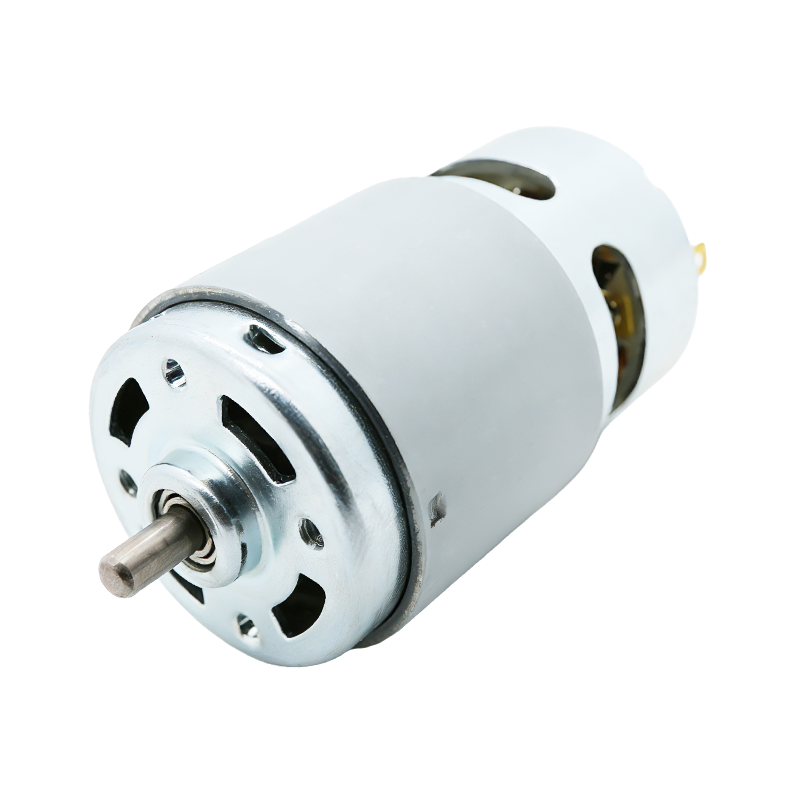
The working principle fits into one paragraph. Electric current enters through two carbon brushes that slide on a segmented copper commutator mounted on the shaft. The commutator feeds the current into coils wound on the rotor. Those coils generate a magnetic field that interacts with the permanent-magnet field of the stator, creating rotation. Just before the rotor aligns with the stator field, the commutator segments change contact with the brushes and reverse the current direction in the coils. That reversal, called commutation, pushes the rotor past the dead point and keeps it spinning in the same direction.
Every micro brush DC motor, from the compact 300 series to the larger 900 series made at Yuyao Hongyang Micromotor, works on this same electromechanical principle.
Main Components of a Micro Brushed DC Motor
A brushed DC electric motor has four functional parts. The table below summarizes each part and its role; the two sub-sections that follow explain the details that matter when you compare motors from different suppliers.
| Component | Function | Typical design in micro motors |
|---|---|---|
| Stator | Provides the stationary magnetic field | Two or four permanent magnet segments bonded inside the steel housing |
| Rotor (armature) | Carries current-carrying windings that create the rotating field | Laminated iron core with multiple coil slots, wound with enameled copper wire |
| Commutator | Switches current direction in the rotor windings as the shaft turns | Segmented copper bars pressed onto a molded hub on the shaft |
| Brushes | Deliver current from the DC supply to the commutator | Carbon or metal-graphite blocks held by springs and connected to the terminals |
Stator and Rotor: Where the Torque Comes From
In a permanent-magnet brushed motor, the stator uses curved magnets to create a fixed field across the air gap. The rotor sits inside that field. When current flows through the rotor windings, each coil behaves like an electromagnet. The attraction and repulsion between the rotor field and the stator field produce torque on the shaft.
Commutator and Brushes: The Mechanical Switch
The commutator is what distinguishes a brushed motor from every other DC motor type. As the rotor turns, different commutator segments come into contact with the stationary brushes. Switching happens at the angular position where the coil is coplanar with the stator field, which is the point where torque would otherwise drop to zero. The brush-commutator pair therefore acts as a rotary switch synchronized with rotor position, without any external sensor or driver circuit.
Step by Step: How a Brushed DC Motor Rotates
To see the sequence clearly, imagine a simple two-pole motor. The sequence repeats twice per revolution, because each coil pair is switched every half turn.
- DC voltage is applied to the two terminals, which are connected to the brushes.
- The positive brush contacts a commutator segment and current flows into the rotor winding; the negative brush completes the circuit.
- Current in the winding creates a magnetic axis in the rotor. Because the stator magnets are fixed, the magnetic forces rotate the rotor toward alignment with the stator field.
- At the alignment point, the commutator segments pass under the brushes and the current direction in the winding reverses. The rotor's magnetic polarity flips, so instead of stopping, the rotor is pushed past the dead point and continues to spin.
- The sequence repeats, producing continuous rotation as long as DC power is supplied.
Two consequences follow from this design. First, no electronic controller is needed to commutate the motor; the brushes do it mechanically. Second, the rotating windings generate a back electromotive force that opposes the supply voltage. Back EMF grows with speed, which is why a free-spinning motor draws little current while a stalled motor draws maximum current.
Torque, Speed, and the Stall Condition
Most engineers who contact a micro motor manufacturer want the same thing: a motor that fits the available space and delivers the right torque at the right speed without overheating.
Two relationships define brushed DC motor behavior. Torque is proportional to armature current and to the magnetic flux of the stator. Speed is proportional to the voltage applied to the armature minus the voltage drop across the winding resistance. In plain language, load the shaft and the motor slows down and draws more current; raise the voltage and the motor speeds up, while torque remains roughly linear with current.
These relationships also show where the risks are. A motor running below its load rating is safe. A motor running above its rating, or stalled, can overheat the winding insulation, damage the commutator, and demagnetize the stator magnets. The rated torque and the corresponding rated current matter more than the no-load speed when you select a motor.
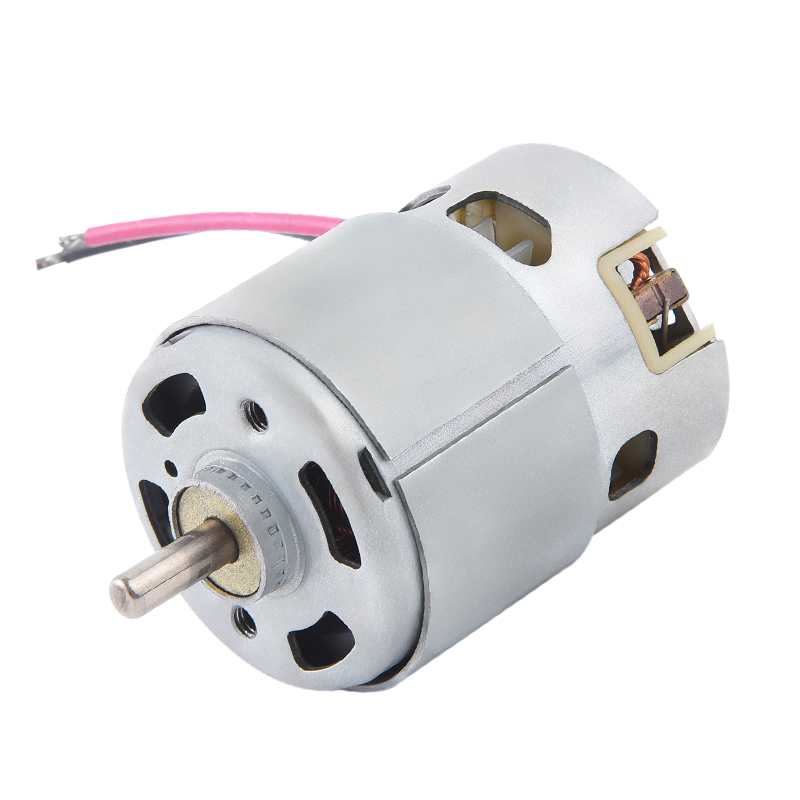
Air-moving products illustrate the trade-off. A fan impeller presents a load that rises with speed; if the motor lacks torque margin at the operating point, the impeller slows and current climbs. The RS360 high-torque brushed DC motor for fans is an example of a motor deliberately wound and magnetized for that load pattern, giving the impeller enough margin without pushing the winding current into the danger zone.
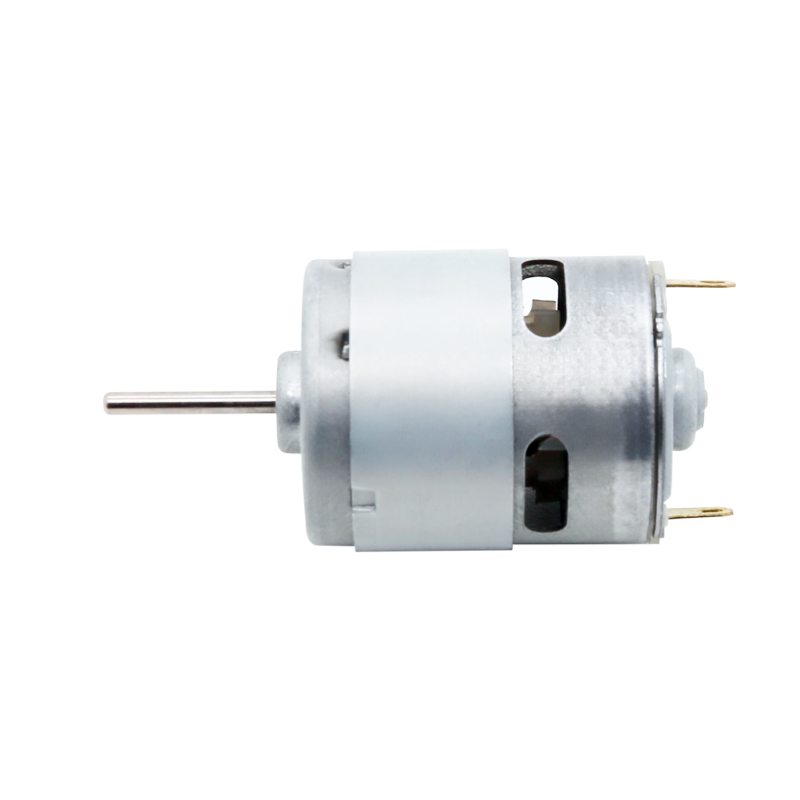 Wholesale Micro Brush DC Motor For Pump Suppliers, FactoryAs China Micro DC Motor for Pump suppliers and RS-360 Small Brush DC Motor For Air Pumps factory, Yuyao Hongyang Micromotor Co., Ltd. off...View Product →
Brushed versus Brushless: What the Comparison Means
Anyone shopping for micro DC motors will see brushless alternatives, and the choice is not always obvious. The table below compares the factors that influence product cost, reliability, and user experience.
| Factor | Brushed DC motor | Brushless DC motor |
|---|---|---|
| Drive electronics | Switch or simple H-bridge; no position sensor needed | Electronic controller with Hall sensors or back-EMF detection |
| System cost | Lower component count, lower system cost | Higher cost for controller and magnet materials |
| Efficiency | Lower, due to brush friction and electrical losses | Higher, especially at partial load |
| Noise | Brush friction and arcing create acoustic and electrical noise | No mechanical commutation noise; drive switching can still produce noise |
| Lifespan | Limited by brush and commutator wear | Limited mainly by bearing life |
| Control complexity | Simple: apply voltage, add PWM for speed | Commutation strategy must be implemented correctly |
| Stall behavior | Very high stall torque; must be protected from overheating | High stall torque; controller protection is available |
The conclusion is practical, not theoretical. If your product has an intermittent duty cycle, runs on low voltage, and competes on cost, a brushed motor is usually the better engineering choice. If the motor runs for hours every day and efficiency is a sales argument, brushless becomes attractive. That is why manufacturers keep both technologies in their range, and why the answer depends on the load profile rather than on fashion.
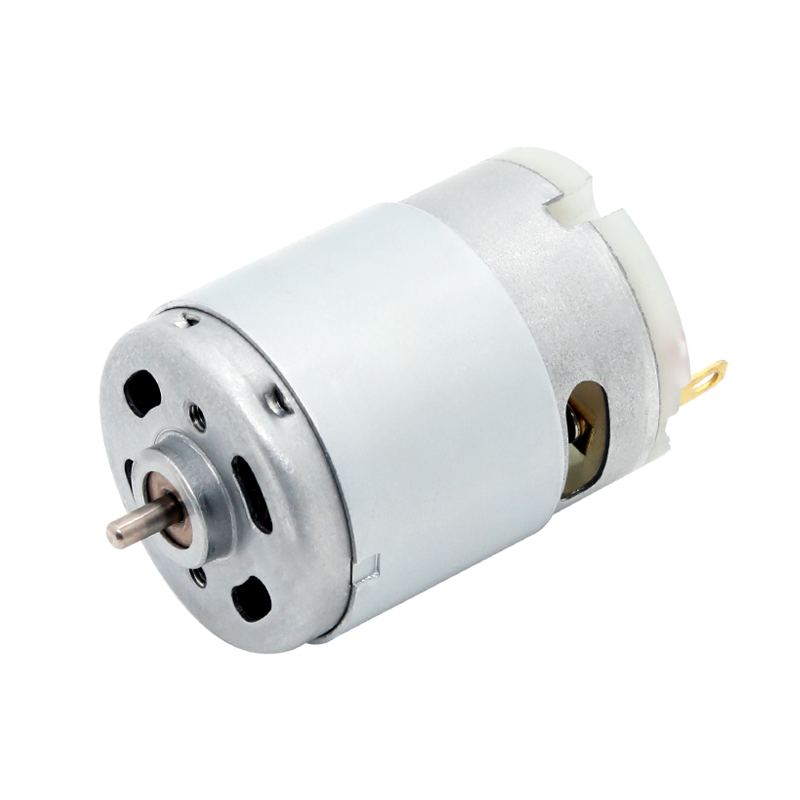
In home appliances, where users sit close to the product, brush noise generates complaints quickly. The RS380SL mute brushed DC motor for home application is a quiet-oriented variant built for that kind of environment, where a few decibels of brush noise decide whether a product feels premium or cheap.
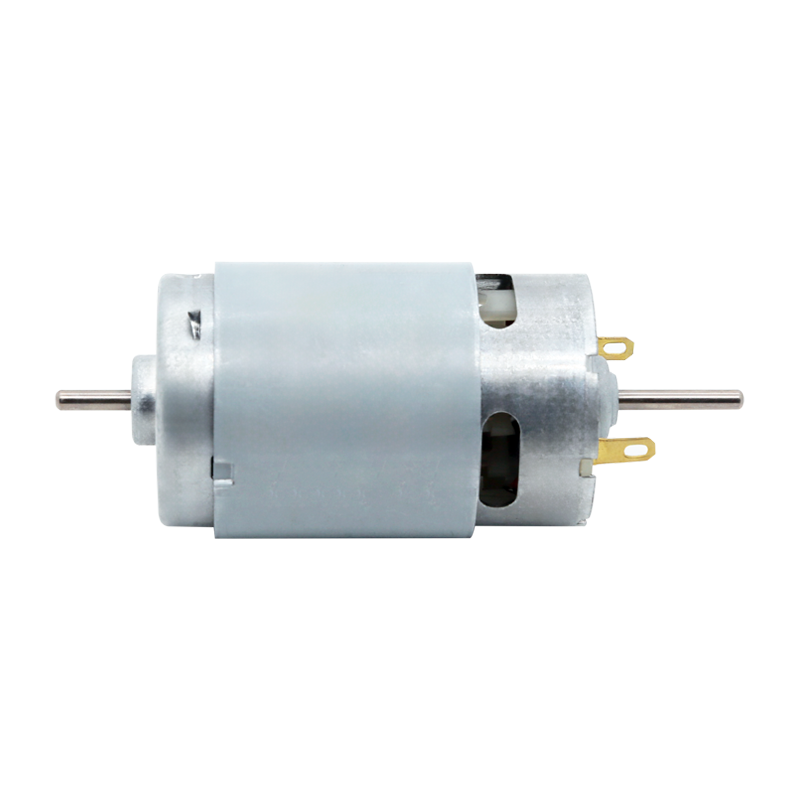 Wholesale Micro Brushed PMDC Motor For Coffee Makers Suppliers, FactoryYuyao Hongyang Micromotor Co., Ltd. is China Micro PMDC Motor suppliers and RS-380SL Brushed PMDC Motor For Coffee Makers factory, we off...View Product →
Selecting a Brushed DC Motor for Your Product
Because a micro brushed motor is always part of a larger system, selection starts with the load, not with the motor catalog. Three application patterns are worth recognizing.
Matching the Motor to the Load
Power tools such as electric screwdrivers need high torque at low speed and tolerate brief overloads; the brushed motor's high starting torque is exactly the right characteristic. Household products such as robot vacuum cleaners need compact size, moderate lifespan, and low noise, so brush grade and commutator finish matter as much as the basic magnetic design. Automated equipment such as vending machines runs long duty cycles, and current draw plus heat dissipation decide whether the motor survives inside a sealed enclosure.
Verifying a Micro Motor Before Volume Orders
Once you have a shortlist that fits your mechanical envelope, verify these parameters on samples before placing a volume order:
- Rated voltage and current draw at rated load. A 20 percent difference in current between samples indicates winding or magnet inconsistency.
- No-load speed, rated speed, and stall torque. Compare them against your load curve, not just against the datasheet.
- Acoustic noise, reported in dB(A). For home appliances this is a first-line specification; a motor that is mechanically perfect but audible will fail the product review.
- Operating life in hours, tested under the same duty cycle you intend to use. A motor rated for continuous operation may fail quickly under an aggressive start-stop sequence.
- Material compliance for your target market. ISO 9001 manufacturing, RoHS, and REACH compliance are routinely requested by micro motor buyers.
- Shaft and terminal customization. Shaft flat, pinion gear, lead wire length, and connector type often make the difference between a drop-in motor and a custom variant.
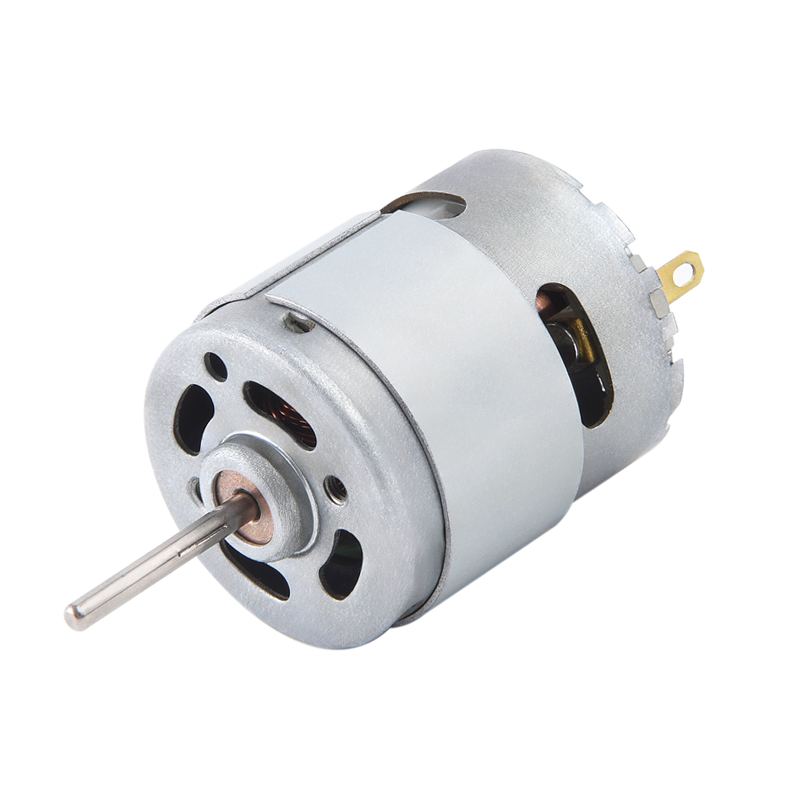
Coffee machines are a good example of why product-specific design matters. The machine cycles on and off many times per day, and users notice motor vibration and clicking. The RS550SL smooth brushed DC motor for coffee machines targets exactly that profile with low-vibration running and consistent starting behavior.
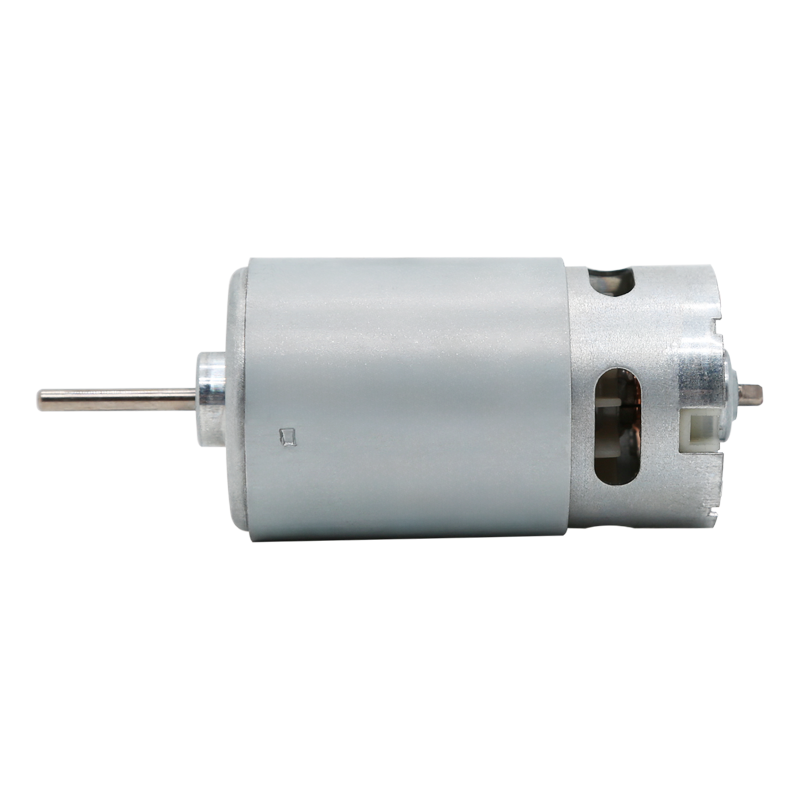 Wholesale RS-550SL Low Noise Brush DC Motor for Paper Shredders Suppliers, FactoYuyao Hongyang Micromotor Co., Ltd. is China Wholesale RS-550SL Low Noise Brush DC Motor for Paper Shredders Suppliers and Factory, detai...View Product →
At Yuyao Hongyang Micromotor, we have manufactured micro brush DC motors since 1988 across the 300, 500, 700, 800, and 900 series, with an annual capacity of more than 10 million units. Whatever supplier you evaluate, ask for test data on torque-speed curves, acoustic noise, and endurance. The answers will tell you more about the manufacturing process than any promotional description.
News
-
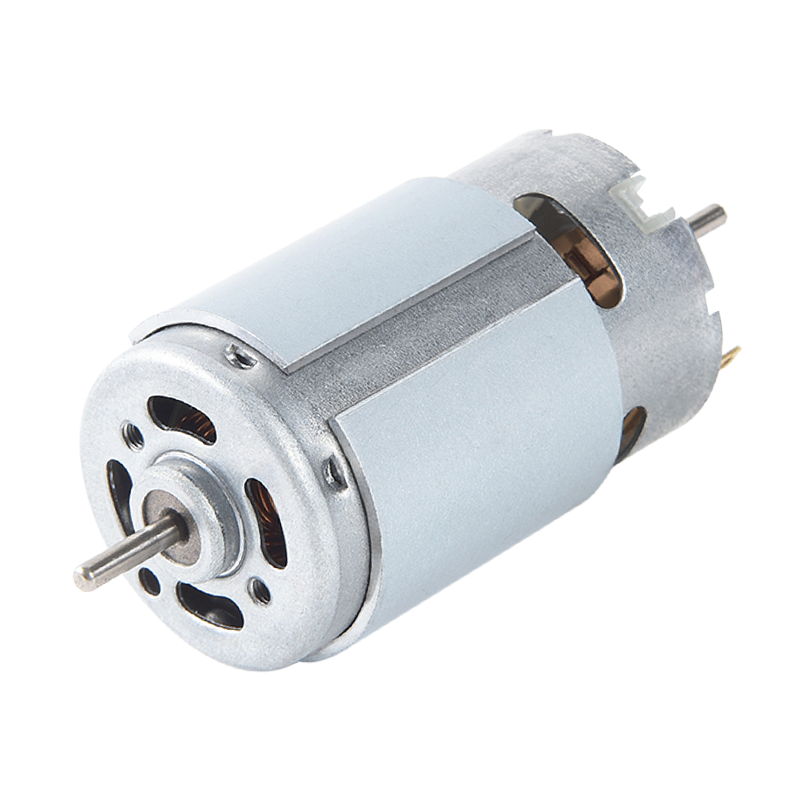
Brush DC Motor Origins and Physical Foundations The Brush DC Motor is a pioneer in converting electrical energy into mechanical motion, and its history is closely intertwined with ...
READ MORE -
Who Is Still Using Brushed DC Motors These Days? Brushed DC motors in small appliances Despite the growing adoption of brushless motor technology, small appliances remain a major c...
READ MORE -
Brush DC Motor Applications in Consumer Electronics and Smart Devices Brush DC Motor Role in Consumer Electronics Design Brush DC Motor plays a critical role in the design and func...
READ MORE

Quick Links
 Home
Home


Copyright © Yuyao Hongyang Micromotor Co., Ltd. All rights reserved.

