

 Eng

 русский
 Español


 Home / News / Industry News / how can a dc motor be used as generator: Practical Applications, Selection, Performance
how can a dc motor be used as generator: Practical Applications, Selection, Performance
 2026.10.14
 Industry News
Somewhere in a drawer there is a small DC motor waiting for a job, rescued from a broken toy, a hand fan, or an old printer. You have read that it can also run backwards as a generator, and now you want to know whether that is really true and how to do it properly.
Short answer: yes, and there is no trick involved. A permanent-magnet DC motor and a permanent-magnet DC generator are the same machine, only described from opposite ends. We have been building micro DC motors in Yuyao since 1988, and the generator question comes up constantly, from students wiring a small wind turbine to engineers adding a hand-crank charging option. Here is what actually matters.
Why a DC Motor Can Be Used as a Generator
Energy conversion inside a DC machine is symmetrical. Push current through a coil sitting in a magnetic field and the coil is pushed sideways, so the rotor turns. Turn that same rotor instead and the coil sweeps through the field, the magnetic flux linking it changes, and a voltage appears across the terminals. That is Faraday's law of induction doing exactly what it does in every generator ever built.
What makes a brushed DC motor so convenient is its commutator. Inside the armature the induced voltage is alternating, because each coil passes under a north pole and then a south pole. The commutator swaps the connection to the outside world at precisely the right moment, so the two terminals keep a fixed polarity. It is a mechanical rectifier, and it is the reason a brushed motor hands you DC without a single electronic component.
The neat part is that one number does two jobs. The voltage constant that tells you how fast a motor spins per volt also tells you how much voltage it produces per revolution. A motor rated at 12 V and 6,000 rpm no load will generate roughly 12 V when something else spins it up to 6,000 rpm.
Brushed or Brushless: What Comes Out of the Wires
Both families can generate, but they hand you different electricity, and that difference decides how much work the rest of your circuit has to do.
Brushed DC motors deliver direct current
Spin the shaft and DC appears at the terminals, with a ripple riding on top from the commutation. Two wires, nothing else required, and a multimeter shows a reading immediately.
Brushless DC motors deliver three-phase alternating current
In a brushless motor the windings sit in the stator and the magnets rotate, so spinning the shaft induces a three-phase voltage on the stator leads, trapezoidal in a typical BLDC and sinusoidal in a PMSM. Nothing rectifies it mechanically, so you need a three-phase bridge plus a smoothing capacitor, or a controller that supports active rectification, before that energy can charge a battery.
| Aspect | Brushed DC motor | Brushless DC motor |
|---|---|---|
| Output at the terminals | DC with ripple | Three-phase AC |
| Rectification | Built in, via commutator and brushes | External bridge rectifier required |
| Voltage versus speed | Nearly linear | Nearly linear |
| Extra parts for DC output | Smoothing capacitor, perhaps a blocking diode | Three-phase rectifier and capacitor, or a regenerative controller |
| Main wear point | Brushes and commutator | Electronics, not brushes |
| Typical fit | Simple DIY and low-cost generation | Higher efficiency, sealed or long-life duty |
Turning a Motor Into a Generator, Step by Step
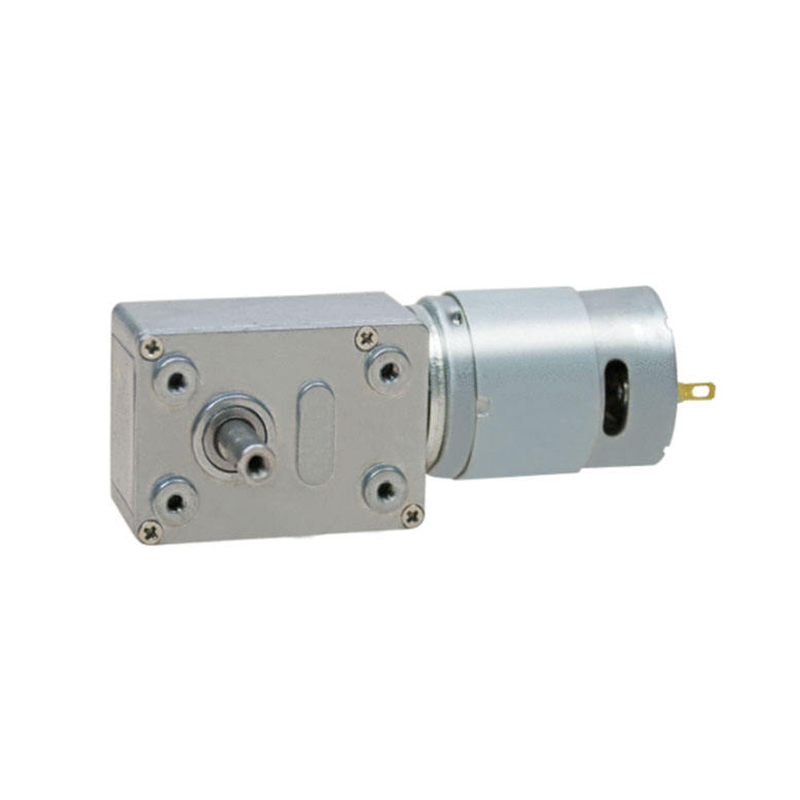
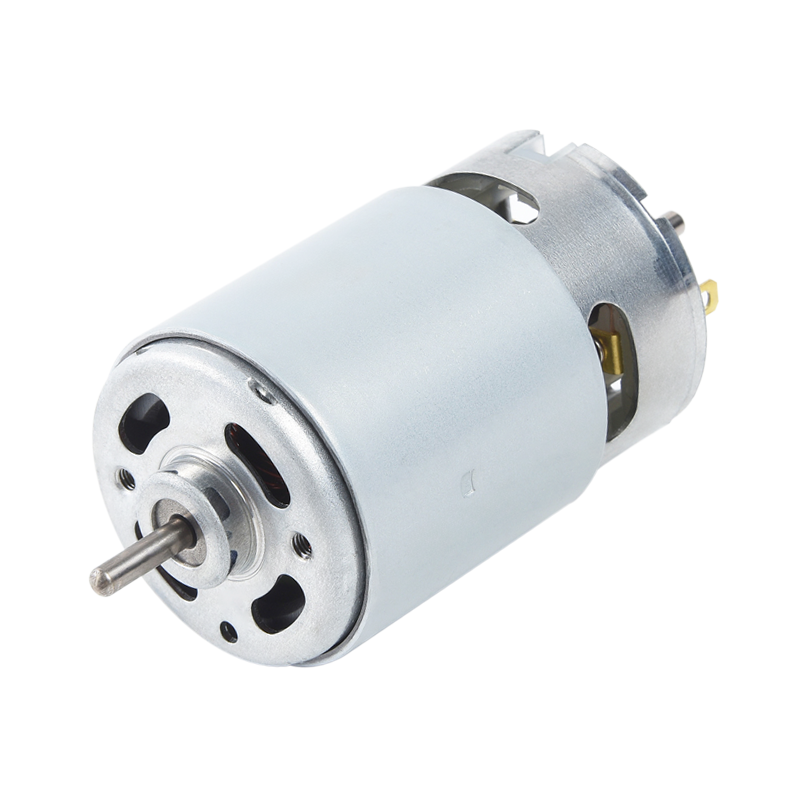
Most people start with whatever motor is already on the bench, and that is a perfectly good approach. The small brushed motors used in toys and handheld appliances are the classic choice for a first wind turbine or hand-crank experiment, because they contain permanent magnets and produce a readable voltage at only a few hundred rpm.
 RS-977 High Speed Brushed DC Motor for Lawn MowersA permanent-magnet brushed motor offering high-speed output and stable load capacity, relevant when matching voltage to rpm in small builds.View Product →
- Start with the right machine. It must have permanent magnets. A brushed permanent-magnet motor from a toy, fan or printer qualifies, and so does a brushless motor. Induction and wound-field machines do not work the same way.
- Disconnect the electronics. If the motor came with a driver board, speed controller or battery pack, isolate it. You want the raw motor terminals.
- Couple the shaft to a prime mover. A hand crank, propeller, water wheel or turbine will do, as long as it turns the shaft steadily.
- Measure the open-circuit voltage. Set a multimeter to DC volts for a brushed motor and AC volts for a brushless one, then spin by hand and watch the reading follow your speed.
- Note the volts per rpm. Spin at a known speed, record the voltage, and you have the constant you need to size everything else.
- Rectify if necessary. Three-phase bridge and capacitor for a brushless motor; a capacitor across the terminals is usually enough for a brushed one, plus a blocking diode if you are feeding a battery.
- Add a load and measure again. Expect the voltage to sag, because current flowing through the winding resistance always costs you volts.
- Watch for heat and brush arcing. If the motor runs hot, you are drawing more current than it can shed.
How Much Voltage and Power Can You Realistically Get?
Voltage scales with speed almost linearly, which makes the arithmetic easy. Divide the rated voltage by the no-load speed and you get the generator constant. For a typical micro motor that constant lands somewhere between one and three volts per thousand rpm, which is why a lazy hand crank produces a volt or two while a turbine spinning at a few thousand rpm can reach the motor's rated voltage.
Open-circuit voltage is the optimistic number. As soon as current flows, the terminal voltage drops by the current multiplied by the winding resistance. On a small motor the armature resistance may be a few ohms, so pulling one amp can cost you several volts. Measure again with the load connected; that is the figure your circuit actually sees.
Power follows torque. The current a generator delivers is proportional to the torque applied to the shaft, so a weak prime mover at low speed gives you voltage with almost no current behind it. As a rough guide, a small brushed motor driven at a decent fraction of its rated speed returns somewhere between half and three quarters of the mechanical power you put in, with winding resistance, brush drop, bearing friction and iron losses taking the rest.
Choosing a Motor for Generator Duty
If you are picking a motor specifically to generate, look past the number on the label and check a handful of characteristics instead.
- Permanent magnets, without exception. Ferrite or rare-earth magnets give you the excitation field for free, which is what makes generation possible in a machine this small.
- Low winding resistance, so less of your mechanical input turns into heat in the copper.
- Low no-load current and gentle cogging, because smooth armatures start turning with less effort when a light breeze or a hand crank is your prime mover.
- A speed rating that suits your drive. Since voltage rises with rpm, a faster motor needs fewer revolutions to reach a useful output.
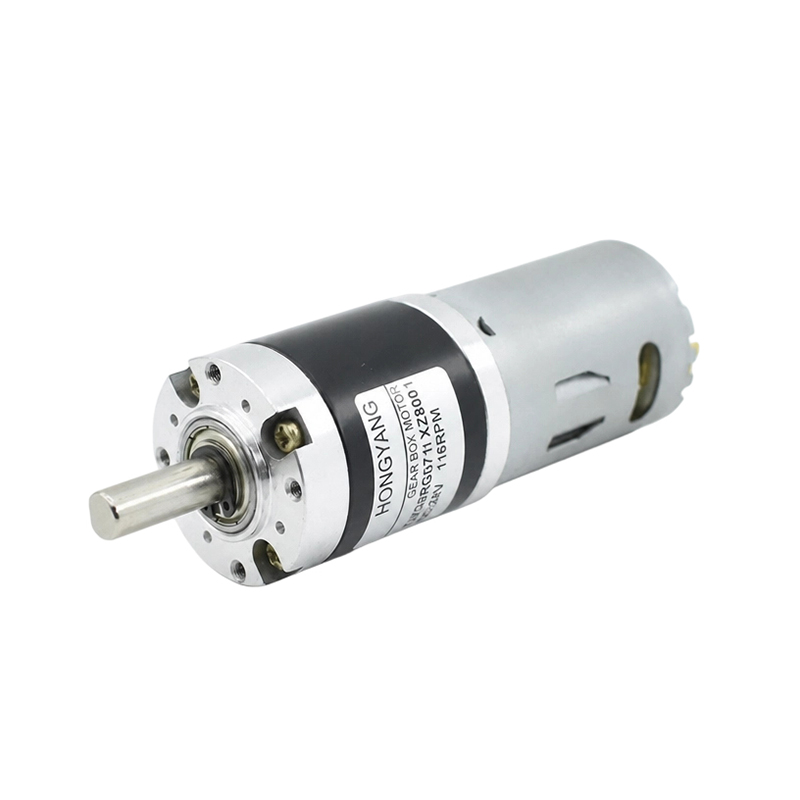
- A gearbox, used thoughtfully. In normal operation a gear motor trades speed for torque; in generation you can run it the other way round, letting a slow water wheel spin the motor shaft much faster, as long as you accept the extra friction and losses.
Motors that spin easily and draw little current at no load tend to make the friendliest generators, which is part of the reason we keep energy-saving brushed designs in the catalogue. They behave predictably when the energy flows the other way, and their lower losses leave more of your effort in the circuit rather than in the windings.
 RS-540 Long Lifespan Brushed DC Motor for Vacuum CleanersA durable brushed permanent-magnet motor with predictable low-load behavior, useful where long service life and bidirectional energy flow matter.View Product →
Mistakes That Catch People Out
- Expecting any motor to work. A shaded-pole or three-phase induction motor will not produce useful output without external excitation.
- Spinning too slowly. Voltage is proportional to speed, so a leisurely crank gives you almost nothing.
- Forgetting to rectify a brushless motor. Three-phase AC fed into battery terminals is a good way to damage something.
- Leaving the original controller connected. Back-feeding a driver through its own output stage rarely ends well.
- Ignoring brush wear. Brushes are consumables, and continuous generating duty is harder on them than occasional motor use.
- Overloading the prime mover. Current is proportional to torque, so a heavily loaded generator can stall the turbine driving it.
- Trusting the open-circuit voltage. It is not the working voltage; measure under load before you design around a number.
Where Motor-as-Generator Already Happens in Real Products
Regenerative braking is motor-as-generator in production form. When an electric vehicle slows down, when a cordless drill releases its trigger, and when a robot arm decelerates, the controller lets the machine act as a brake and pushes recovered energy back into the pack. In robotics this is routine, and the same joints that drive the industrial robots we supply motors for spend part of every cycle generating rather than consuming.
Applications like that need motors that tolerate thousands of direction changes without drama, which is exactly what the smooth-running brushed designs in our robot range are built for.
 RS-785SL Brushed DC Motor for Joint CleanersA low-noise brushed permanent-magnet motor built for repeated direction changes, suitable for tools and small generator experiments needing dependable output.View Product →
On a smaller scale, generation turns up in hand-crank flashlights and radios, wind-up torches, small wind turbines, micro-hydro setups, exercise bikes, and energy harvesting from doors, turnstiles and vending mechanisms. None of these need a purpose-built generator. They need a permanent-magnet motor, a sensible gear ratio or speed match, and a rectifier where the output has to be DC.
A Last Word Before You Spin That Shaft
We have been making micro DC motors since 1988, which means we have watched a great many of them end up on the generating side of the circuit, sometimes by design and sometimes by accident. If you are working on a product where one motor has to drive and generate, tell us the voltage, speed, torque and duty cycle you have in mind and we will help you narrow the options, whether that turns out to be a standard brushed model, a brushless design, or a geared unit.
If you would like to see how these motors behave in real equipment first, our overview of the most common brush DC motor applications is a good place to start.
News
-
Brush DC Motor Origins and Physical Foundations The Brush DC Motor is a pioneer in converting electrical energy into mechanical motion, and its history is closely intertwined with ...
READ MORE -
Who Is Still Using Brushed DC Motors These Days? Brushed DC motors in small appliances Despite the growing adoption of brushless motor technology, small appliances remain a major c...
READ MORE -
Brush DC Motor Applications in Consumer Electronics and Smart Devices Brush DC Motor Role in Consumer Electronics Design Brush DC Motor plays a critical role in the design and func...
READ MORE

Quick Links
 Home


Copyright © Yuyao Hongyang Micromotor Co., Ltd. All rights reserved.

