

 Eng
Eng 
 русский
 Español


Types of Small DC Motors: A Guide to Selecting Micro DC Motors
 2026.08.05
 Industry News
The Main Types of Small DC Motors at a Glance
Small DC motors — often called micro DC motors when sized below 37mm in diameter — convert direct current electrical energy into rotational mechanical motion. They power everything from medical devices and camera autofocus systems to hobby drones and automotive actuators. The five principal types used in compact applications are: brushed DC motors, brushless DC motors (BLDC), coreless DC motors, stepper motors, and servo motors. Each operates on a different internal mechanism and suits a different set of performance requirements.
Choosing the wrong type for an application is one of the most common and costly engineering mistakes at the component selection stage. Understanding exactly how each type works — and where its strengths break down — is the practical foundation for making the right call.
Brushed DC Motors: The Workhorse of Small Motion
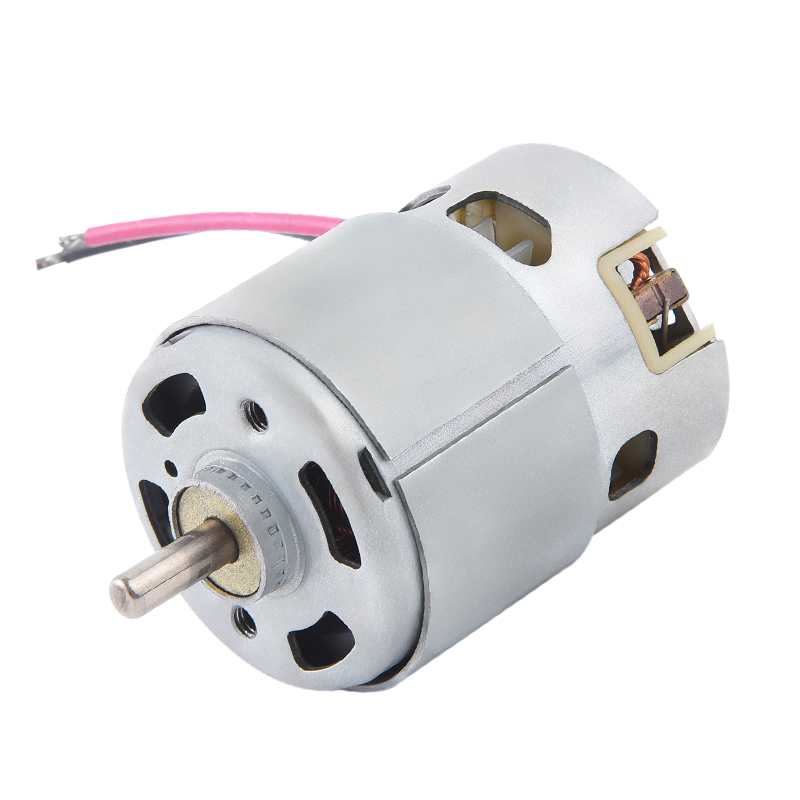
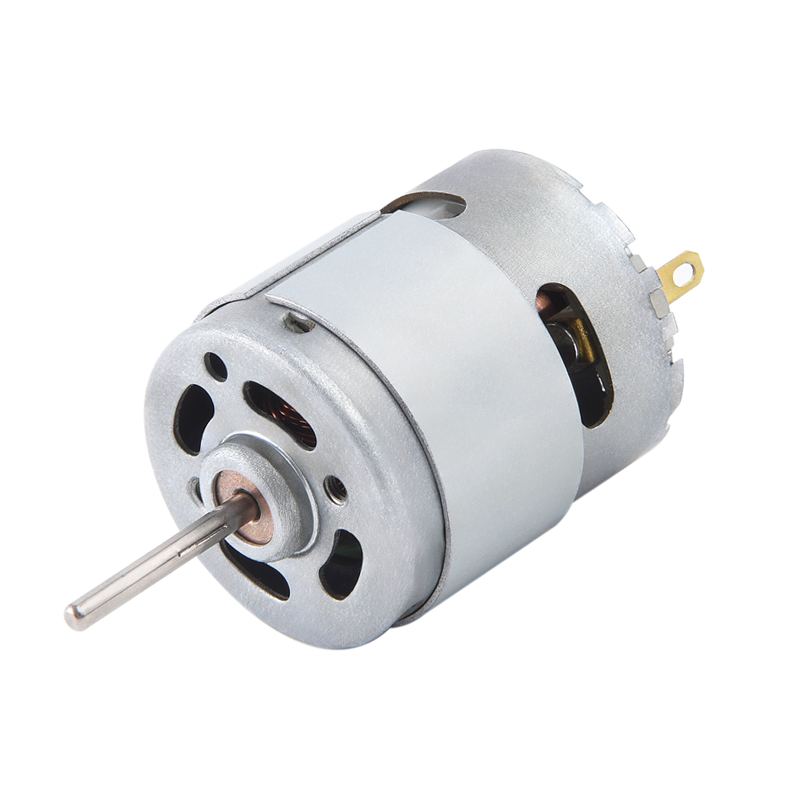
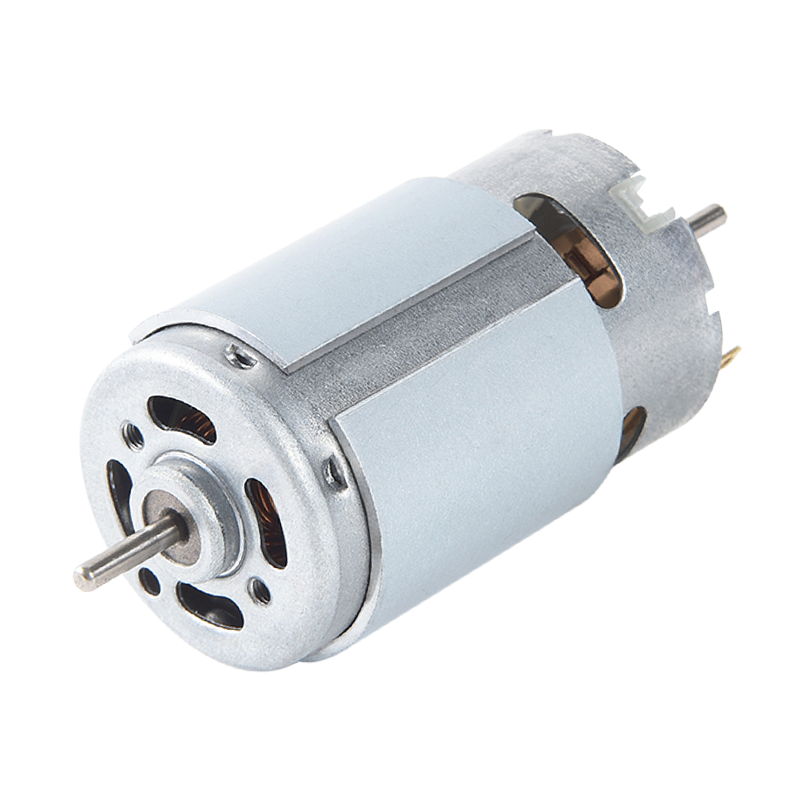
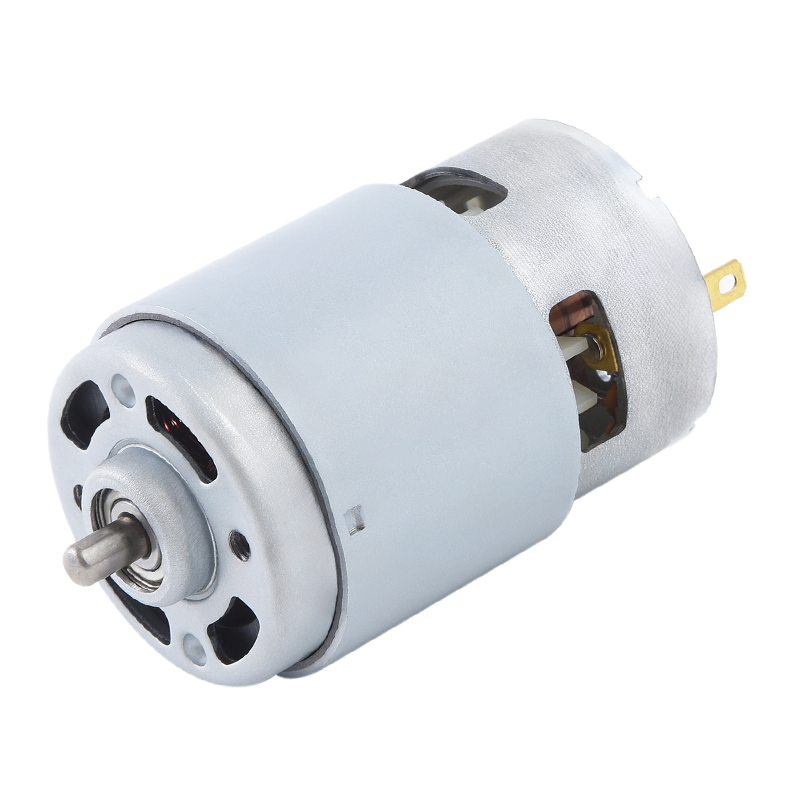
Brushed DC motors are the most widely produced small motor type in the world. Their operating principle is straightforward: carbon or metal brushes maintain sliding electrical contact with a rotating commutator, which sequentially energizes coils on the rotor to sustain rotation. Apply voltage, get rotation — no external controller required.
How They Work
Current flows from the power supply through the brushes into the commutator segments, energizing specific rotor windings. The resulting magnetic field interacts with the permanent magnets surrounding the rotor, generating torque. As the rotor turns, the commutator switches which windings are energized, sustaining continuous rotation. Speed is proportional to applied voltage; torque is proportional to current.
Performance Characteristics
Small brushed DC motors typically operate between 1.5V and 24V and can achieve speeds from a few hundred to over 20,000 RPM. They deliver high starting torque relative to their size and respond instantly to voltage changes. A standard N20 brushed micro motor — one of the most common form factors — fits in a package measuring just 12mm × 10mm and can output meaningful torque at 3–6V.
Key Trade-offs
The brush-commutator interface generates friction and electrical arcing, which means brushed motors produce EMI (electromagnetic interference) and wear out over time. Typical brush life ranges from 500 to 2,000 operating hours depending on load and speed. They are unsuitable for applications requiring long maintenance-free life or very low electrical noise environments. However, their simplicity and low cost make them the default choice for toys, appliances, automotive accessories, and low-cost robotics.
Brushless DC Motors (BLDC): Higher Performance, Longer Life
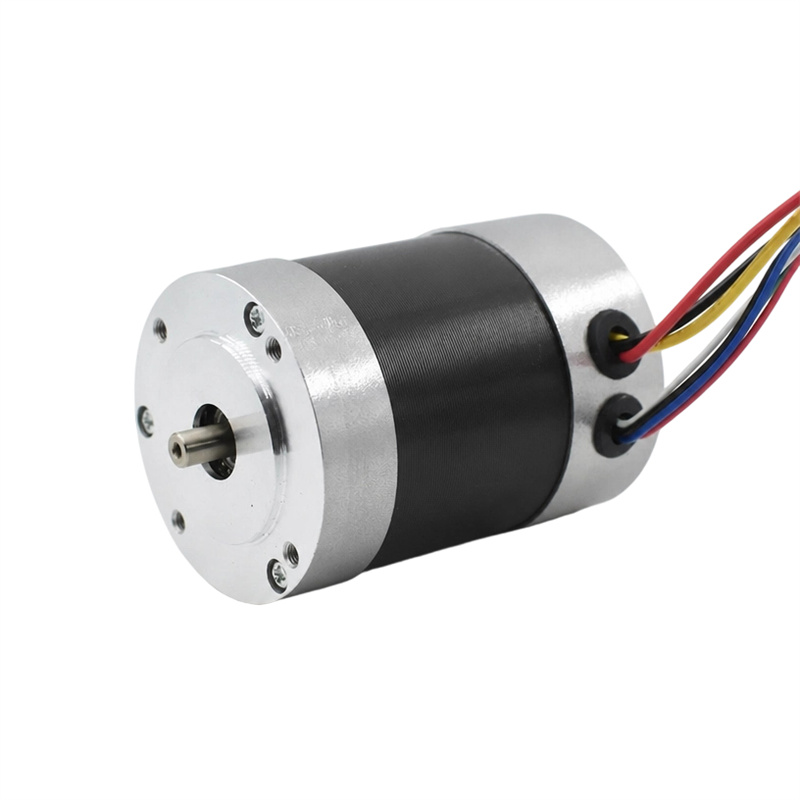
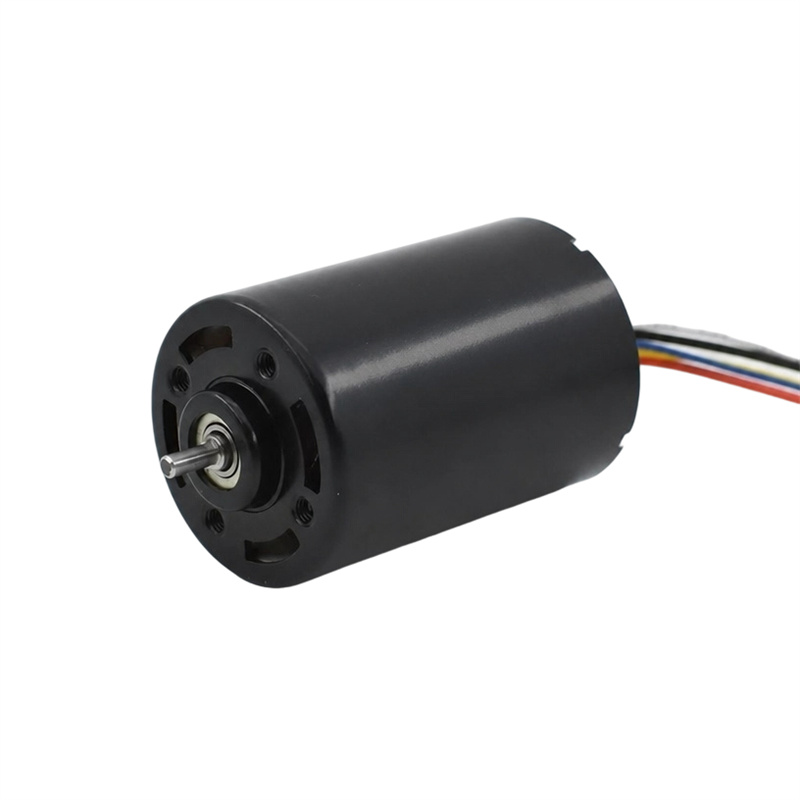
Brushless DC motors eliminate the brush-commutator assembly entirely. Instead, the permanent magnets are on the rotor and the windings are fixed on the stator. An external electronic speed controller (ESC) uses rotor position feedback — typically from Hall effect sensors or back-EMF sensing — to sequence the stator coils and sustain rotation electronically.
Advantages Over Brushed Types
Without mechanical commutation, BLDC motors run cooler, quieter, and far longer. Rated lifespan is typically 10,000–30,000 hours — an order of magnitude greater than brushed equivalents. They are also significantly more efficient: a quality small BLDC motor can achieve 85–95% electrical efficiency, compared to 70–80% for brushed motors of similar size. This makes them the preferred choice in battery-powered applications where run time matters.
Where They Are Used
Micro BLDC motors dominate in drone propulsion (where efficiency and weight are critical), hard disk drive spindles, cooling fans in electronics, electric shavers, and medical devices such as surgical handpieces and portable ventilators. The added cost of the controller is offset by performance and longevity in virtually every demanding application.
Coreless DC Motors: Ultra-Low Inertia for Precision Response
Coreless DC motors — also called ironless or hollow-rotor motors — replace the conventional iron-core rotor with a lightweight cylindrical winding that rotates freely inside a permanent magnet. The absence of an iron core removes the magnetic cogging effect and dramatically reduces rotor mass.
What Makes Them Different
Because the rotor has no iron, there is no reluctance torque and no cogging — the motor starts and stops smoothly at any position without the detent-like "steps" felt in iron-core designs. Rotor inertia is up to 10 times lower than a comparable iron-core motor, which translates to extremely fast acceleration and deceleration.
Applications That Demand This
Coreless DC motors are used wherever position response time and smoothness are non-negotiable: camera autofocus and optical zoom mechanisms, robotic surgery tools, prosthetic limb actuators, pen plotters, and laboratory automation equipment. They are among the more expensive small motor types but nothing else matches their dynamic performance at small scale.
Stepper Motors: Precise Position Control Without Feedback
Stepper motors divide a full rotation into a fixed number of equal steps — typically 200 steps per revolution (1.8° per step) for a standard NEMA 17, or up to 400+ steps in high-resolution variants. Each electrical pulse moves the rotor exactly one step; by counting pulses, position can be controlled without any encoder or feedback sensor.
Types of Stepper Motors
Three internal constructions are used in small stepper motors:
- Permanent magnet (PM) steppers: Simple, low-cost, typically 48 or 96 steps per revolution. Common in printers and small appliances.
- Variable reluctance (VR) steppers: No permanent magnet; rotor moves to minimize magnetic circuit reluctance. High step rates possible but low holding torque.
- Hybrid steppers: Combine PM and VR principles for the best combination of resolution, torque, and step accuracy. The dominant type in CNC machines, 3D printers, and precision lab instruments.
Where Steppers Excel and Where They Don't
Steppers are ideal when you need repeatable, open-loop position control without the cost of a closed-loop encoder system. They hold their position under load with full rated torque even when stationary — a property called holding torque that continuous DC motors don't have. The trade-off: torque drops sharply above a few hundred RPM, and missed steps under overload go undetected without a feedback sensor. They also draw full rated current even when stationary, making them less efficient in battery-powered designs.
Servo Motors: Closed-Loop Precision for Dynamic Loads
A servo motor is not a fundamentally different motor type — it is typically a brushed or brushless DC motor paired with a position encoder and a control circuit that continuously compares actual position to commanded position and corrects any error. This closed-loop architecture is what makes servo systems far more precise and responsive under varying loads than open-loop steppers.
RC Servos vs. Industrial Servo Motors
In the small motor space, two distinct categories are important to distinguish:
- RC/hobby servos are self-contained units with a built-in gearbox, potentiometer feedback, and control circuit. They accept a standard PWM signal and rotate to a position between 0° and 180° (or continuous rotation in modified versions). They're used in robotics, RC aircraft, and animatronics.
- Industrial micro servo systems pair high-resolution encoders (often 1,000–10,000 counts per revolution) with a dedicated servo drive and controller. These offer dynamic torque control, velocity profiling, and sub-degree accuracy — found in precision CNC axes, pick-and-place machines, and medical robotics.
When to Choose Servo Over Stepper
Servo systems are the right choice when the load varies unpredictably, when high speed and high torque are needed simultaneously, or when position accuracy must be verified and corrected in real time. They are more complex and expensive than stepper systems, but for dynamic, high-duty-cycle applications they are both more accurate and more energy efficient — a servo motor only draws current proportional to the torque demand, unlike a stepper that draws full current continuously.
Side-by-Side Comparison of Small DC Motor Types
The table below summarizes the key operating characteristics and application fit for each motor type:
| Motor Type | Control Complexity | Typical Efficiency | Lifespan | Position Control | Relative Cost |
|---|---|---|---|---|---|
| Brushed DC | Very low | 70–80% | 500–2,000 hrs | None (open-loop speed) | Lowest |
| Brushless DC | Medium (needs ESC) | 85–95% | 10,000–30,000 hrs | Speed control | Medium |
| Coreless DC | Low–medium | 75–90% | 1,000–5,000 hrs | Speed; smooth response | High |
| Stepper | Medium | 50–70% | Very long (no brushes) | Open-loop position | Low–medium |
| Servo | High | 80–95% | Long (BLDC-based) | Closed-loop precision | Highest |
Specialized Small DC Motor Configurations Worth Knowing
Beyond the five primary types, several specialized configurations appear frequently in micro motor applications:
Gear Motors
A gear motor integrates a gearbox directly onto any of the above motor types. Reduction ratios from 10:1 to 1000:1 are common in micro form factors. This trades output speed for proportionally higher output torque, making it possible for a tiny brushed motor drawing 200mA to drive a mechanical load requiring far more torque than the bare motor could deliver. The N20 gear motor — one of the most popular hobbyist and robotics components — is a brushed DC motor with an integrated metal gearbox in a package under 25mm long.
Vibration Motors (ERM and LRA)
Eccentric rotating mass (ERM) motors are brushed DC motors with an off-center weight attached to the shaft — rotation of the imbalanced mass creates vibration. Linear resonant actuators (LRA) use a voice-coil mechanism to produce precise, frequency-tunable haptic feedback. Both are micro DC motor derivatives used in smartphones, wearables, game controllers, and medical alert devices. LRAs offer significantly faster response times (5–10ms vs. 50–100ms for ERMs) and are increasingly preferred in premium haptic applications.
Pancake (Flat) Motors
Pancake motors sacrifice axial length for a very flat profile — some measure under 5mm in height. They use a disc-shaped coreless or printed-circuit rotor and are used where installation depth is the critical constraint: inside thin robotic joints, in blood glucose meters, and in certain aerospace actuators.
How to Select the Right Small DC Motor for Your Application
Working through a structured selection process avoids the most common mismatches between motor type and application requirement:
- Define the load: Calculate required output torque and speed at the shaft. Account for peak loads, not just average loads — a motor that handles steady-state demand may stall or overheat under startup or overload conditions.
- Determine position control needs: If you need to stop at precise angular positions, steppers or servo systems are required. If you only need speed control, brushed or brushless DC motors are simpler and cheaper.
- Assess duty cycle: A motor running continuously at high load needs high efficiency (BLDC) and adequate thermal management. An intermittently used motor (a camera lens drive that moves for 0.5 seconds) can tolerate lower efficiency.
- Check operating environment: High EMI sensitivity (medical equipment, precision instrumentation) rules out brushed motors. Environments requiring IP-rated sealing favor brushless designs where the commutation is electronic rather than mechanical.
- Factor in lifespan requirements: Consumer products with short design lifespans can use brushed motors. Devices requiring 5–10+ years of reliable operation without maintenance should use BLDC or stepper types.
- Set a budget per unit: Brushed motors start below $1 in volume. Precision coreless or servo systems can run $50–$500+. The performance gain must justify the cost delta for the specific application.
For most low-cost, low-duty-cycle applications — toys, basic robotics, simple actuators — a brushed DC motor with or without a gearbox is the pragmatic starting point. When efficiency, longevity, noise, or precision enters the picture, the selection moves up the complexity and cost curve toward BLDC, coreless, stepper, or servo solutions.
Common Applications Mapped to Motor Type
Real-world application examples make the selection logic more concrete:
| Application | Motor Type Used | Key Reason |
|---|---|---|
| Toy car drive wheels | Brushed DC | Lowest cost, simple control |
| Drone propulsion | Brushless DC | Efficiency, high RPM, long life |
| Camera autofocus | Coreless DC | Ultra-low inertia, smooth response |
| 3D printer axes | Hybrid stepper | Open-loop position, high holding torque |
| Robotic arm joints | Servo (BLDC-based) | Closed-loop precision, dynamic load handling |
| Smartphone haptics | LRA vibration motor | Fast response, precise feedback control |
| Portable ventilator blower | Brushless DC | Long lifespan, low EMI, efficiency |
| RC servo (steering) | Brushed DC + gearbox + pot | Compact, self-contained position control |
News
-
Brush DC Motor Origins and Physical Foundations The Brush DC Motor is a pioneer in converting electrical energy into mechanical motion, and its history is closely intertwined with ...
READ MORE -
Who Is Still Using Brushed DC Motors These Days? Brushed DC motors in small appliances Despite the growing adoption of brushless motor technology, small appliances remain a major c...
READ MORE -
Brush DC Motor Applications in Consumer Electronics and Smart Devices Brush DC Motor Role in Consumer Electronics Design Brush DC Motor plays a critical role in the design and func...
READ MORE

Quick Links
 Home
Home


Copyright © Yuyao Hongyang Micromotor Co., Ltd. All rights reserved.

