

 Eng

 русский
 Español


 Home / News / Industry News / How Does a DC Motor Work? A Simple Guide to Brushed & Brushless Motors
How Does a DC Motor Work? A Simple Guide to Brushed & Brushless Motors
 2026.10.29
 Industry News
If you’ve ever used an electric screwdriver, a robotic vacuum, or a car window switch, you’ve relied on a DC motor. These small but powerful devices convert electrical energy into rotary motion through a clever combination of magnetism and current. In this guide, we’ll break down how does a DC motor work, what happens inside it, and why different designs suit different applications.
Inside a DC Motor: The Essential Components
To understand how a DC motor works, start with its core parts. Every standard brushed DC motor contains a few key elements:
- Armature (rotor): The rotating coil of wire housed in the center of the motor.
- Field magnets (stator): Permanent magnets or electromagnetic windings that create a stationary magnetic field around the rotor.
- Commutator: A segmented ring on the rotor that reverses the flow of current at the right moments.
- Brushes: Carbon or metal contacts that deliver electrical current to the commutator.
When current flows through the armature, it creates its own magnetic field. The interaction between the rotor's magnetic field and the stator's magnetic field produces a force called the Lorentz force, which pushes on the coil and generates torque. That torque is what makes the shaft spin.
Step by Step: How Continuous Rotation Happens
The beauty of a brushed DC motor lies in how it maintains rotation. Here is the step-by-step process:
- Brushes press against the commutator and pass current into the armature windings.
- The energized winding creates a magnetic field that is attracted or repelled by the field magnet.
- This magnetic interaction creates a rotational force, causing the armature to turn.
- As the armature rotates, the commutator segments switch which windings receive current.
- This switching flips the direction of the magnetic field inside the rotor, so the motor continues spinning in one direction.
Because the commutator and brushes handle the switching mechanically, brushed motors are simple, inexpensive, and easy to control. They also deliver strong starting torque, making them ideal for many everyday products.
Brushed vs Brushless DC Motors
While brushed motors have been around for over a century, brushless DC motors have become popular in recent years. The main difference is that brushless motors replace the mechanical commutator and brushes with an electronic controller. This changes the way the motor operates and what it offers in practical use.
| Aspect | Brushed DC Motor | Brushless DC Motor |
|---|---|---|
| Commutation | Mechanical contact | Electronic control |
| Lifespan | Shorter due to wear | Longer, less wear |
| Noise | More electrical and brush noise | Quieter operation |
| Efficiency | Lower due to friction | Higher efficiency |
| Cost | Lower upfront | Higher complexity and cost |
| Applications | Household appliances, tools | Drones, robotics, precision equipment |
Choosing between them depends on your product’s priorities. If budget and simplicity matter most, brushed motors are often the right fit. If long life, quiet operation, and efficiency are critical, brushless motors are worth the extra investment.
Real-World Applications and How to Choose
DC motors are everywhere. They power electric fans, coffee makers, vacuum cleaners, power tools, car accessories, and even medical instruments. When a design engineer selects a motor, they consider factors such as voltage, speed, torque, noise, size, and cost. The good news is that manufacturers like Hongyang Motor offer ready-made designs tailored for specific devices.
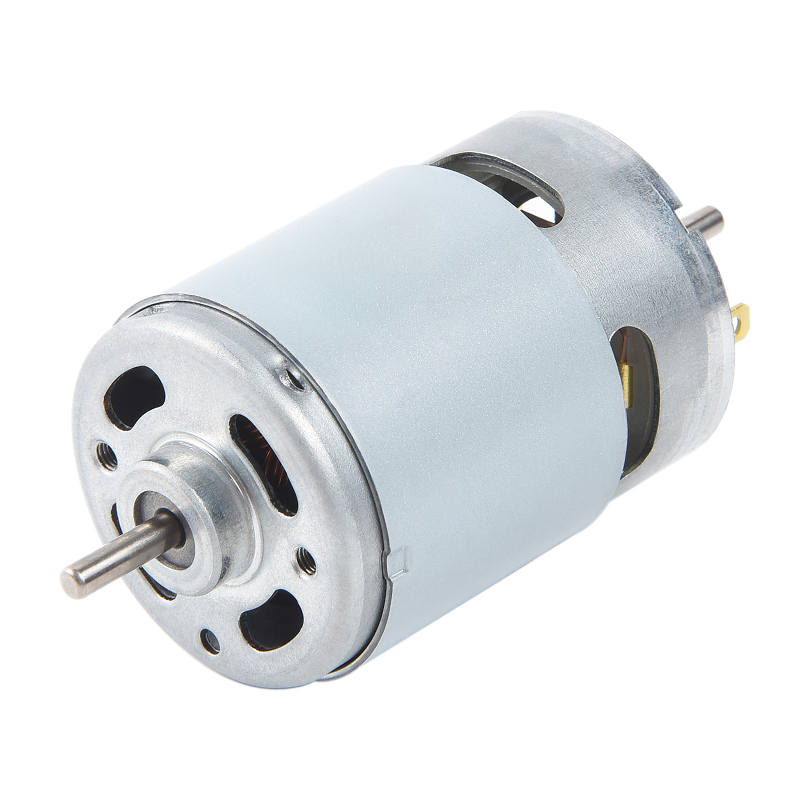
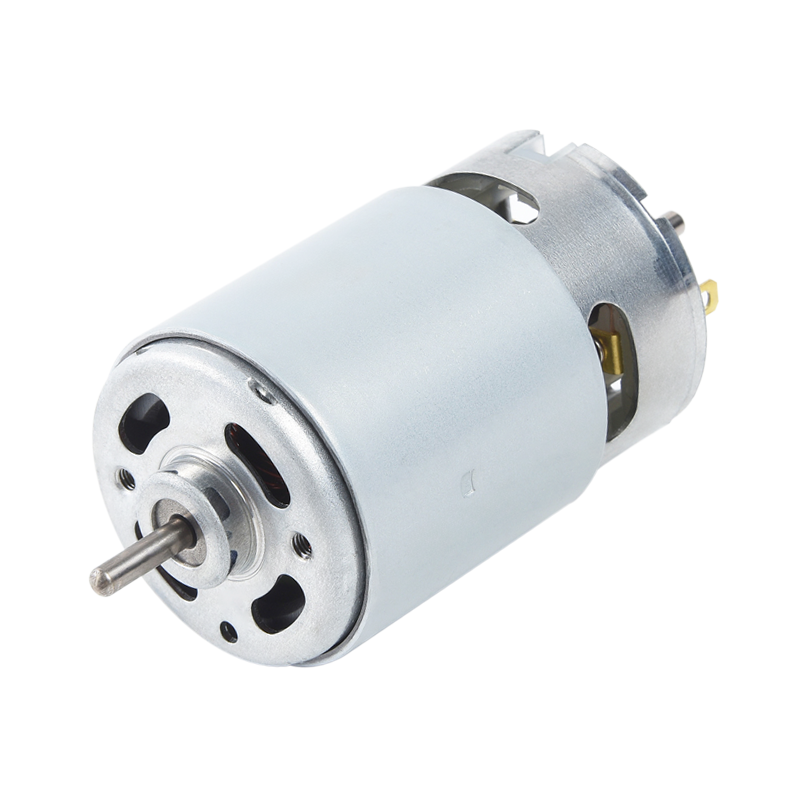
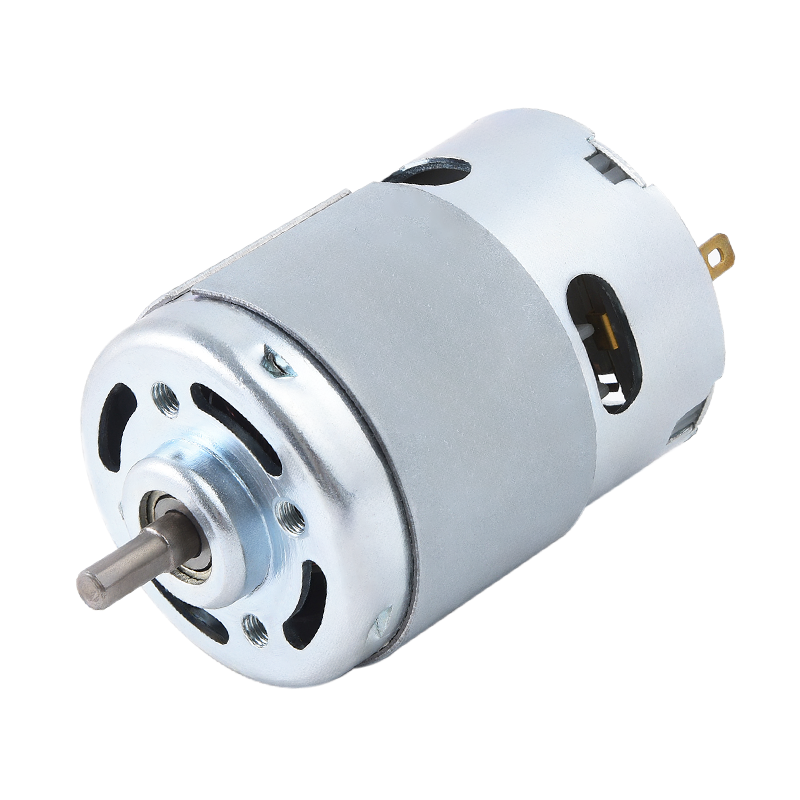
For example, a permanent magnet brushed motor such as the is often used in vacuum cleaners because it provides the high-speed rotation needed for efficient suction while remaining compact and reliable. Its construction also keeps the motor easy to control with simple speed-regulating circuits.
In appliances where quiet performance is more important, a mute design like the 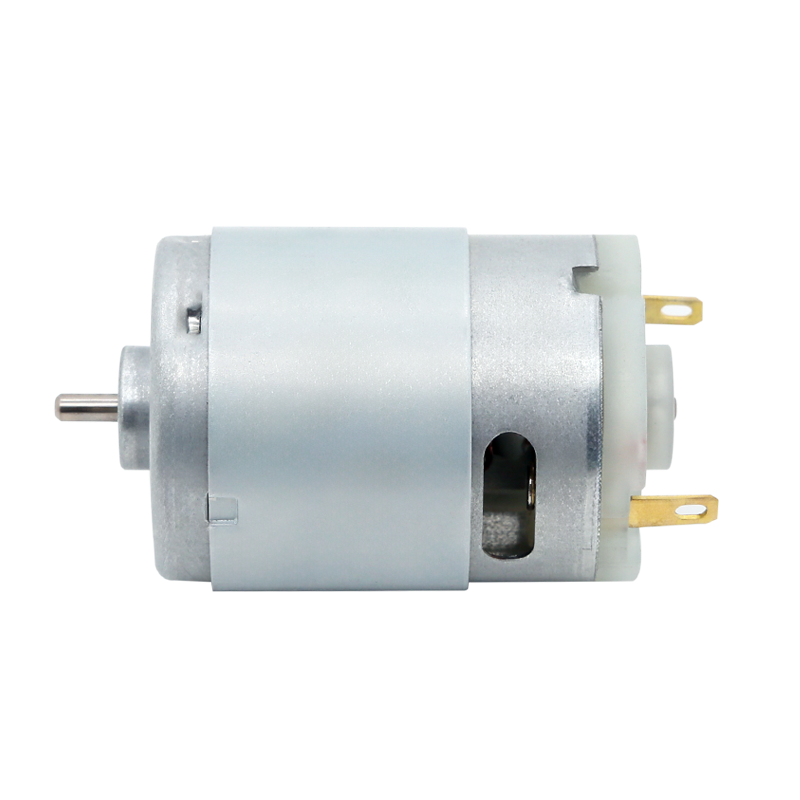 RS-380 Mini Brushed DC Motor for Electric ScrewdriversThe RS-380 mini motor offers quiet, efficient performance for household appliances and power tools, with customizable shaft and voltage options to fit various designs.View Product → helps reduce vibration and acoustic noise. Ice makers, for instance, run for short cycles but need smooth operation so the whole process feels unobtrusive in a kitchen.
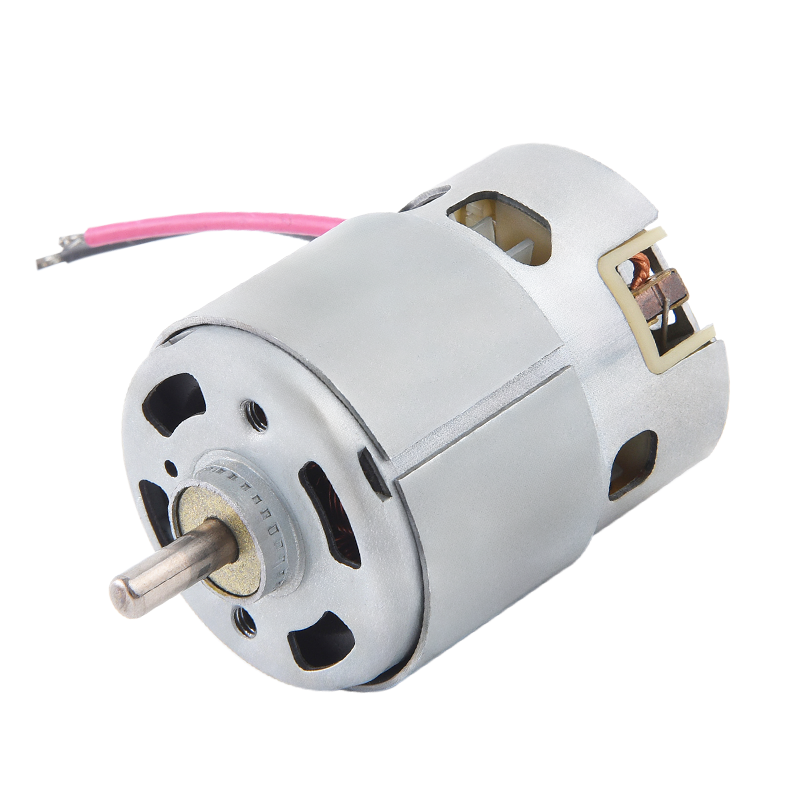
For pump applications, an energy-saving motor such as the  RS-540 Long-Lifespan Brushed DC MotorThis RS-540 motor offers dependable torque and low current draw for battery-powered pumps and vacuums, with a long-lifespan design.View Product → delivers dependable torque while keeping current consumption low. That matters for battery-powered or energy-conscious products.
If you’re evaluating which motor architecture fits your next design, you can explore the broad range of micro DC motor applications we serve. And if you need more torque at the output shaft, our gear motors combine a DC motor with a reduction gearbox to match speed and torque requirements.
Designing a DC Motor Around Your Product
Understanding how a DC motor works is essential, but picking the exact motor for your product requires experience. At Hongyang Motor, we’ve been manufacturing micro DC motors since 1988. Over the years, we’ve learned that each application brings its own demands: some products need low noise, others need high starting torque, and many need a specific frame size or mounting arrangement.
Our product line includes brushed DC motors, brushless DC motors, and gear motors, covering 300, 500, 700, 800, and 900 series. We also offer customization, so you can adjust shaft dimensions, terminals, voltage, or speed to fit your product. With more than ten production lines and an annual capacity of ten million units, we are equipped to help you find a reliable motor solution.
So, how does a DC motor work? It comes down to the interaction between magnetic fields and electrical current, managed by either a mechanical commutator or an electronic controller. Brushed motors offer simplicity and affordability, while brushless motors provide greater efficiency and longevity. Whatever your product requires, choosing the right motor starts with understanding its working principle—and that’s always a good first step.
News
-
Brush DC Motor Origins and Physical Foundations The Brush DC Motor is a pioneer in converting electrical energy into mechanical motion, and its history is closely intertwined with ...
READ MORE -
Who Is Still Using Brushed DC Motors These Days? Brushed DC motors in small appliances Despite the growing adoption of brushless motor technology, small appliances remain a major c...
READ MORE -
Brush DC Motor Applications in Consumer Electronics and Smart Devices Brush DC Motor Role in Consumer Electronics Design Brush DC Motor plays a critical role in the design and func...
READ MORE

Quick Links
 Home


Copyright © Yuyao Hongyang Micromotor Co., Ltd. All rights reserved.

