

 Eng

 русский
 Español


 Home / News / Industry News / How to Choose a DC Motor: Practical Steps From Application Load to Final Order
How to Choose a DC Motor: Practical Steps From Application Load to Final Order
 2026.11.16
 Industry News
Choosing a DC motor is rarely about finding the biggest or the cheapest unit on a list. It is about matching a small machine to the work it will do every day for years — inside a coffee maker, a cordless drill, a vending slot, or a laboratory pump. We have been building micro DC motors since 1988, and almost every selection conversation starts the same way: with the device, not the datasheet.
Below is the process our engineers actually walk through with customers, from the first rough sketch of a new product to the moment a purchase order is signed.
Start With the Device, Not the Datasheet
Before comparing models, write down what the motor has to survive. A motor that is perfect for a handheld fan may fail within weeks in a car door lock, and the difference is usually not the motor's quality but the fit between its design and the job.
Answer these questions in plain language first:
- What is being turned, and how heavy is it?
- How fast does the final output need to move, and how precisely?
- How long does the motor run per cycle, and how many cycles per day?
- What power source is available — battery pack, adapter, vehicle supply?
- How much space is there, and how does the motor mount?
- What is the surrounding environment: dust, moisture, heat, vibration?
- What noise level will the user tolerate?
- What lifetime and cost target does the product need to hit?
Vague answers here turn into expensive surprises later. A rough torque estimate and a realistic duty pattern are worth more than a long list of candidate part numbers.
Brushed or Brushless: The First Real Decision
Most micro DC applications come down to this choice, and it is less about technology level than about cost, electronics and service life.
Brushed DC motors
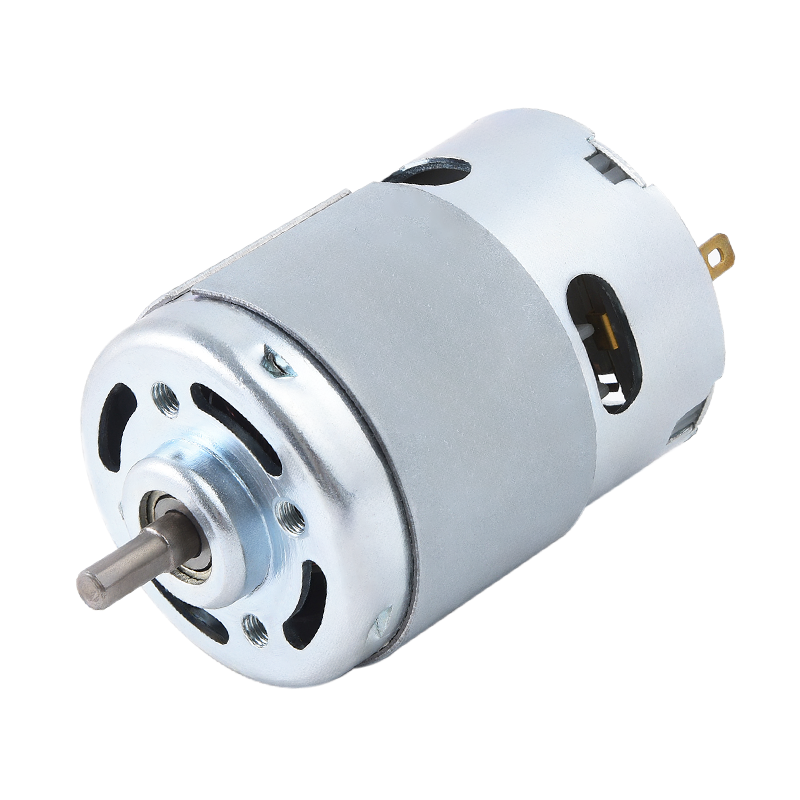
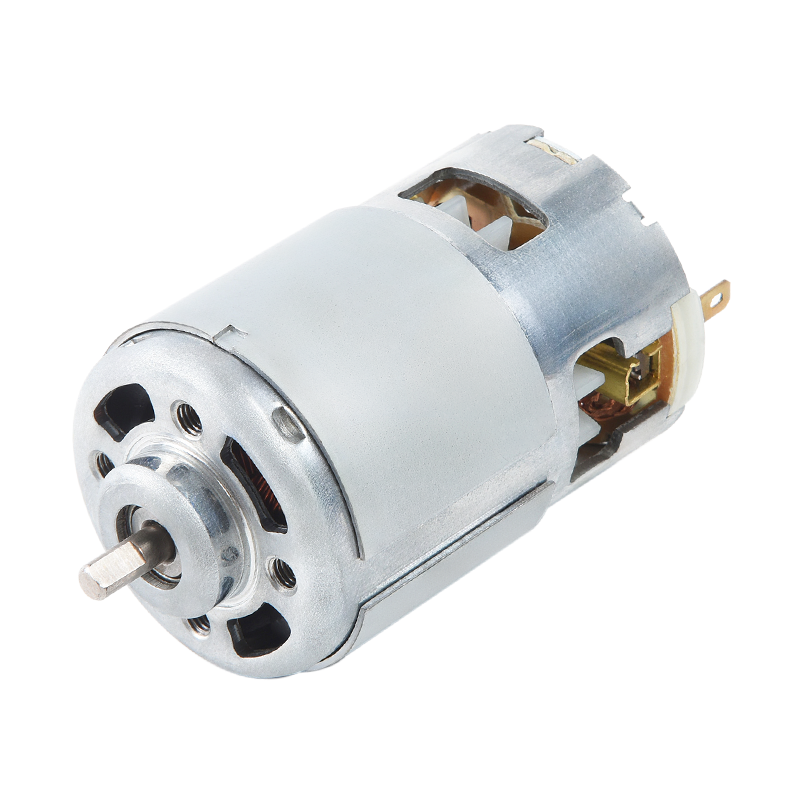
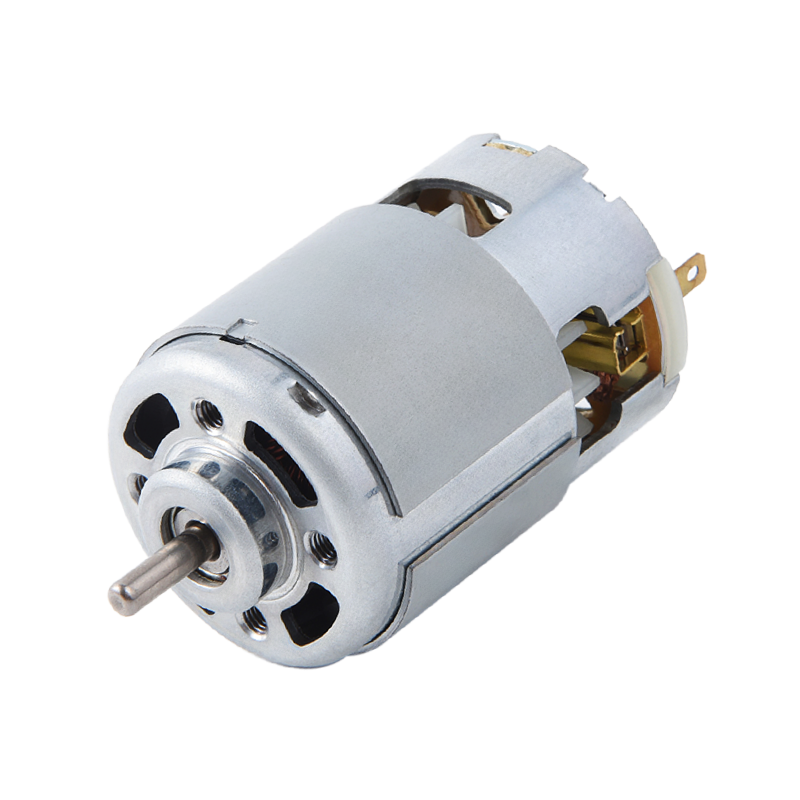
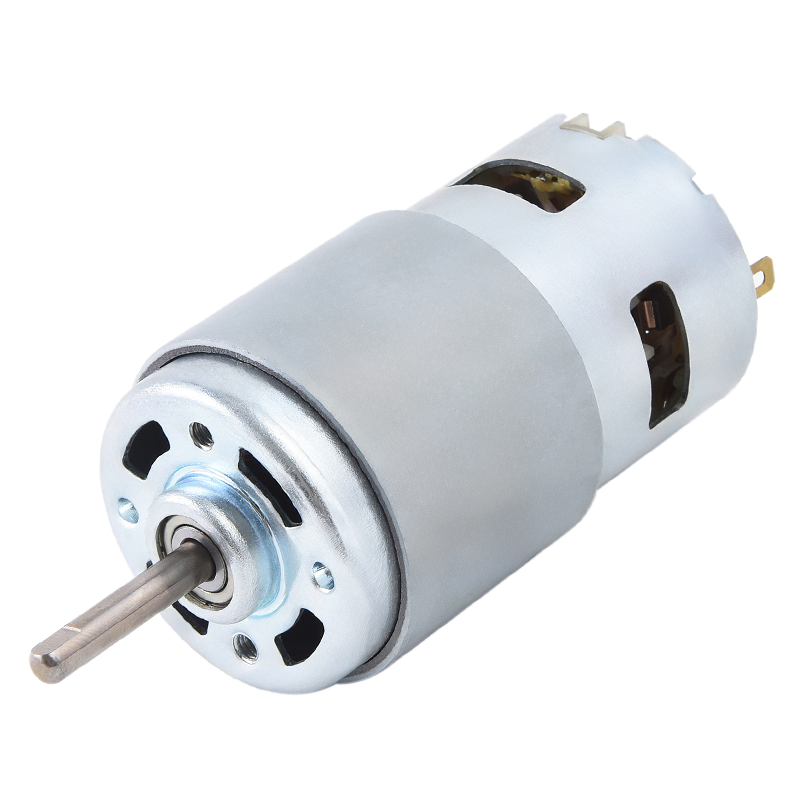
A brushed motor is simple, inexpensive, and easy to drive: connect it to a suitable supply and it turns. It handles high starting torque well, comes in a huge range of sizes, and is the default for high-volume consumer goods where the electronics budget is tight. The trade-offs are brush wear, carbon dust, sparking noise, and a service life that depends heavily on duty cycle.
For quiet household devices, sealed construction and careful brush selection make a bigger difference than headline specifications. A unit like the
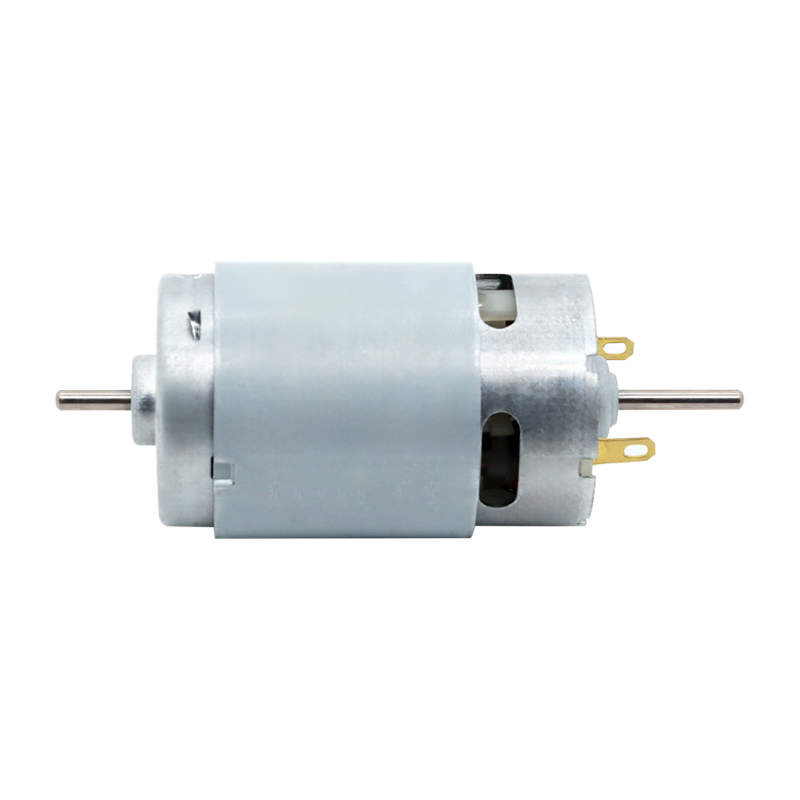 RS-380SL Brushed DC Motor for Low-Noise DevicesExtended RS-380/385 motor with customizable shaft options and an optional internal fan, relevant for quiet household devices when paired with sealed construction and careful brush selection.View Product →
shows how a standard frame can be tuned for low acoustic output rather than maximum speed.
Brushless DC motors
A brushless motor removes the wear parts, which means longer life, better efficiency, and cleaner operation at high speed. The price is a drive board, more careful commissioning, and a higher unit cost. It makes sense when the product runs for long stretches, when efficiency affects battery runtime, or when the motor is hard to reach for service — drone propulsion and continuous-duty equipment are typical examples.
Voltage, Speed and Torque: The Numbers That Matter
Three figures describe almost any DC motor requirement: the supply voltage, the speed at which the output shaft must turn, and the torque needed to move the load. They are linked, and a motor is only comfortable when all three sit inside its rated window at the same time.
Torque is best measured, not guessed. If you can, attach a spring scale or a small torque meter to the real mechanism and record the highest force it ever resists — including start-up, a jammed tool, or a cold morning when grease is stiff. Then add headroom: 20 to 30 percent above the worst case is a sensible starting point, more if the load is unpredictable.
| What you check | Why it matters | How to begin |
|---|---|---|
| Starting torque | Confirms the motor can break away under load | Measure the worst case, then add headroom |
| Rated speed | Sets output motion, noise and gearing needs | Work backward from the required final speed |
| Voltage and current | Defines supply, driver and wiring | Match the supply the product will actually use |
| Duty cycle | Drives heating, brush life and bearing wear | Describe run and rest time honestly |
| Mounting and sealing | Affects fit, vibration and ingress protection | Confirm shaft, flange and IP needs early |
Never select from the free-running speed alone. Loaded speed is always lower, and on a speed-torque curve the safe working area sits comfortably before the point where the motor stalls.
Gearing: When Torque Matters More Than Speed
If the motor spins fast but the mechanism needs slow, strong motion, a gearbox is the answer. A gear motor trades speed for torque roughly in proportion to the ratio: a 30:1 reduction gives about thirty times the torque at the output shaft, minus some efficiency loss and added backlash.
Choose the gear type to match the job. Spur gears are efficient and inexpensive for moderate loads. Planetary gears pack high torque into a short body and handle shock better. Worm gears give quiet, self-locking output where the mechanism must hold position. Ask about lubricant, gear material, and noise at the actual operating speed, since those details decide whether the product sounds refined or cheap.
Gear motor families such as
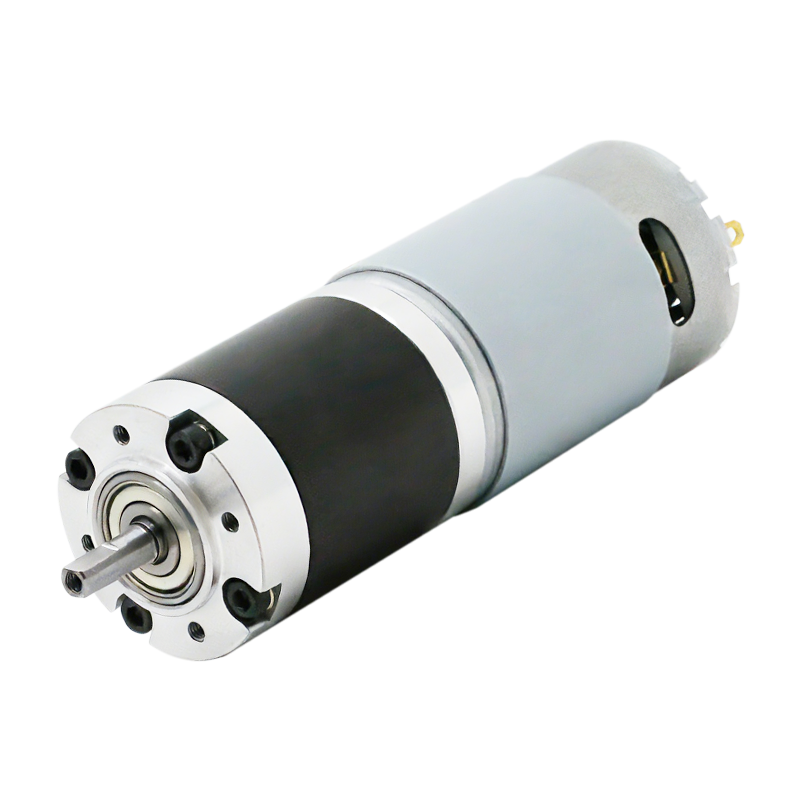 Customizable Gear Motor Families and SeriesPlanetary, spur, brushless and worm gear motor families with customizable ratios, shafts and mounting, specified as one gearbox-and-motor assembly.View Product →
are usually specified together with the motor frame, so the ratio, shaft and mounting are treated as one assembly rather than separate purchases.
Duty Cycle, Heat and the Life You Should Expect
Duty cycle is the most commonly understated specification in a customer brief. A motor rated for intermittent use will not thank you for running eight hours a day, and a continuous-duty unit is wasted money in a device that runs for twenty seconds at a time. Heat is the real enemy: every ten degrees of extra winding temperature shortens insulation and brush life significantly.
Be honest about rest periods, ambient temperature, and whether the motor sits near another heat source. If the enclosure is sealed, plan for the heat to stay inside it. If the device runs continuously, choose a design with generous thermal margin rather than one that just passes a bench test.
Energy-saving designs matter in exactly these cases; a pump-duty frame such as the
 RS-540 Long-Life Brushed DC Motor for Vacuum CleanersVacuum-cleaner series with high-quality magnets and a precision rotor, available in multiple voltage and speed models for sustained pump-duty operation.View Product →
illustrates how windings and magnets are adjusted for sustained operation rather than short bursts.
Fit, Mounting, Noise and the Working Environment
Mechanical details decide whether a technically correct motor becomes a producible product. Check shaft diameter and length, flat or keyway, end play, flange hole spacing, connector type, and lead length. Confirm that the motor can be assembled without stressing bearings or misaligning the output.
Then look at the environment. Dust clogs cooling paths; condensation corrodes brushes; vibration loosens terminals; and a motor mounted against a plastic housing can turn the whole panel into a loudspeaker. Sealed and encapsulated versions exist for exactly these situations, and it is far cheaper to specify one at the design stage than to redesign a housing later.
Acoustic performance is especially application-specific. Domestic appliances such as a coffee maker have tight noise budgets, while a power tool is judged more on torque delivery, which is why electric drill platforms tend to prioritise thermal headroom and overload behaviour over quietness.
Prototype First, Then Talk Volume
Once the shortlist is down to two or three candidates, order samples and test them in the real assembly, not on a bench with a lab supply. Run the worst-case load, the longest cycle, the highest ambient temperature, and the lowest battery voltage the product will ever see. Record current draw, temperature rise, noise, and starting behaviour.
This stage is also the moment to discuss customisation: winding changes for a different speed constant, shaft modifications, connectors, suppression components, or a completely new frame. Suppliers with in-house design and testing capability can iterate quickly, and a manufacturer that has already solved a similar application will usually save a round of prototypes.
Volume questions follow naturally. Ask about lead time, minimum order quantity, batch consistency, and which standards the factory works to. A supplier operating under ISO 9001 and able to document RoHS and REACH compliance removes a whole category of procurement risk from your checklist.
A Short Selection Checklist
- Describe the mechanism, the load and the required output speed.
- Record the real duty cycle, including rest time and ambient heat.
- Measure worst-case torque and add sensible headroom.
- Confirm the available voltage and the current budget.
- Decide between brushed simplicity and brushless longevity.
- Add gearing only when torque or output speed requires it.
- Check shaft, flange, connector and sealing against the housing design.
- Test samples in the product at its worst case, then plan volume.
Bring Us the Application and We Will Help You Narrow It Down
After more than three decades of building micro DC motors, the pattern we see most often is this: the customer arrives with a specification, and the useful conversation turns out to be about the device behind it. Tell us what the motor has to move, how long it runs, and where it lives, and the shortlist becomes much shorter.
You do not need a complete datasheet to start. A sketch, a target speed, a supply voltage and an honest description of the working conditions are enough for a first recommendation — and usually enough to avoid the two most expensive mistakes in motor selection: too much headroom, and too little.
News
-
Brush DC Motor Origins and Physical Foundations The Brush DC Motor is a pioneer in converting electrical energy into mechanical motion, and its history is closely intertwined with ...
READ MORE -
Who Is Still Using Brushed DC Motors These Days? Brushed DC motors in small appliances Despite the growing adoption of brushless motor technology, small appliances remain a major c...
READ MORE -
Brush DC Motor Applications in Consumer Electronics and Smart Devices Brush DC Motor Role in Consumer Electronics Design Brush DC Motor plays a critical role in the design and func...
READ MORE

Quick Links
 Home


Copyright © Yuyao Hongyang Micromotor Co., Ltd. All rights reserved.

