

 Eng
Eng 
 русский
 Español


Brushless DC Motor Guide: How BLDC Motors Work & Perform
 2026.07.15
 Industry News
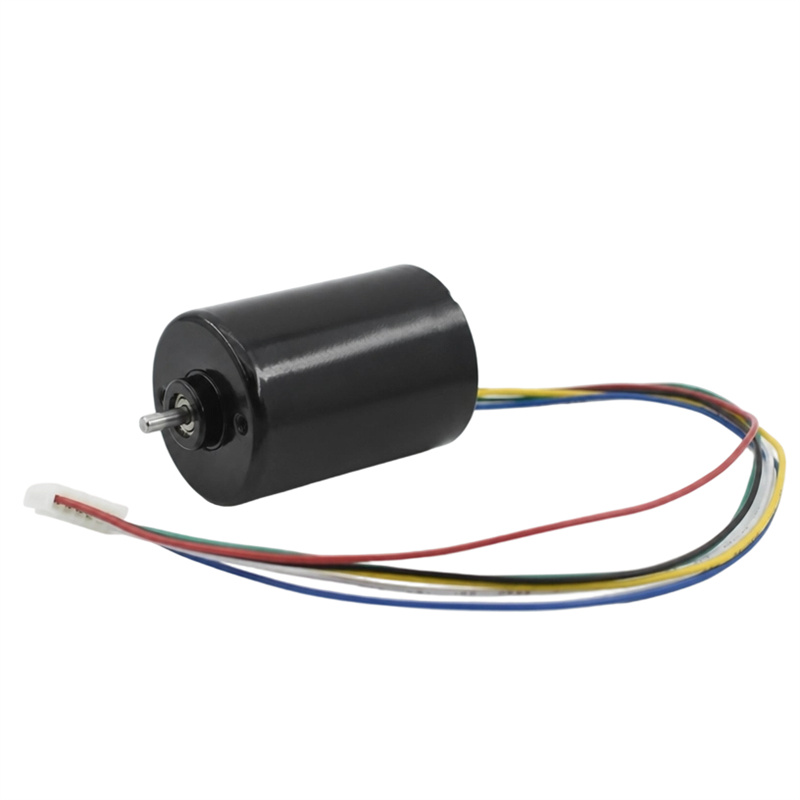
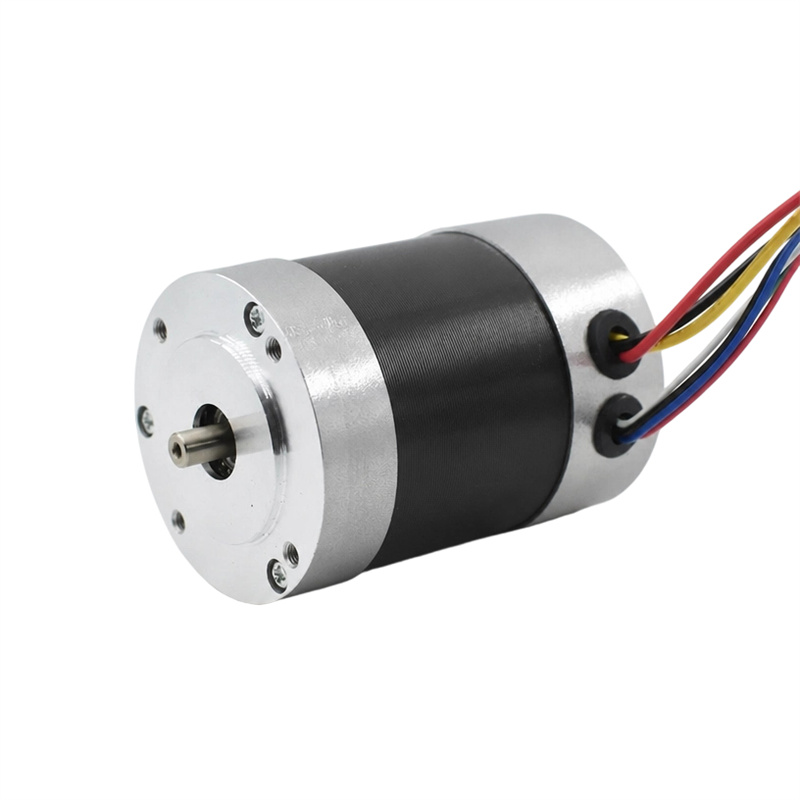
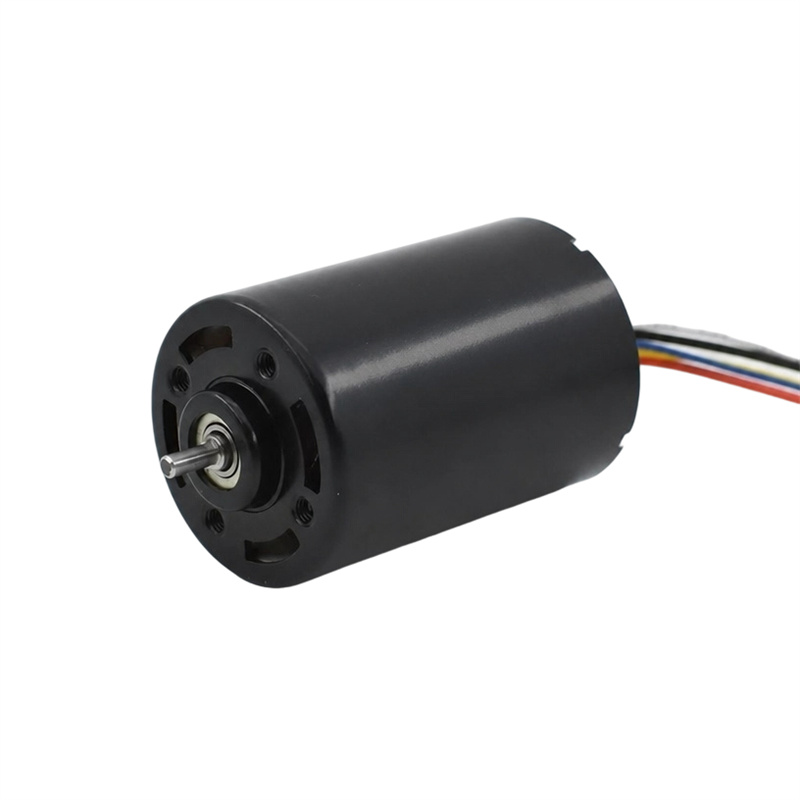
A brushless DC motor (BLDC) replaces the carbon brushes and mechanical commutator of a traditional DC motor with electronic switching, permanent magnets on the rotor, and a controller that senses rotor position to fire the windings in sequence. The payoff is direct: 82-93% efficiency versus 70-85% for brushed motors, three to five times longer service life, and no brush maintenance. The trade-off is equally direct — you're buying an electronic controller along with the motor, and that controller is what makes the whole system work.
That single design change — moving the commutation from a mechanical contact to an electronic circuit — is responsible for almost everything BLDC motors are known for: quieter operation, higher top speeds, better heat dissipation, and a lifespan measured in tens of thousands of hours rather than a few thousand. The sections below break down how that works, where the efficiency actually comes from, what it costs in practice, and how to decide whether a BLDC motor is the right call for a specific application.
How a Brushless DC Motor Actually Works
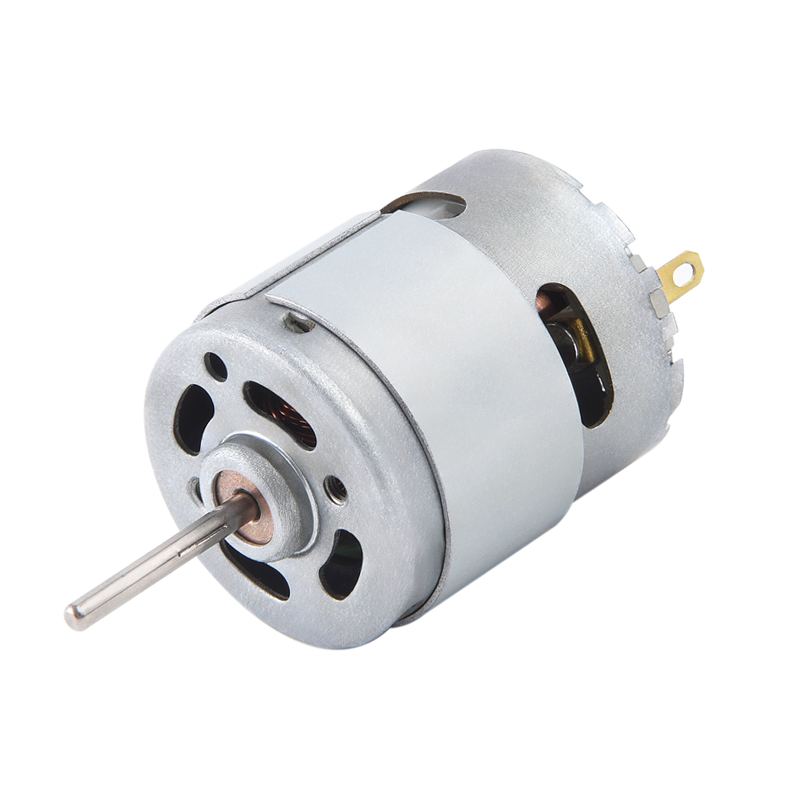
In a brushed motor, the rotor carries the windings, and a spinning commutator physically drags brushes across copper segments to reverse current direction at the right moment. In a BLDC motor, that arrangement is flipped: the windings sit on the stationary stator, and the rotor carries permanent magnets. Since nothing on the rotor needs an electrical connection, there's no brush, no commutator, and no sliding contact at all.
Instead, an electronic controller switches current through the stator windings in a specific sequence, and that sequence has to be timed to the rotor's actual position — otherwise the motor stalls or runs backward. This is where BLDC motors split into two broad approaches:
Sensored Control (Hall-Effect Sensors)
Small Hall-effect sensors mounted near the rotor detect the position of the permanent magnets directly, even at a dead stop. This makes sensored control the standard choice for anything that needs reliable starting torque under load — elevators, e-bikes on a hill, robotics — because the controller always knows exactly where the rotor is, from zero RPM onward.
Sensorless Control (Back-EMF Detection)
Rather than adding sensors, the controller measures the back-electromotive force generated in the winding that isn't currently energized, and uses that voltage to infer rotor position. It's cheaper and reduces wiring and failure points, but it only works once the motor is already spinning fast enough to generate a usable signal — startup and very low speeds are the weak point, which is why sensorless designs dominate in drones and fans but are rarely used where high starting torque under load matters.
Trapezoidal, Sinusoidal, and Field-Oriented Control
Beyond sensing rotor position, there's also a choice in how the current itself is shaped. Trapezoidal (six-step) commutation is the simplest and cheapest to implement, energizing two of three phases at a time — it's common in fans, pumps, and power tools where cost matters more than smoothness. Field-oriented control (FOC) drives smooth sinusoidal current and continuously calculates the optimal angle between stator and rotor fields, delivering less torque ripple, quieter operation, and better efficiency at low speed — at the cost of needing a more powerful microcontroller. Servo motors and precision robotics almost always use FOC or sensored trapezoidal control; cost-sensitive, high-volume products often stick with sensorless trapezoidal.
Why BLDC Motors Are More Efficient — With the Numbers
Efficiency is the single biggest reason engineers switch to BLDC, and it isn't a marginal difference. In brushed motors, current has to pass through a physical brush-to-commutator contact, which adds resistance, generates friction, and wastes energy as heat. Removing that contact point removes an entire category of loss.
82-93% Typical BLDC motor efficiency
70-85% Typical brushed DC motor efficiency
3-5x Longer service life vs brushed
1-3% Input power lost to brush contact resistance alone
A 100W brushed motor running at 78% efficiency draws 128W from its supply, while a brushless equivalent at 90% efficiency draws only 111W — 17W less, continuously. Over 2,000 operating hours at roughly $0.12 per kWh, that gap alone saves approximately $40 in electricity, before accounting for reduced heat buildup and less bearing wear. Scale that to a facility running dozens of motors continuously, and the efficiency gap becomes a real line item rather than a rounding error.
Part of that efficiency gain also comes down to where the heat ends up. Brushed motors generate heat directly at the rotor through brush friction, and that heat gets trapped inside the rotating assembly, limiting how long the motor can run continuously. BLDC motors produce their heat in the stationary stator windings instead, which are much easier to cool — this is a major reason BLDC motors tolerate continuous duty cycles that would overheat a brushed motor in minutes.
One caveat worth knowing
Efficiency isn't unconditional. Brushless motors do have eddy current losses that brushed motors with permanent-magnet stators don't, and those losses rise with the square of rotational speed — so at very high RPM, the efficiency gap between BLDC and brushed motors can narrow. It's also worth remembering that a full efficiency comparison should account for the entire drive system, including the controller and any gearbox, not just the bare motor.
Service Life and Maintenance: What Actually Wears Out
Lifespan is where the brushed-vs-brushless gap is most dramatic, and it's driven by one simple mechanical fact: brush life is typically limited to 1,000-3,000 hours of operation, while brushless motors routinely reach tens of thousands of hours, because there's no wearing contact surface to begin with.
That difference shows up directly in maintenance cost, not just theoretical lifespan. Replacing carbon brushes on a typical small-frame gearmotor takes 20-40 minutes of technician time plus $5-20 in parts. Multiply that across a facility running 20 gearmotors on one shift, and a single brush-replacement cycle can consume 40-80 hours of maintenance labor — a cost that rarely shows up when someone's comparing sticker prices at purchase time.
| Factor | Brushed DC Motor | Brushless DC Motor |
|---|---|---|
| Typical efficiency | 70-85% | 82-93% |
| Service life | 1,000-3,000 hours | Tens of thousands of hours |
| Maintenance | Periodic brush replacement required | Effectively maintenance-free |
| Starting torque | Instant, strong from standstill | Strong with sensored control; sensorless needs speed to stabilize |
| Heat handling | Heat trapped at the rotor, limits continuous duty | Heat dissipates from the stator, supports longer duty cycles |
| Controller needed | Simple — runs directly off DC voltage | Required — adds upfront cost and complexity |
| Upfront cost | Lower | Typically 30-50% higher |
Where the Extra Cost Goes — and When It Pays Off
BLDC motors cost more to buy. That's not a marketing spin issue, it's a direct consequence of needing an electronic speed controller to do the job brushes used to do mechanically. A rough sense of where that shows up at the component level: a quality 100W brushed DC gearmotor with a 30:1 gear ratio typically lists for $30-80, while a comparable brushless BLDC gearmotor runs $80-200.
Whether that premium is worth it comes down almost entirely to duty cycle. As a practical rule of thumb from gear motor engineering guidance:
- Continuous or high-duty operation (above roughly 40% duty cycle): BLDC pays for itself through energy savings, reduced heat, and eliminated maintenance labor.
- Intermittent, low-duty use (occasional short bursts): a brushed motor's lower upfront cost often wins, since there isn't enough runtime to recoup the controller premium.
- Space-constrained designs: BLDC motors deliver more torque for their size, since there's no bulky brush assembly to fit around.
- High-reliability requirements (5,000+ hours, hard-to-access installations): BLDC is close to the only sensible choice, since a brush failure in an inaccessible location means real downtime.
Matching the Motor Type to the Right Application
Not every use case needs a brushless motor, and picking one for the wrong job just adds cost without a real benefit. The clearest way to decide is to look at what the application actually demands.
- Electric vehicles and e-bikes BLDC dominates here because battery range depends directly on drivetrain efficiency, and the wide, consistent torque band suits variable-speed riding.
- Drones and propulsion Sensorless BLDC is the near-universal standard — light weight, high RPM, and no sensor wiring to route through a small airframe.
- HVAC blowers and compressors BLDC motors reduce electricity draw on equipment that runs for years continuously, which is exactly where the efficiency gap compounds.
- Power tools (drills, saws) Increasingly BLDC for runtime and torque under load, though brushed motors still show up in low-cost tools where instant torque and price matter more than duty cycle.
- Robotics and precision positioning Sensored BLDC with FOC control is standard, since accurate low-speed torque and smooth motion are non-negotiable for servo applications.
- Simple, intermittent-use devices A basic brushed motor (a toy, a low-cost fan, a single-use appliance) often remains the more sensible and economical choice.
Quick Checklist Before Choosing a BLDC Motor
Before specifying a brushless motor for a design, it's worth confirming a few things up front, since the controller and sensing method chosen at this stage are hard to change later without a redesign:
- Does the application need strong torque from a dead stop under load? If yes, go sensored (Hall-effect), not sensorless.
- Is smooth, low-noise motion more important than raw cost? Lean toward FOC over trapezoidal control.
- Will the motor run above roughly 40% duty cycle? That's the rough threshold where BLDC's efficiency and lifespan advantages typically outweigh the higher upfront controller cost.
- Is the installation hard to access for maintenance? That alone often justifies BLDC regardless of duty cycle, since a brush swap in an inaccessible location costs far more than the part itself.
- Does the design budget account for the controller, not just the motor? The electronic speed controller is a real line item, not an optional accessory.
News
-
Brush DC Motor Origins and Physical Foundations The Brush DC Motor is a pioneer in converting electrical energy into mechanical motion, and its history is closely intertwined with ...
READ MORE -
Who Is Still Using Brushed DC Motors These Days? Brushed DC motors in small appliances Despite the growing adoption of brushless motor technology, small appliances remain a major c...
READ MORE -
Brush DC Motor Applications in Consumer Electronics and Smart Devices Brush DC Motor Role in Consumer Electronics Design Brush DC Motor plays a critical role in the design and func...
READ MORE

Quick Links
 Home
Home


Copyright © Yuyao Hongyang Micromotor Co., Ltd. All rights reserved.

