

 Eng
Eng 
 русский
 Español


What Is the Use of Brushes in DC Motors? Full Guide
 2026.04.29
 Industry News
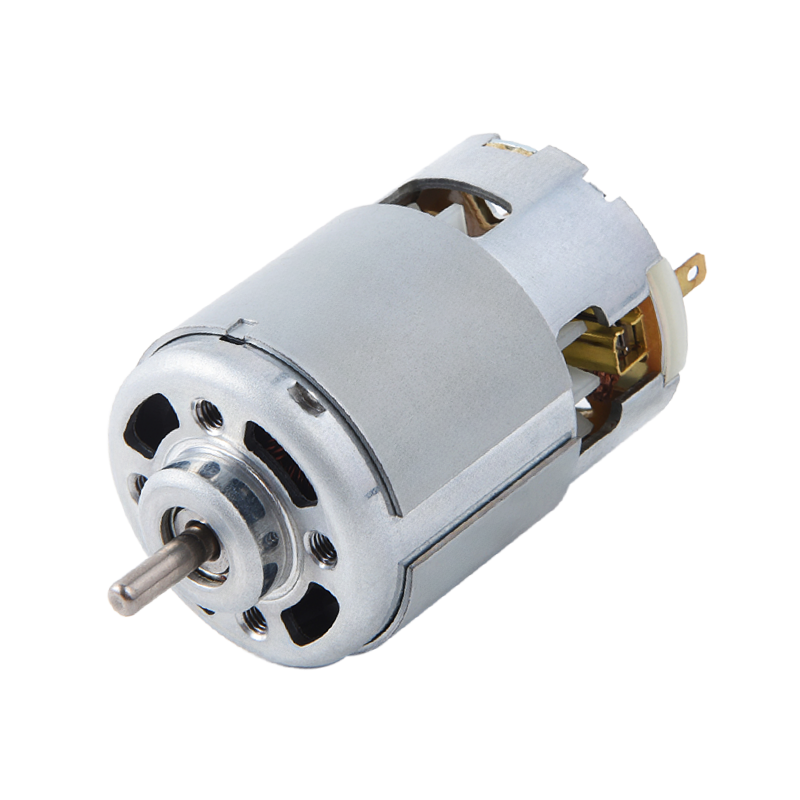
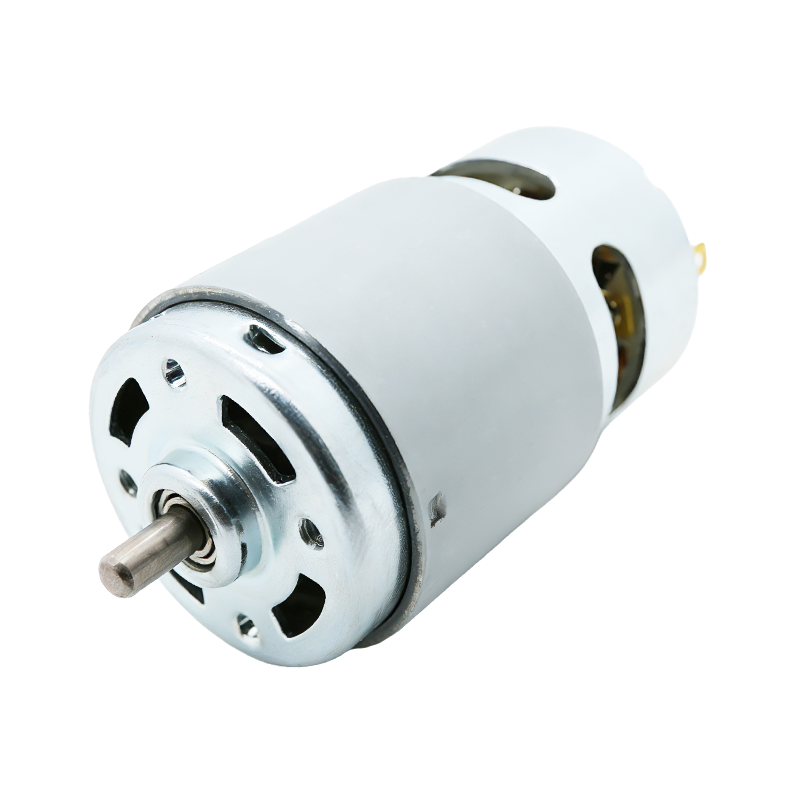
In a DC motor, brushes serve one essential purpose: they transfer electrical current from the stationary power supply to the rotating armature windings through continuous sliding contact with the commutator. Without brushes, current cannot reach the rotor coils, the magnetic field required for rotation cannot be established, and the motor cannot run. Brushes are therefore not peripheral components — they are the electrical interface that makes a brushed DC motor function.
Understanding exactly what brushes do — and why engineers developed brushless DC electric motors to eliminate them — is fundamental to selecting the right motor technology for any application, from industrial drives to precision micro brushless DC motors in medical devices and drones.
The Specific Functions of Brushes in a DC Motor
Brushes in a DC motor perform two distinct but inseparable functions simultaneously, and both are critical to motor operation.
Function 1: Electrical Current Transfer to the Rotating Armature
The armature — the rotating part of a DC motor — contains coil windings that must carry current to generate the electromagnetic force that produces rotation. Since the armature rotates continuously, a fixed wire connection is impossible. Brushes solve this by pressing against the commutator (a segmented copper ring mounted on the armature shaft) under spring tension, maintaining continuous electrical contact regardless of rotational speed. Current flows from the power supply → through the brush → across the brush-commutator interface → into the armature windings → back through the opposite brush to complete the circuit.
Function 2: Commutation — Reversing Current Direction in Armature Coils
The second and equally critical function of brushes is commutation: mechanically switching the direction of current flow through each armature coil at precisely the right moment to maintain continuous torque in one rotational direction. As the armature rotates, each commutator segment passes under the brush in sequence. The brush bridges two adjacent segments during the switching instant, short-circuiting the coil undergoing commutation and reversing the current direction in that coil. Without this switching, the armature coils would generate alternating torque impulses that cancel each other, and the motor would not sustain rotation. In a typical DC motor, this commutation event occurs hundreds to thousands of times per second depending on the number of commutator segments and the motor's RPM.
The Physical Construction of DC Motor Brushes
Brushes are spring-loaded blocks of carbon-graphite composite held in brush holders positioned around the commutator circumference. Most DC motors use two or four brushes spaced symmetrically. The spring maintains a contact pressure of typically 150 to 400 grams per cm² — enough to ensure reliable electrical contact without excessive friction. The carbon material is deliberately softer than the copper commutator so that brushes wear preferentially, protecting the more expensive commutator surface.
Why Brushes Create Fundamental Limitations in DC Motors
While brushes enable DC motor operation, they simultaneously introduce a set of performance, reliability, and maintenance constraints that are inherent to the brush-commutator contact mechanism — and cannot be fully engineered away regardless of brush material quality or design refinement.
Mechanical Wear and Limited Service Life
Brushes are consumable components. Continuous sliding contact against the spinning commutator erodes the brush material at a rate that depends on current density, contact pressure, commutator surface speed, and environmental conditions. Typical brush service life in a continuously running DC motor is 1,000 to 5,000 operating hours, after which brushes must be inspected and replaced. By comparison, brushless DC motors — which eliminate this contact mechanism entirely — routinely achieve 10,000 to 50,000+ hours of service life with no commutation-related maintenance.
Electrical Losses and Heat Generation at the Contact Interface
The brush-commutator contact creates a resistive voltage drop of approximately 0.5 to 2 volts per brush, regardless of motor size. In a small motor running on 12V, two brushes together consume 8 to 33% of the supply voltage in contact resistance losses alone — directly reducing efficiency. This lost energy is dissipated as heat at the contact surface, limiting the motor's thermal capacity and requiring adequate ventilation even at modest power levels.
Sparking, Electrical Noise, and Speed Limitations
During commutation, the brush short-circuits the commutating coil for a brief instant. If the timing is imperfect — which is inevitable as motor speed, load, and temperature vary — the coil current does not fully reverse before the brush moves to the next segment, causing arcing and sparking at the brush-commutator interface. This sparking generates electromagnetic interference (EMI) that can disrupt nearby electronics, damages the commutator surface over time, and limits maximum safe operating speed. Most brushed DC motors have practical speed limits of 5,000 to 15,000 RPM before commutation-related sparking becomes destructive, while brushless motors routinely operate at 50,000 to 100,000 RPM in high-speed applications.
Environmental Restrictions
The sparking inherent in brush commutation makes brushed DC motors unsuitable for explosive or flammable atmospheres without expensive intrinsic safety enclosures. Carbon brush dust accumulates inside the motor housing, requiring regular cleaning to prevent tracking faults and short circuits. In high-humidity or submerged applications, moisture contamination of the brush-commutator interface causes erratic operation and accelerated corrosion.
What Is a Brushless DC Electric Motor and How Does It Solve the Brush Problem
A brushless DC electric motor (BLDC motor) achieves the same result as a brushed DC motor — controlled rotational speed and torque — but eliminates brushes and the commutator entirely by moving the permanent magnets to the rotor and placing the energized windings in the stationary stator. Since the windings no longer rotate, there is no need for sliding electrical contact, and no commutator is required.
Commutation — the switching of current between windings to maintain rotation — is performed electronically by a dedicated motor controller (ESC or BLDC driver) that uses rotor position feedback from Hall effect sensors or back-EMF sensing to energize the correct stator winding phases in the correct sequence. This electronic commutation is faster, more precise, and perfectly timed at every speed and load condition, eliminating the imperfect mechanical commutation that causes sparking in brushed motors.
BLDC Motor Operating Principle Step by Step
- The motor controller reads rotor position via Hall effect sensors (or back-EMF in sensorless designs) to know the exact angular position of the permanent magnet rotor at every moment.
- Based on rotor position, the controller energizes the appropriate stator phase windings using power transistors (MOSFETs or IGBTs), creating a rotating magnetic field in the stator.
- The permanent magnet rotor is attracted and repelled by the rotating stator field, producing torque and rotation — exactly as in a brushed motor, but without any physical contact between stationary and rotating parts.
- The controller continuously updates the switching sequence as the rotor turns, maintaining optimal commutation timing regardless of speed or load changes — achieving efficiencies of 85% to 95% in well-designed BLDC systems.
Brushed DC vs. Brushless DC Motor: Direct Performance Comparison
| Parameter | Brushed DC Motor | Brushless DC Motor |
|---|---|---|
| Commutation Method | Mechanical (brushes + commutator) | Electronic (motor controller) |
| Typical Efficiency | 75–85% | 85–95% |
| Service Life | 1,000–5,000 hours | 10,000–50,000+ hours |
| Maximum Speed | 5,000–15,000 RPM (typical) | Up to 100,000+ RPM |
| Maintenance | Regular brush replacement required | Minimal — bearings only |
| EMI / Sparking | Significant sparking and EMI | Minimal EMI |
| Noise Level | Higher (brush friction + arcing) | Lower (no contact friction) |
| Speed Control | Simple (voltage adjustment) | Requires dedicated controller |
| Initial Cost | Lower | Higher (motor + controller) |
| Total Cost of Ownership | Higher (maintenance + downtime) | Lower over full service life |
| Hazardous Environments | Not suitable without special enclosure | Suitable (no sparking) |
Micro Brushless DC Motors: High Performance at Miniature Scale
Micro brushless DC motors apply the same brushless operating principle at very small physical scales — typically with rotor diameters from 4mm to 40mm and power ratings from under 1 watt to approximately 100 watts. At this scale, the advantages of brushless technology become even more critical, because the physical constraints of miniaturization make brush-commutator systems practically unworkable.
Why Brushes Fail at Micro Scale
In a motor with a rotor diameter of 6mm, the commutator segments are only fractions of a millimeter wide. Maintaining reliable brush contact at these dimensions while the motor spins at 20,000 to 100,000 RPM is mechanically impractical — brush wear rates are catastrophic, commutator segments cannot be manufactured with sufficient precision at low cost, and the brush contact resistance represents an unacceptably large fraction of the total circuit impedance in a low-voltage micro motor. Micro brushless DC motors solve all of these problems by eliminating physical contact entirely.
Construction of Micro Brushless DC Motors
Micro BLDC motors are manufactured in two primary configurations:
- Inrunner configuration: The permanent magnet rotor rotates inside the stator windings — the classic motor topology. Inrunner micro motors achieve the highest RPM due to the small rotor inertia of the inner magnet assembly. Common in dental handpieces, turbopumps, and high-speed machining spindles operating at 50,000 to 150,000 RPM.
- Outrunner configuration: The permanent magnet assembly forms the outer rotating shell around the fixed stator core. Outrunner motors produce higher torque at lower RPM due to the larger rotor diameter and are the dominant configuration in drone and multirotor propulsion systems, where direct drive without gearboxes is preferred.
Key Applications of Micro Brushless DC Motors
- Drone and UAV propulsion: Micro BLDC outrunner motors power the propellers of consumer and commercial drones, where power-to-weight ratios of 5:1 to 10:1 (watts per gram) and precise electronic speed control are essential for stable flight.
- Medical devices: Surgical robots, implantable pumps, and portable diagnostic equipment use micro BLDC motors because their long service life, low noise, and spark-free operation meet the stringent requirements of medical-grade hardware. A typical micro BLDC motor in a surgical tool runs at 35,000 to 80,000 RPM with positional accuracy better than 0.1°.
- Computer cooling fans and hard drive spindles: The cooling fans in servers and laptops and the spindle motors in hard disk drives are almost universally micro BLDC motors, selected for their quiet operation, high reliability, and ability to start and stop millions of times without brush wear.
- Robotics and automation: Joint actuators in collaborative robots (cobots), gripper drives, and AGV wheel motors increasingly use micro BLDC motors with integrated encoders, achieving positioning repeatability of ±0.02mm in precision assembly applications.
- Consumer electronics: Electric toothbrushes, hair dryers, handheld vacuums, and camera stabilizer gimbals use micro BLDC motors to achieve compact size, high efficiency, and product lifespans that would be impossible with brush-dependent designs.
Selecting Between Brushed DC and Brushless DC Motors for Your Application
The choice between brushed and brushless DC motor technology should be driven by the specific requirements of the application — not by a blanket assumption that brushless is always superior. Both technologies remain commercially relevant and are actively specified in new designs.
When Brushed DC Motors Remain the Right Choice
- Simple speed control is adequate: Brushed DC motors can be speed-controlled with a simple PWM signal or variable voltage — no dedicated motor controller chip is required. For low-cost, low-complexity products, this significantly reduces BOM cost.
- Short duty cycle or infrequent use: Applications where the motor runs only occasionally — a car window motor, a toy, a vending machine actuator — may never accumulate enough operating hours to reach brush wear limits. The brushless cost premium is not justified.
- Low initial cost is the primary constraint: Brushed motors cost 30 to 60% less than an equivalent brushless motor plus controller for the same power output. In high-volume consumer products with a 2–3 year design life, this cost difference is often decisive.
When Brushless DC Motors Are the Correct Specification
- Continuous or high duty cycle operation: Any application running more than a few hours per day — industrial automation, HVAC fans, pumps, traction drives — should use brushless motors. The elimination of brush maintenance alone justifies the cost premium within 6 to 18 months of operation for most industrial users.
- High speed requirements: For applications requiring speeds above 15,000 RPM — turbopumps, dental tools, high-speed spindles, drone motors — brushless is the only viable option. Brushed motors cannot sustain these speeds without commutation failure.
- Maintenance-inaccessible locations: Motors installed in sealed enclosures, embedded in machinery, or deployed in remote locations where brush replacement is impractical must be brushless to ensure long-term reliability.
- EMI-sensitive environments: Medical equipment, precision measurement instruments, and avionics cannot tolerate the electromagnetic interference generated by brush commutation. Brushless motors with proper filtering meet even the most demanding EMI standards including MIL-STD-461 and IEC 61000.
- Miniaturization requirements: When motor diameter must be below 20–30mm, micro brushless DC motors are the only technology that delivers adequate efficiency, speed, and reliability at that scale.
Key Specifications to Evaluate When Choosing a Brushless DC Motor
Selecting the correct brushless DC motor requires evaluating several interdependent performance parameters. Optimizing for one specification in isolation — such as maximum RPM — without considering torque, efficiency curve, and thermal limits leads to poor system performance.
- KV rating (RPM per volt): The KV value defines how many RPM the motor produces per volt of applied voltage with no load. A high KV motor (2,000–10,000 KV) is suited to high-speed, low-torque applications like drone propellers. A low KV motor (100–500 KV) produces high torque at low speed and is preferred for direct-drive wheels, winches, and robotic joints.
- Continuous and peak torque: Continuous torque defines the maximum load the motor can sustain indefinitely without overheating. Peak torque — typically 2 to 3 times the continuous rating — is available for short acceleration bursts. The application's load profile must stay within these limits.
- Motor constant (Km): Km = torque / √(power losses) and is a measure of motor efficiency independent of size. Higher Km indicates a more efficient motor design for the same frame size.
- Number of poles: More magnetic poles generally produce smoother torque at low speed — important for servo applications — while fewer poles allow higher maximum RPM. Most micro BLDC motors use 2 to 14 poles.
- Sensor type: Hall-effect sensored motors provide accurate position feedback at all speeds including zero RPM — essential for servo and positioning applications. Sensorless BLDC motors are simpler and cheaper but require minimum speed for back-EMF detection, making them unsuitable for applications requiring precise low-speed or holding torque control.
Maintaining Brushed DC Motors: Extending Brush Service Life
Where brushed DC motors remain in service, proper maintenance practices can significantly extend brush life and prevent premature commutator damage — reducing total maintenance cost and unplanned downtime.
- Inspect brush length every 500 operating hours in continuously running industrial motors. Replace brushes before they reach the minimum length mark — typically when worn to one-third of original length — to prevent the brush spring from contacting the commutator and causing catastrophic damage.
- Always replace both (or all four) brushes simultaneously, even if only one is worn. Mixed brush lengths create uneven contact pressure and accelerate commutator grooving.
- After brush replacement, bed in new brushes by running the motor at 50% load for 30 minutes before returning to full-load operation. This allows the brush face to conform to the commutator curvature and establishes a stable carbon film on the commutator surface.
- Clean carbon dust from inside the motor housing at each brush inspection. Accumulated carbon dust can create conductive tracking paths between commutator segments, causing inter-segment short circuits.
- Verify commutator surface condition at each inspection. The surface should appear smooth with a uniform dark patina (carbon film). Bright copper spots indicate localized arcing; grooves deeper than 0.5mm require commutator skimming by a qualified motor repairer.
News
-
Brush DC Motor Origins and Physical Foundations The Brush DC Motor is a pioneer in converting electrical energy into mechanical motion, and its history is closely intertwined with ...
READ MORE -
Who Is Still Using Brushed DC Motors These Days? Brushed DC motors in small appliances Despite the growing adoption of brushless motor technology, small appliances remain a major c...
READ MORE -
Brush DC Motor Applications in Consumer Electronics and Smart Devices Brush DC Motor Role in Consumer Electronics Design Brush DC Motor plays a critical role in the design and func...
READ MORE

Quick Links
 Home
Home


Copyright © Yuyao Hongyang Micromotor Co., Ltd. All rights reserved.

